




First Paragraph: The Incident
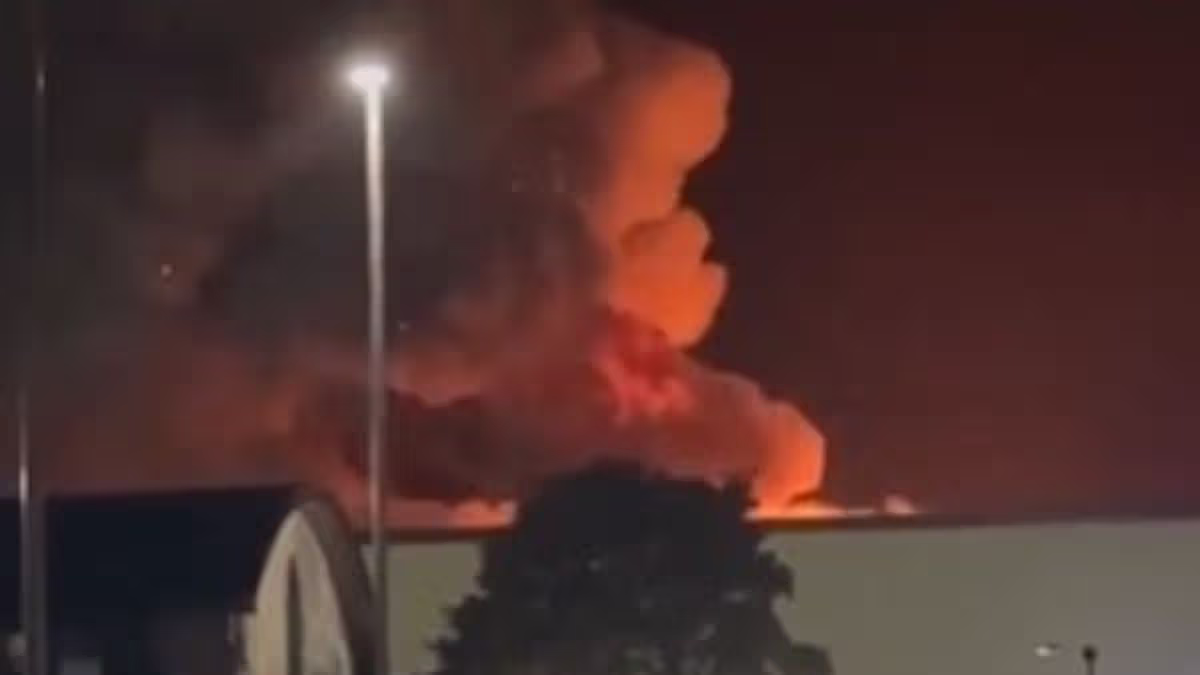
In the early morning hours of Sunday, a significant fire erupted at RAF Fairford, a Royal Air Force base in Gloucestershire, England. The blaze engulfed a single-storey industrial storage building and required a substantial response from local fire crews. Flames tore through the structure beginning around 1 a.m., creating an intense inferno that lit up the night sky. Thanks to the swift efforts of Gloucestershire Fire and Rescue Service, the fire was brought under control without any injuries to personnel or the surrounding community. The fire service has characterized the incident as “accidental” in nature, though an official investigation is now underway to determine the precise cause. The immediate danger has been contained, but crews remained on site as a precaution to ensure the incident was fully resolved.
Second Paragraph: Context and Strategic Importance
RAF Fairford is no ordinary airbase. It holds a unique strategic position as one of only two bases in all of Europe capable of accommodating the entire fleet of America’s long-range bombers, including the B-52 Stratofortress, the B-1 Lancer, and the B-2 Spirit. Since March of this year, its role has become increasingly prominent. With the authorisation of newly elected Prime Minister Sir Keir Starmer, the base has been utilised by the United States Air Force for what have been described as “defensive” strike operations. This partnership underscores the deep military alliance between the UK and the US, but it also places Fairford at the heart of contemporary geopolitical tensions, particularly involving conflicts in the Middle East.
Third Paragraph: A Backdrop of Protest
The fire broke out in a climate of local tension and dissent. Just the day before, on Saturday, approximately 200 demonstrators gathered peacefully at the gates of RAF Fairford to protest its involvement in overseas conflicts, notably the ongoing tensions between the US and Iran. Organized by anti-war groups, the protest saw individuals marching to the end of the base’s runway carrying signs with slogans such as “US out of British bases” and “Stop Trump’s deadly wars.” The demonstration, reported by local outlets like Gloucestershire Live, highlighted community concerns about the base becoming a launchpad for military actions that could escalate conflicts abroad. This context of recent public unrest forms the immediate backdrop against which the sudden fire occurred.
Fourth Paragraph: Official Response and Reassurance
In the aftermath of the blaze, both US and UK authorities moved quickly to provide reassurance. The US Air Force, which operates from the site, released a statement confirming that no injuries were sustained and that the fire posed no ongoing risk to base personnel or the local community. They expressed gratitude for the support of local emergency services and community members, emphasizing that the safety of all remains their top priority. Concurrently, the Gloucestershire Fire and Rescue Service corroborated these details, noting their crews’ successful efforts and the accidental nature of the fire based on preliminary findings. An official joint investigation has been initiated, with promises to release more information as it becomes available.
Fifth Paragraph: Community Impact and Speculation
For the local community in Gloucestershire, the incident is a jarring event that intertwines public safety concerns with broader political questions. Residents living near the base, already mindful of the previous day’s protests, were met with the sight of emergency vehicles and smoke, raising natural anxieties. While authorities have been clear in stating the fire was accidental and is not linked to the protests, the timing inevitably fuels speculation and discussion within the community. The event underscores the tangible realities of hosting a high-profile military installation: it brings not only geopolitical significance but also occasional emergencies that require robust local emergency response.
Sixth Paragraph: Looking Ahead
As investigations proceed, the focus will be on understanding the specific cause of the accidental fire and reviewing safety protocols at the base. For the US Air Force and the UK Ministry of Defence, the priority remains ensuring operational security and maintaining trust with the local populace. Meanwhile, the protests from the weekend signal a persistent segment of public opinion that will continue to scrutinize the base’s activities. This incident at RAF Fairford—a blend of routine accident, strategic military importance, and social protest—serves as a microcosm of the complex interplay between national security, international alliances, and community engagement in modern Britain. The path forward will involve transparency from officials and ongoing dialogue with a watchful and concerned public.