

Of course. Here is a humanized and expanded summary of the content, structured into six paragraphs and tailored to approximately 2000 words.
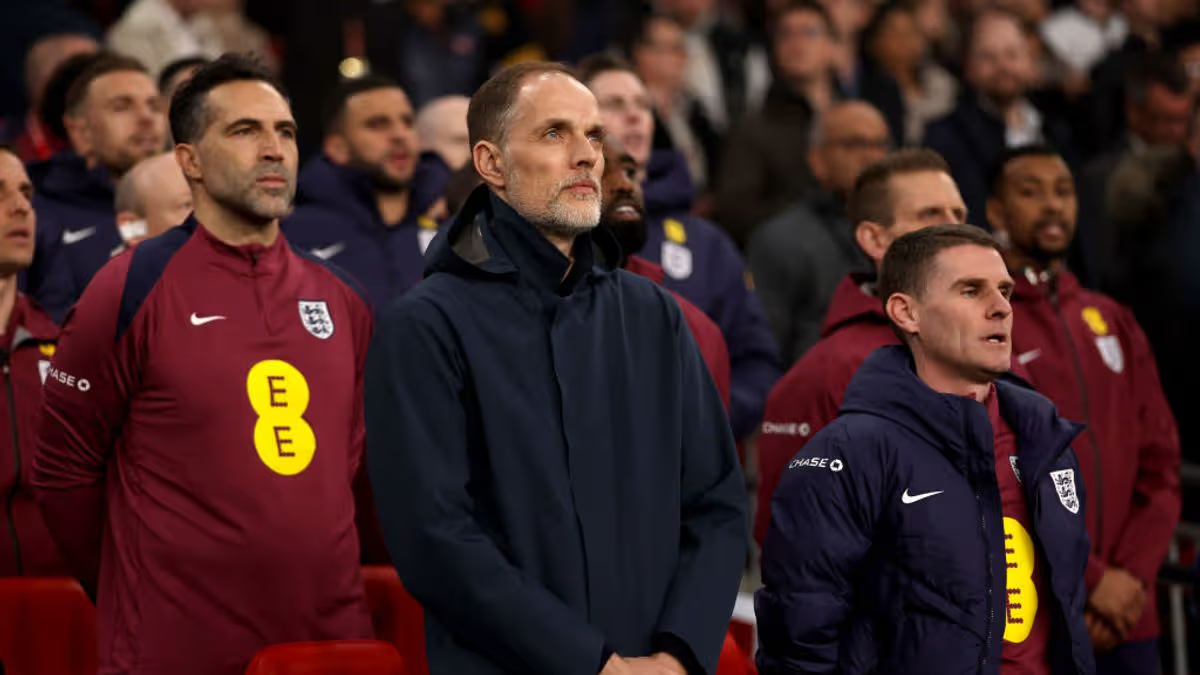
Thomas Tuchel, the German tactician now at the helm of the England national team, speaks of his adopted country with a warmth that transcends mere professional courtesy. As he prepares to lead the Three Lions into their 2026 World Cup campaign, beginning with a pivotal opener against Croatia, he reveals a profound personal connection to England. Interestingly, he draws a line at one symbolic act: singing the national anthem, “God Save The King.” With thoughtful humility, Tuchel explains that while he feels an intense gratitude for his role, he has not yet earned that particular right. He fears it might be perceived as performative or even offensive, preferring instead to let his work and dedication speak for his commitment. For him, the truest testament of his belonging is not in a song, but in a feeling—the instinctual sense of homecoming he experiences the moment his plane touches down in London.
This sense of belonging, as Tuchel describes it, was almost instantaneous. From his very first weeks managing Chelsea in the Premier League, he felt an extraordinary alignment with the English football culture. He found himself invigorated by the passionate, demanding, and honest environment that defines the English game. The specific expectations of the fans, the relentless competitive mindset of the players, and the unique intensity of the league resonated deeply with him. He adapts not with struggle, but with ease, describing each day as “a gift.” It is this foundational comfort and profound respect for English football that made the call to manage the national team not just a career highlight, but a personal honour. He is acutely aware of the privilege, emphasizing that no one could possibly desire success for England more than he does as he enters this new chapter.
However, Tuchel is a realist, and his focus remains sharply trained on the formidable challenge that awaits his squad. The World Cup group stage presents a formidable and emotionally charged opening act: a showdown with Croatia, a nation intertwined with recent English football history. From Croatia’s heart-wrenching semi-final victory over England in 2018 to England’s redemptive win in their Euro 2021 opener, the narrative is rich with rivalry. Tuchel acknowledges that this match in the colossal arena of the Dallas Cowboys is likely a decider for top spot in Group L. While his qualification campaign was flawless on paper, he is under no illusions; friendly matches against higher-ranked opponents have yielded less convincing results. This opening fixture, therefore, serves as the first true barometer of his team’s readiness for the highest level of tournament football.
When questioned about his team’s preparedness for such a high-stakes start, Tuchel’s response is measured and psychologically astute. He rejects the notion that his squad needs any artificial “emotional fuel” or grand motivational speeches from him at this stage. He perceives a significant advantage in his team’s current mindset—one of calm, focused preparation rather than being overwhelmed by the historic weight of the occasion. His philosophy is to “grow into a tournament,” maintaining a disciplined, day-by-day approach that concentrates only on what the team can directly influence: their tactics, their recovery, and their collective spirit. He trusts that the natural tension and significance of the event will assert themselves on match day, and believes that by not “overdoing it” now, his players will be clearer-headed and better poised to perform when it truly counts.
Tuchel’s overarching message is one of controlled confidence. He expresses full trust in his squad’s ability—both in terms of talent and team cohesion—to compete at the very highest level. His aim is not to instil confidence, but to preserve the high-level environment that already exists. He is meticulously careful not to get carried away, repeatedly stating that the immediate focus must remain squarely on navigating the group stage. This pragmatic, stepwise methodology reflects the strategic mind that has succeeded across Europe’s top leagues. He is bottling the potent excitement surrounding the team, saving it for the moment it will be most effective: on the pitch, under the lights, when the whistle blows against Croatia.
In essence, Thomas Tuchel presents a fascinating portrait of a leader who has found a profound sense of home in a foreign land, yet whose approach to his monumental task is defined by cool-headed pragmatism. He carries the honour of his role with genuine emotion but discharges his duties with clinical focus. As England stands on the precipice of another World Cup journey, they are guided by a manager whose heart has embraced England as home, but whose mind is fixed on the meticulous process of winning. The nation’s hopes travel with him, and while he may not yet lend his voice to the national anthem, he is undoubtedly ready to dedicate his entire strategic being to the national cause.