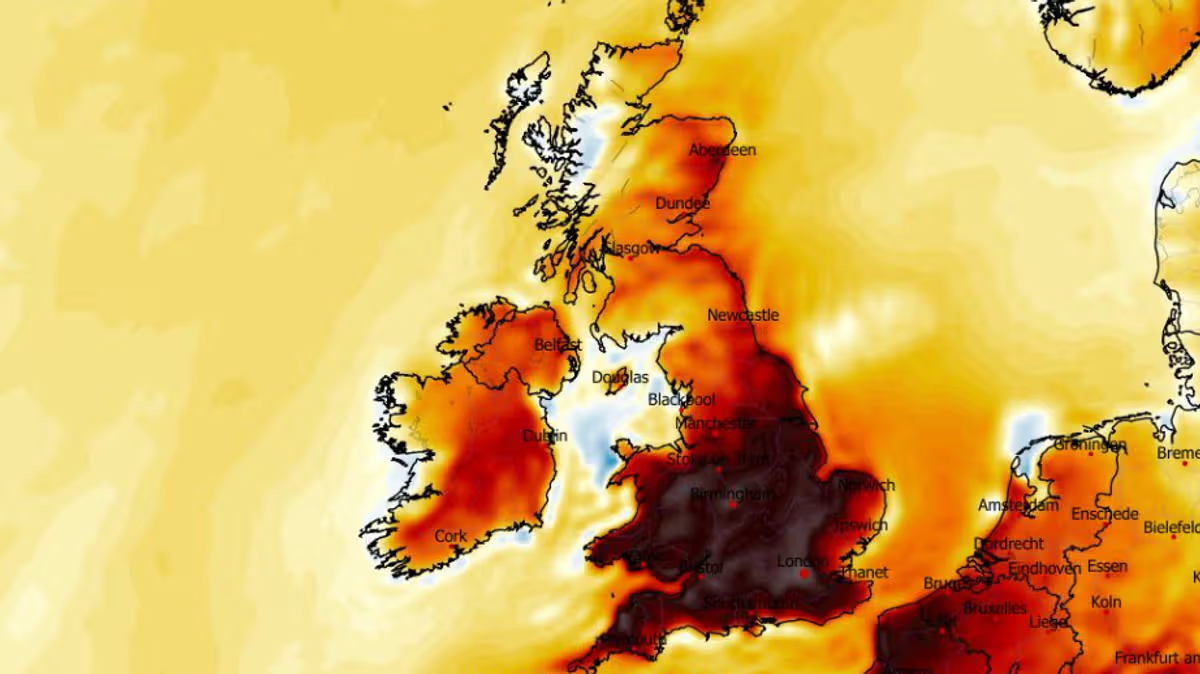




The coming Bank Holiday weekend in the UK is poised to be more than just a sunny spell; it is set to become a stark marker in the nation’s climatic history. The Met Office has forecast that temperatures could soar to 33°C on Monday, a figure that would officially break the long-standing May temperature record of 32.8°C, set all the way back in 1944. This prediction, issued by Met Office Deputy Chief Forecaster Steve Kocher, transforms a simple weather forecast into a significant historical event. It signals not just a day of exceptional heat for late spring, but a tangible crossing of a threshold that has held firm for nearly eight decades, inviting both public enjoyment and scientific reflection on our changing environment.
This anticipated record is not an isolated fluke, but part of a clear and accelerating pattern underscored by rigorous scientific research. Last summer, Met Office scientists published a pivotal study that examined the increasing likelihood of such extreme temperature events in the context of a warming planet. Their findings were unequivocal: the chances of surpassing that 1944 May record have grown substantially as the global climate has been altered by human activity. The study provided a sobering statistical translation of this change, moving the event from the realm of the rare into the domain of the expected.
Specifically, the research concluded that breaking the 32.8°C barrier is now approximately three times more likely in our current, human-influenced climate than it would have been in a natural climate unaffected by greenhouse gas emissions. To put this in more relatable terms, what was once considered roughly a 1-in-100-year event has been recalibrated to a 1-in-33-year event. This shift represents a profound change in the fundamental odds, compressing the timeframe in which we can expect such extremes and reshaping our understanding of what constitutes “normal” or “exceptional” weather for the month of May.
The human impact of this forecast is multifaceted. On one hand, for many, the prospect of glorious, record-breaking sunshine over a long weekend is a gift—an invitation to beaches, parks, and barbecues, injecting a vibrant, summer-like energy into the tail end of spring. It promises a boost for tourism and outdoor hospitality, creating a collective mood of warmth and relaxation. However, this human experience is tinged with significant concerns. Such an abrupt and intense heatwave in May, before many have acclimatised to warmer weather, poses serious health risks, particularly for the elderly, the very young, and those with underlying health conditions. It also places sudden strain on infrastructure and water resources, highlighting societal vulnerabilities to climatic extremes.
Therefore, while we may enjoy the sunshine, this event serves as a powerful, real-time case study in climate change attribution. It moves the concept from abstract global models and future projections into the immediate, felt reality of a UK Bank Holiday. The Met Office forecast, coupled with their own prior research, creates a direct line of understanding: the heat we are about to experience is not merely a product of natural variability, but is significantly amplified by the broader context of a warming world. The record, if broken, will be a data point with a footnote explaining its enhanced probability.
In conclusion, the expected surpassing of the May temperature record this weekend is a moment that encapsulates our current epoch. It is a blend of simple pleasure and complex warning—a chance to enjoy the sun while simultaneously recognizing it as a symbol of a shifting climate baseline. As we mark this potential new record, it is a reminder that the extremes of our past are becoming the more frequent realities of our present, urging both adaptation in how we live and renewed commitment to mitigating the forces driving this change. The weather this Bank Holiday is thus more than just a forecast; it is a conversation between our present enjoyment and our future resilience.