


As the United Kingdom grapples with a persistent cost of living crisis, a significant number of its remote professionals are looking beyond their borders for solutions. Seeking not just financial relief but a transformative life experience, thousands are embracing a version of the digital nomad lifestyle, often characterised by a slower, more deliberate pace known as “slomadism.” This trend involves longer stays in single locations, prioritising deep cultural immersion and a sustainable work-life balance over constant travel. Driven by a desire for better weather, lower expenses, and more supportive infrastructure, an estimated 165,000 UK workers have already relocated abroad. Their destinations are carefully chosen, favouring countries that offer clear visa pathways, enticing tax policies, and established communities of like-minded individuals.
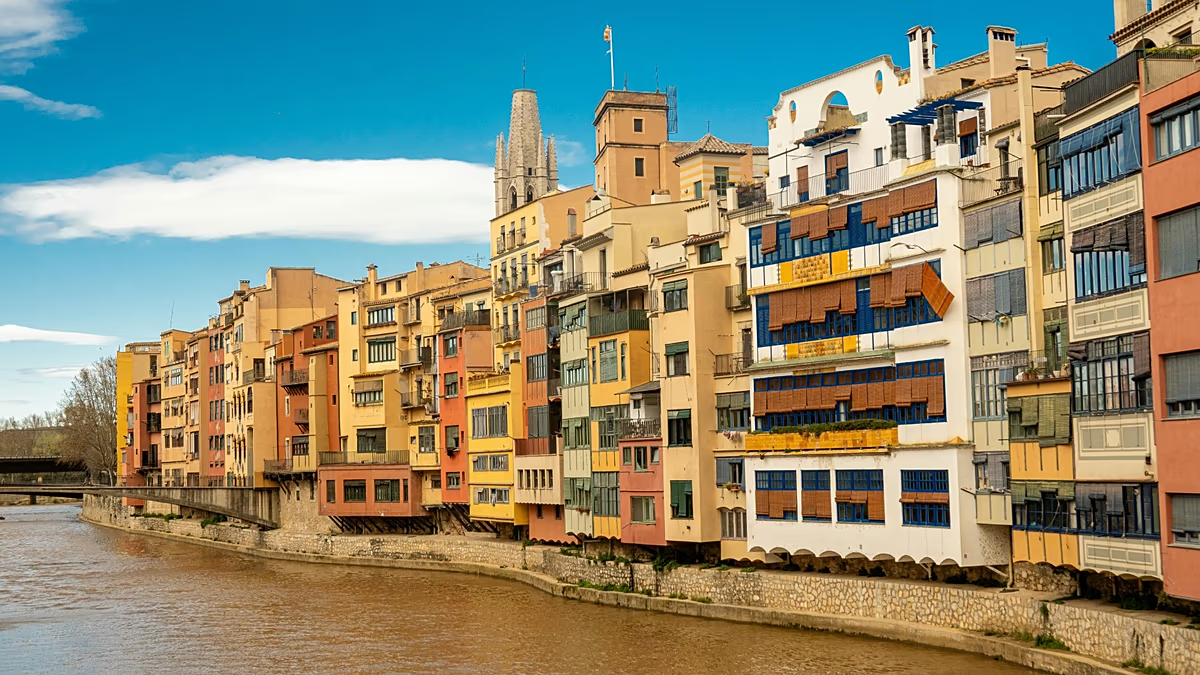
Spain emerges as the foremost choice for these UK nationals, combining robust practical offerings with an irresistible lifestyle. Its high-speed internet, among the world’s fastest, provides the essential backbone for remote work. The specialised Digital Nomad Visa, often obtainable within the country, grants legal residency, often includes family members, and accesses a favourable non-resident income tax regime, requiring a minimum monthly income of €2,700. Beyond the bureaucracy, the allure is profound: over 300 days of sunshine starkly contrasts with the UK’s grey skies, while living costs are 20-40% lower. Cities like Barcelona, Madrid, and Valencia boast coworking spaces and cafes tailored for remote professionals, alongside vibrant networking events and expat communities. The Spanish promise extends outside the office, offering an active life defined by tapas culture, rich history, and access to beaches, mountains, and national parks.
Portugal presents a similarly compelling case, with its own Digital Nomad Visa (D8) requiring proof of €3,480 monthly income. It mirrors Spain’s advantages—high-speed internet, costs roughly 30-40% lower than the UK, and superb year-round safety and climate—while often being more affordable than other Western European hubs. Lisbon stands out for its vast network of British expats, English-friendly services, and a vibrant startup community that fosters professional connections. Despite challenges like a housing crisis and some local resentment, Portugal’s appeal remains strong. Regions like the Algarve offer relative affordability alongside stunning natural beauty, golf, hiking, and water sports. The promise of over 300 sunny days annually enables a seamless transition from work to beach, embodying the improved work-life balance so many seek.
Croatia attracts with its Mediterranean charm and a uniquely advantageous visa policy. Its Digital Nomad Visa permits non-EU citizens to live and work for up to a year without paying local income tax, though it maintains an income requirement of approximately €3,295 per month. The country is notably pocket-friendly, with a cost of living about 30% lower than the UK, a figure that decreases further inland away from tourist hotspots. Croatia offers exceptional safety, reliable internet, widespread English proficiency, and, crucially, another generous quota of over 300 sunny days annually. Cities such as Dubrovnik, Split, and Zagreb are developing their expat and coworking infrastructures. For the adventurous nomad, Croatia provides a wealth of exploration, from historic coastal towns to 13 national parks and over a thousand islands, blending work with profound cultural and natural discovery.
For those prioritising cutting-edge digital infrastructure, Estonia is a rising star. It offers a remarkably efficient, low-red-tape environment where nearly all government services—from banking to voting—are online 24/7. Digital nomads benefit from a relatively low income tax rate, projected at 22% from 2026, and a cost of living around 30.5% lower than the UK. Its pioneering e-Residency programme is a major draw, allowing entrepreneurs to register and manage an EU-based company remotely in minutes. The capital, Tallinn, supports this with a growing tech scene, high English proficiency, and excellent coworking spaces. Yet Estonia also provides a counterbalance to digital life; it is a walkable city with easy access to serene, expansive nature—bogs, vast forests, and the coast—offering ample opportunity for digital detox and mental rebalancing.
The collective migration of UK remote workers to these destinations underscores a fundamental shift in how people conceptualise work and life. It is not merely an escape from high costs or bad weather, but a proactive choice for a more integrated, fulfilling existence. These professionals are leveraging global mobility to trade financial pressure for geographical freedom, swapping routine for exploration, and replacing isolation with community. They are finding that countries like Spain, Portugal, Croatia, and Estonia are not just providing visas and wifi, but are facilitating a holistic recalibration of priorities. In doing so, the “slomad” trend from the UK reflects a deeper yearning: for a life where work supports living, not the other way around, and where one’s environment actively contributes to both professional productivity and personal well-being.