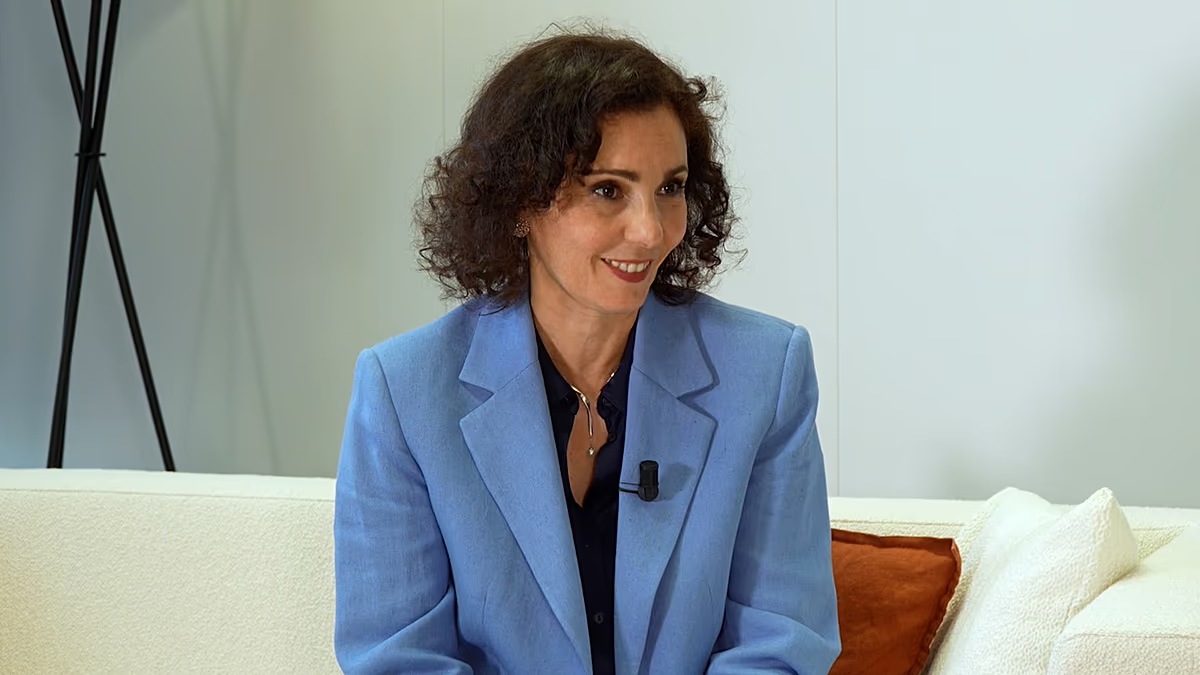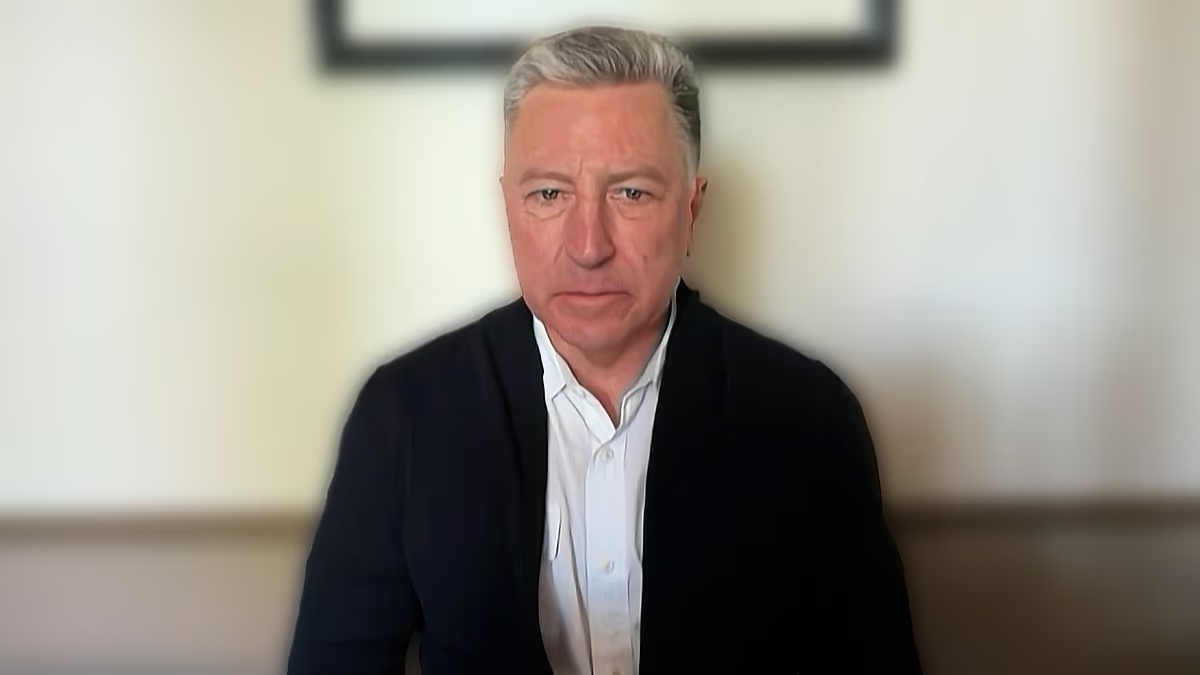



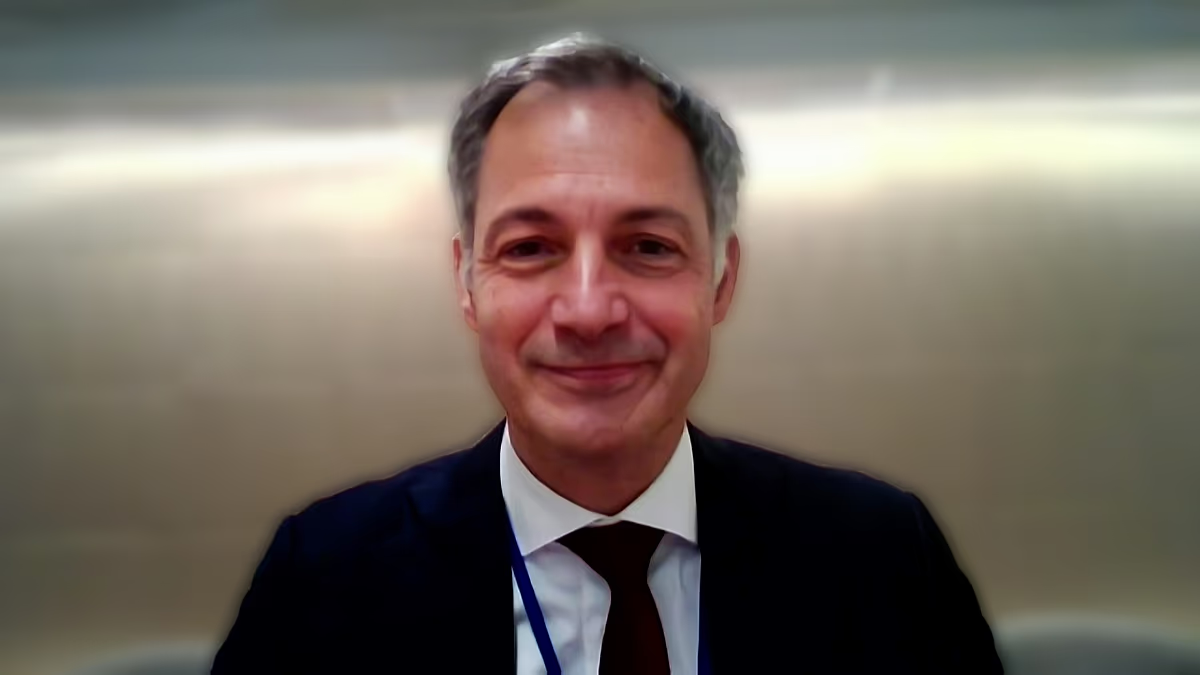
The unresolved conflict in the Middle East carries profound and far-reaching consequences that extend well beyond the immediate theater of war. According to Alexander De Croo, Administrator of the United Nations Development Programme, even a cessation of hostilities today would not prevent severe ripple effects that risk breeding future instability. In an interview with Euronews, De Croo, the former Belgian Prime Minister, emphasized that the first critical step must be to stop the war and normalize crucial shipping lanes, such as the Strait of Hormuz. Without this fundamental de-escalation, the economic foundations of entire regions continue to erode, setting the stage for a cyclical downfall. His central warning is stark: the conflict is not merely a regional crisis but a global catalyst for poverty and subsequent unrest.
The economic toll is already devastating and poised to worsen. A recent UNDP report highlights that the ongoing military escalation could plunge over 30 million people worldwide into poverty. De Croo stressed that this is not a hypothetical forecast but a present-day emergency requiring immediate macroeconomic interventions from international financial institutions. He advocated for targeted, time-limited measures such as direct cash assistance to affected populations and free access to essential resources like fuel and cooking gas. The rationale is clear: without these deliberate supports, economies will collapse in a structural way, reversing decades of hard-won development progress. He poignantly noted that “war is development in reverse,” observing that lifting people from poverty takes decades, but pushing them back can take mere weeks.
The repercussions are geographically vast, striking nations far from the conflict zone. While the impacts are concentrated in directly affected countries and those reliant on imported energy, the UNDP report evidences significant longer-term harm to poorer, non-involved states. De Croo illustrated this by citing Sub-Saharan Africa and small island states in the Pacific, where fuel shortages are becoming catastrophic. This global spillover proves that the blockade and war disrupt foundational supply chains, crippling vulnerable economies that lack resilience. The resulting poverty and food insecurity are not just humanitarian tragedies; they are potential seeds for additional conflicts, displacement, and extremist movements. Thus, the current conflict threatens to ignite a chain reaction of future crises across the globe.
Amid this bleak landscape, there are flickers of diplomatic activity. Euronews interviewed De Croo as rumors circulated of renewed talks between the United States and Iran, with President Donald Trump suggesting a potential deal could be negotiated in Islamabad. When asked if he was confident in a diplomatic solution, De Croo responded cautiously, stating he had “no crystal ball” but remained hopeful. Simultaneously, a ten-day ceasefire between Israel and Lebanon took effect, offering a fragile window for potential negotiations on a more permanent security agreement. De Croo described this ceasefire as “very necessary,” given the immense human and material cost already endured, particularly in Lebanon where 1.2 million people have been displaced.
However, hope is tempered by harsh realities on the ground. De Croo expressed a critical concern that the ceasefire must live up to its name and not become merely a “diminishment of fire,” as has been witnessed in Gaza. Reports from groups like Médecins Sans Frontières confirm that Israeli forces continue attacks and are expanding military control within the Strip. This underscores a painful truth: ceasefires are often unstable and incomplete. Furthermore, De Croo lamented the destruction of international investments in Lebanon—hospitals, schools, and infrastructure built with global community support and taxpayer money—now obliterated by military action. This destruction represents not only a loss of life and property but a colossal waste of collective efforts toward stabilization and development.
In conclusion, the interview with Alexander De Croo presents a sobering, panoramic view of the conflict’s implications. It is a crisis that, regardless of its eventual conclusion, has already unleashed forces of economic devastation and human suffering that will reverberate for years. The path forward requires not only an authentic end to fighting but a robust, coordinated international effort to implement economic safeguards and rebuild shattered societies. Without such comprehensive action, the war’s legacy will be a world made more impoverished, more insecure, and more prone to the very violence it seeks to end. The ultimate message is a plea for holistic peace—one that addresses both the immediate violence and its deep-rooted, global aftershocks.