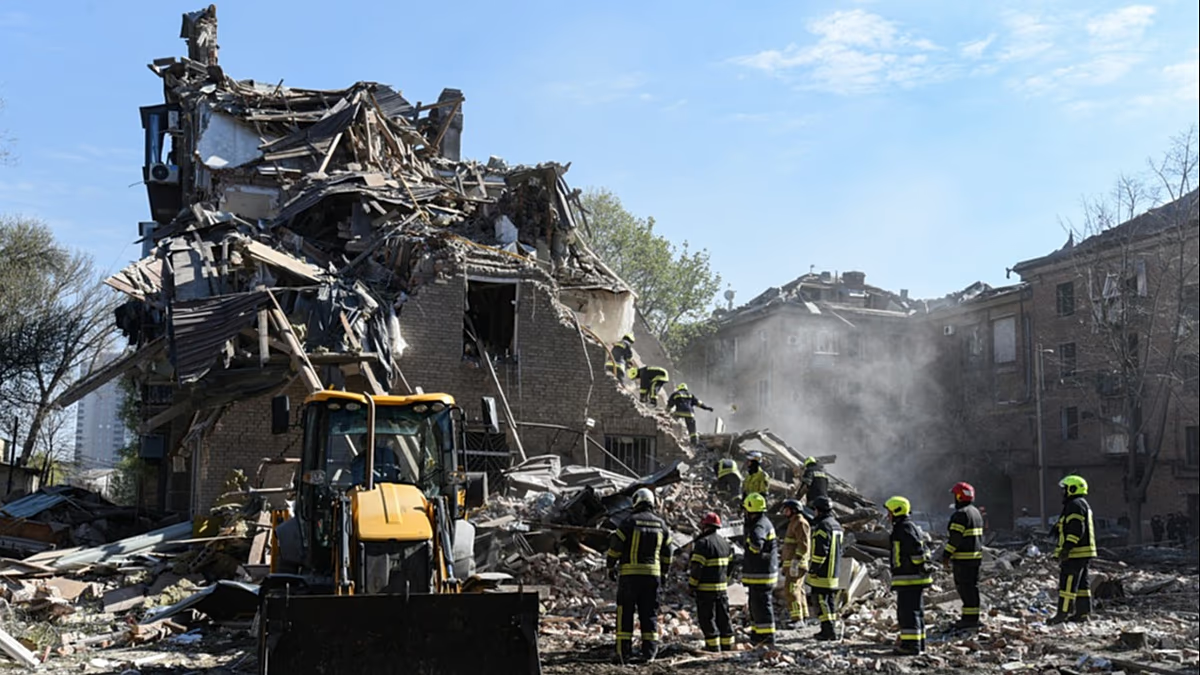




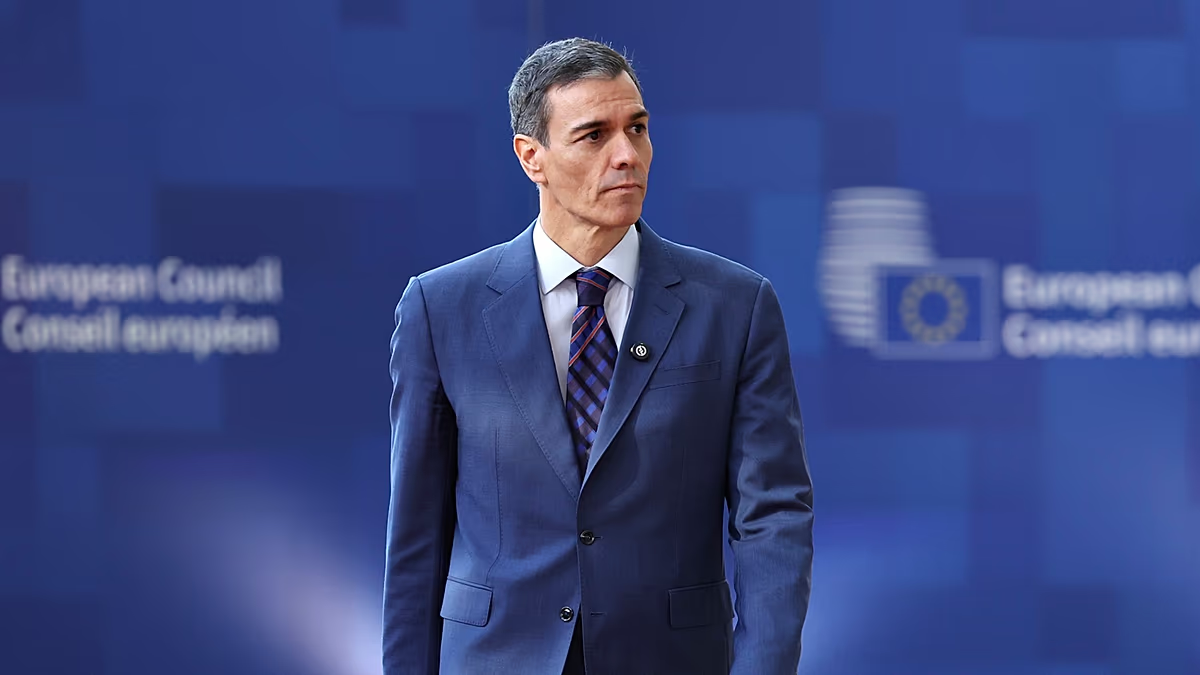
The stinging critique delivered by Spanish Prime Minister Pedro Sánchez at a recent EU summit in Cyprus cuts to the heart of a profound moral and strategic dilemma facing Europe. In his view, the European Union’s inability to sanction Israel for its military actions in Gaza and, now, its strikes in Lebanon, is eroding the bloc’s foundational credibility. Sánchez argues that this inconsistency creates a “double standard” that not only diminishes the EU’s standing in the eyes of the world, but also undermines its legitimacy within the consciences of its own citizens. How can Europe, he posits, remain united and principled in defending Ukraine against Russia’s blatant violation of territorial integrity and international law, while failing to apply the same standards of accountability and humanitarian concern in the Middle East? This perceived hypocrisy, he warns, weakens the very moral authority upon which Europe’s support for “fair causes” like Ukraine’s depends.
Sánchez’s warning is not merely rhetorical; it stems from a concrete and frustrated political effort. His government recently renewed a push to suspend the EU-Israel Association Agreement—a treaty that binds both parties to respect human rights—citing an internal EU review that found Israel in breach of these obligations during its war in Gaza. However, this move was met with broad opposition from other member states. Key nations like Germany and Italy, whose support is crucial for achieving the necessary qualified majority, remain hesitant, leaving Spain’s initiative stalled. The Prime Minister’s case is that this internal disunity on the Middle East has direct consequences: it paralyses the EU, leaving it unable to act as a coherent force for international law, and thereby cheapens its vigorous rhetoric and actions elsewhere. For Sánchez, the EU was conceived as a “peace project”; its silence or inaction in one theatre of conflict compromises its voice in all others.
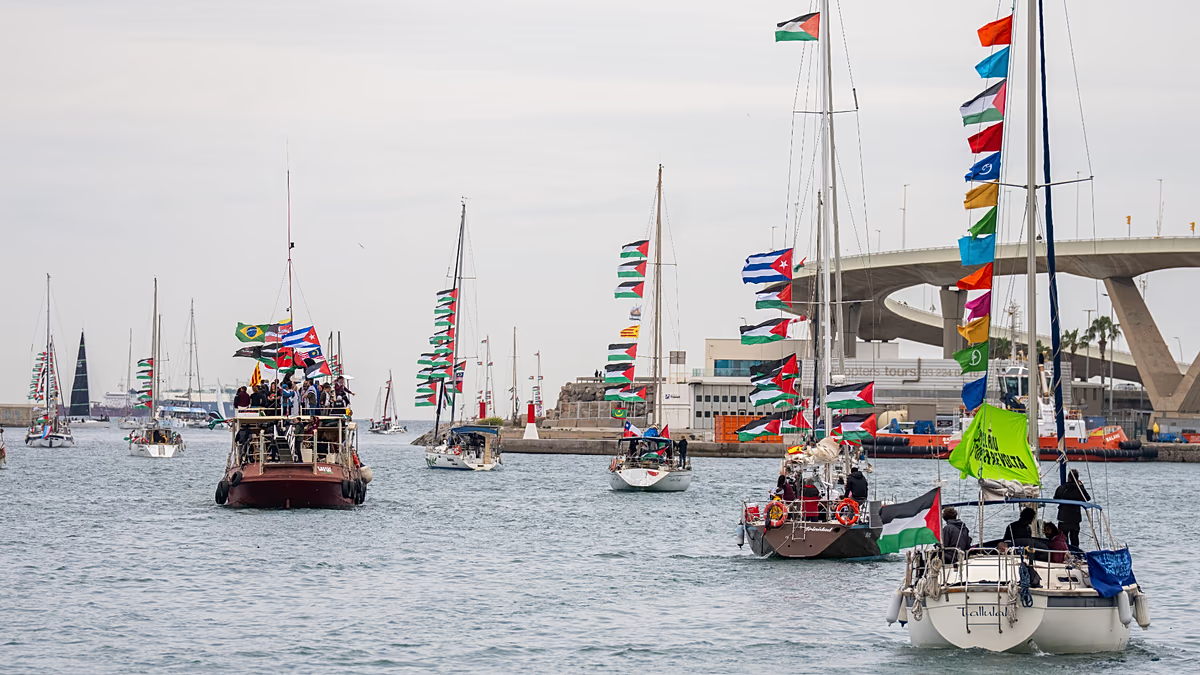
The context of this debate has tragically expanded. While the EU’s review originally focused on the devastating humanitarian crisis in Gaza, the recent Israeli strikes in Lebanon have brought a new urgency to Sánchez’s argument. He explicitly links the situations, stating that the failure to act consistently “in Lebanon, Palestine, Gaza and the West Bank” contradicts the unity shown over Ukraine. This inconsistency, he suggests, surrenders the global order to “the law of the strongest,” a principle he also condemns in the U.S. and Israeli strikes on Iran, which he has denounced as “illegal.” The price for this retreat from principled multilateralism, he starkly notes, is paid in human lives, in forced displacement, and in the economic instability that spills over to affect all nations. For Sánchez, foreign policy choices are not abstract; they have direct, tragic, and tangible human costs.
Israel, of course, contests this framework entirely. It argues that its military actions in Gaza and Lebanon are necessary defensive operations aimed at eliminating the threats posed by Hamas and Hezbollah, groups it identifies as Iranian proxies. This narrative of self-defense and counter-terrorism creates a fundamental interpretive clash with the EU’s human rights-based legal framework. Furthermore, the geopolitical landscape is in flux. A fragile ceasefire between Israel and Hezbollah, recently extended, introduces a complex variable. Other European leaders, like French President Emmanuel Macron, also attending the Cyprus summit, focused pragmatically on safeguarding Lebanon’s “peace, stability and sovereignty.” European officials fear a wider conflict in Lebanon could unravel the state’s fragile political balance, disrupt efforts to manage Hezbollah, and trigger a new wave of displacement and migration toward Europe—a concrete security concern for the bloc.
Thus, Sánchez’s criticism illuminates a deep fissure within the EU. It is a clash between a vision of the Union as a normative power, whose authority derives from unwavering adherence to universal principles of law and human rights, and a more pragmatic, geopolitically cautious approach that weighs complex regional alliances, immediate security threats, and internal political divergences. The Spanish position champions the former: credibility is indivisible and must be maintained across all contexts to be real. The reluctance of other major states reflects the latter: contexts differ, interests vary, and unified action on globally contentious issues is often elusive. This divide leaves the EU in a precarious position—potentially appearing morally compromised in the Global South and internally divided to its own populace, even as it seeks to present a steadfast face against Russian aggression in Europe.
Ultimately, Pedro Sánchez’s words serve as a poignant alarm bell for the European project. He questions whether the EU can sustain its role as a global defender of a rules-based order if it selectively applies the rules. His argument suggests that credibility is a currency that can be spent in one region but devalued in another; that legitimacy is not compartmentalized. Whether his fellow leaders heed this warning or continue to navigate the Middle East’s complexities with cautious divergence remains to be seen. But the Prime Minister has starkly framed the consequence: a weaker, more insecure, and uncertain world not just for those directly under bombardment, but for the European Union itself, whose foundational identity as a peace project is now facing a severe test of its own coherence and conscience.