



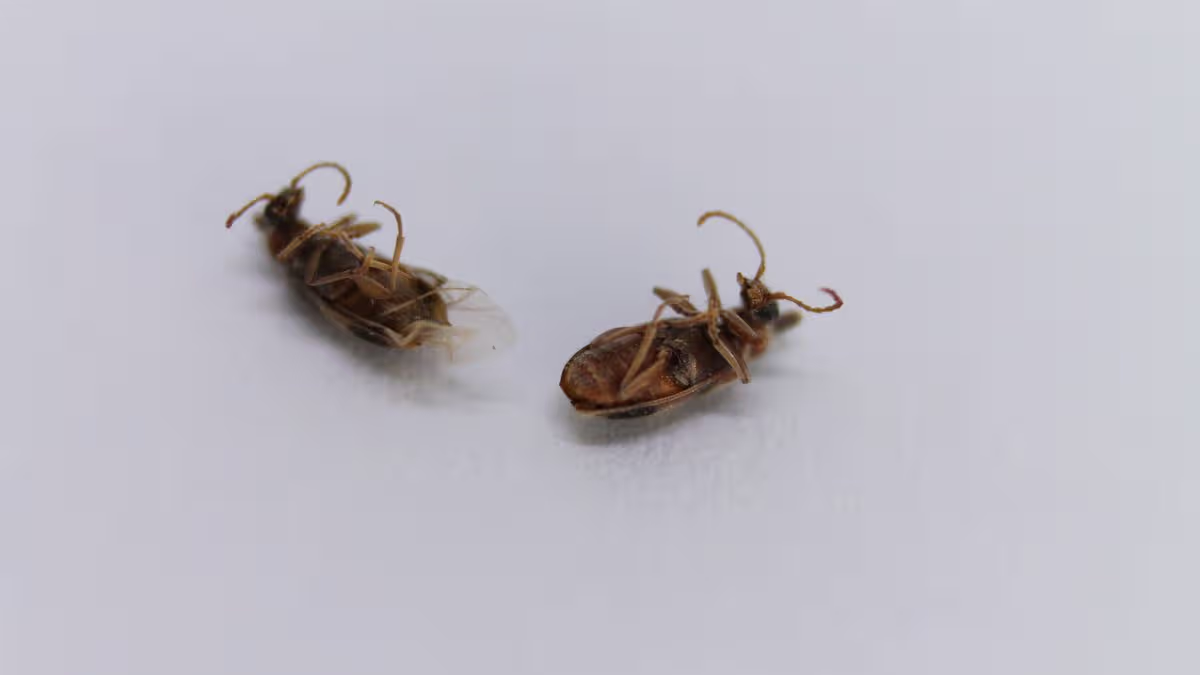
Of all the pests that might invade our homes, bed bugs possess a uniquely unsettling reputation. They are not merely a nuisance; they represent a profound violation of our most private sanctuary: the bedroom. It is a common and dangerous misconception that these pests are attracted to filth or poor hygiene. In reality, bed bugs are equal-opportunity invaders, appearing in the cleanest hotels, the most fastidious homes, and the tidiest of beds. They are not drawn by clutter or dirt, but by something far more basic: us. They seek a warm, sleeping host to provide their necessary meal of human blood. This fundamental truth means that anyone, anywhere, can become a target, turning the universal human need for rest into a potential source of anxiety.
Their success as invaders is rooted in their masterful evasion. Most people expect to see them crawling openly across a mattress, but bed bugs are secretive experts. Their flat, wingless bodies allow them to compress into spaces as thin as a credit card, hiding in the seams of mattresses, the joints of bed frames, the folds of upholstery, and even behind wallpaper. Their activity is strategically timed to human sleep cycles, typically emerging to feed between 2am and 5am, when we are least likely to stir. A feeding session lasts only two to five minutes before the insect retreats to its hidden refuge, leaving behind little immediate evidence of its raid. This stealth makes them extraordinarily difficult to detect in the early stages of an infestation, allowing their numbers to grow unnoticed.
Because visual detection is so challenging, learning to recognize their secondary signs is crucial. One of the most distinctive, yet often overlooked, indicators is a peculiar odor. As explained by pest control expert Norman Smith, when bed bugs gather in large numbers, they release pheromones that create a musty, sweet smell reminiscent of almonds or coriander. Many people encountering this scent mistakenly attribute it to dampness, mildew, or other household issues, failing to connect it to the hidden insect population. Beyond smell, the physical traces they leave are frequently misidentified. Small, dark brown or rust-coloured stains on bedding or mattresses are often mistaken for general dirt or accidental marks. In fact, these are bed bug excrement. Furthermore, small blood spots on sheets may appear; these are usually not from the bite itself, but from a bug being accidentally crushed if a person moves during sleep.
The bites themselves can also provide clues. While bed bug bites vary in individual reaction—some people show pronounced welts, while others have barely noticeable marks—their arrangement can be telling. Bed bugs often feed in a linear or clustered pattern, sometimes referred to as the “breakfast, lunch, and dinner” pattern. This occurs when a feeding bug is disturbed (by a sleeper’s movement, for example) and simply moves a short distance along the body to resume its meal. Finding bites in a straight line or tight cluster, particularly on areas exposed during sleep like arms, shoulders, and legs, can be a strong hint that bed bugs are the culprits, rather than mosquitoes or other insects.
Upon confirming or strongly suspecting an infestation, immediate and decisive action is paramount. Bed bugs reproduce with alarming speed; a single female can lay approximately 200 eggs in just five days. A minor problem can thus explode into a major infestation within weeks if not addressed. The first step is a meticulous inspection. Strip the bed completely and examine every seam, piping, and fold of the mattress. Scrutinize the bed frame, especially corners, joints, and any cracks. Remember their hiding prowess: check nearby furniture, curtain folds, and even electrical outlets. For any items that can be safely treated with heat, this is the most effective initial line of defence. The British Association of Dermatologists confirms that washing bedding and clothing at 60°C, followed by a hot tumble dry for at least 30 minutes, will kill bed bugs and their eggs.
Ultimately, while heat treatment of fabrics is a vital tool, a full infestation often requires professional intervention. DIY chemical sprays are frequently ineffective and can scatter bugs, making the problem worse. Professional pest controllers like Smith’s company, Invicta Environmental, use integrated methods, including targeted insecticides, steam treatments, and comprehensive follow-up. The battle against bed bugs is not just about killing insects; it is about restoring peace of mind. Their presence challenges our sense of security in our own homes. By understanding their behaviour—their indifference to cleanliness, their elusive nature, their tell-tale signs, and their rapid reproduction—we empower ourselves to act swiftly and effectively, reclaiming the comfort and safety of our personal sanctuaries.