


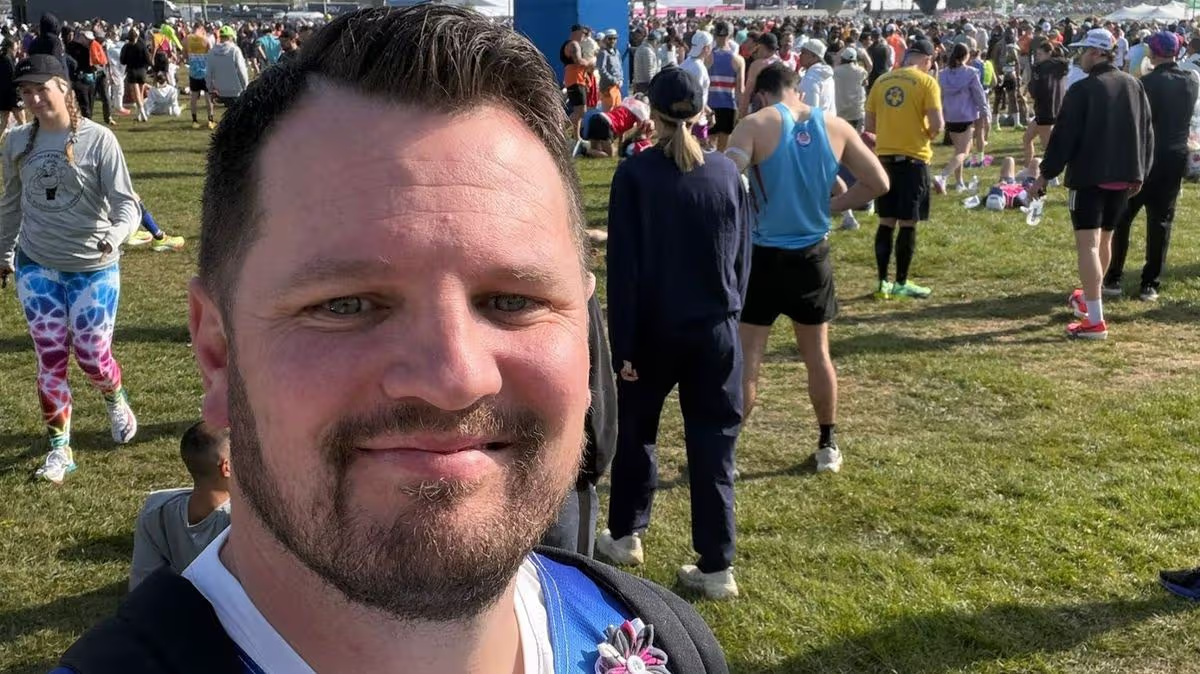
The London Marathon is an event synonymous with human triumph, a sprawling tapestry of personal stories where thousands of individuals push their limits for causes greater than themselves. Among them last weekend was Gareth Hopkins, a 43-year-old paramedic from Hoddesdon, running alongside his brother, Chris. Their mission was profoundly personal: to honor their grandmother, Tricia Petts, who had passed away in January after a six-year battle with Alzheimer’s and dementia. For Gareth, this was not merely a race; it was a testament to his grandmother’s memory and a physical embodiment of his own life’s work—two decades of service as a paramedic with the East of England Ambulance Service. He understood intimately how support could change a life, and he channeled that understanding into every step of his daunting training journey, a journey that began only months prior from a literal couch.
Gareth’s preparation for the marathon was a story of remarkable personal transformation. As he confessed to the BBC before the event, he had not exercised for five years. He was not a runner. Inspired by watching his brother complete the marathon the previous year, he embarked on a “Couch to 5K” program in late August, finding it incredibly tough. To go from that to 26.2 miles was, as he told The Comet, “daunting.” Yet, driven by memory and purpose, he persevered, losing a stone in weight and building the resilience needed for the iconic distance. His determination was absolute; he was resolved to finish “regardless.” This backdrop makes the subsequent events not just a medical emergency, but a heartbreaking interruption of a deeply human narrative of effort and dedication.
Tragedy, however, can strike with indiscriminate cruelty. In the final stretch of his extraordinary effort, just one mile from the triumphant finish line at mile 25, Gareth suffered a sudden cardiac arrest. The scene shifted instantly from one of collective celebration to one of individual crisis. The marathon’s backdrop—a course that raised a record £87.5 million for charity that day—became the setting for a desperate medical intervention. Gareth, a man who had dedicated his career to responding to such emergencies, was now the patient, fighting for his life. He was rushed to a London hospital where he remains critically ill in intensive care, his future uncertain.
The impact of this sudden devastation extends far beyond the hospital walls. It has profoundly shaken his wife, Jodie, their young children, his parents, and his brother Chris, who had just shared the marathon journey with him. In response to the overwhelming emotional and practical needs of the family, friends established a GoFundMe page. The page, set up by friend James Pearson, speaks to the core of Gareth’s life: “Gareth has dedicated the past 20 years to serving others… Throughout his career, he has always been committed to helping people in their time of need.” Now, the community seeks to reciprocate that care, aiming to ease the financial and practical pressures while Gareth receives treatment in London. The human response has been swift and generous, with over £22,300 donated to support the family in their hour of need.
This incident underscores a poignant and powerful duality. Gareth Hopkins is both a caregiver and a recipient, a trained professional in emergency medicine now facing the gravest personal emergency. His story collapses the distance between the helper and the helped, reminding us of our shared vulnerability. It also highlights the immense physical risks inherent in such demanding endurance events, even for those who embody health and service. His participation, motivated by familial love and a professional understanding of support, now necessitates that same support for his own family.
As Gareth continues to fight in the hospital, his story resonates as a profoundly human one. It is a narrative of service, of love for family, of personal challenge met with courage, and of the fragile line between triumph and tragedy. The collective hope now is for the man who spent 20 years changing lives with “a little support” to receive enough of that same support—in the form of medical expertise, community solidarity, and financial aid—to secure his own. The marathon’s finish line, once a symbol of a personal goal achieved in his grandmother’s name, now represents a far more fundamental hope: for Gareth to cross the threshold from critical illness back to life, and to his waiting family.