



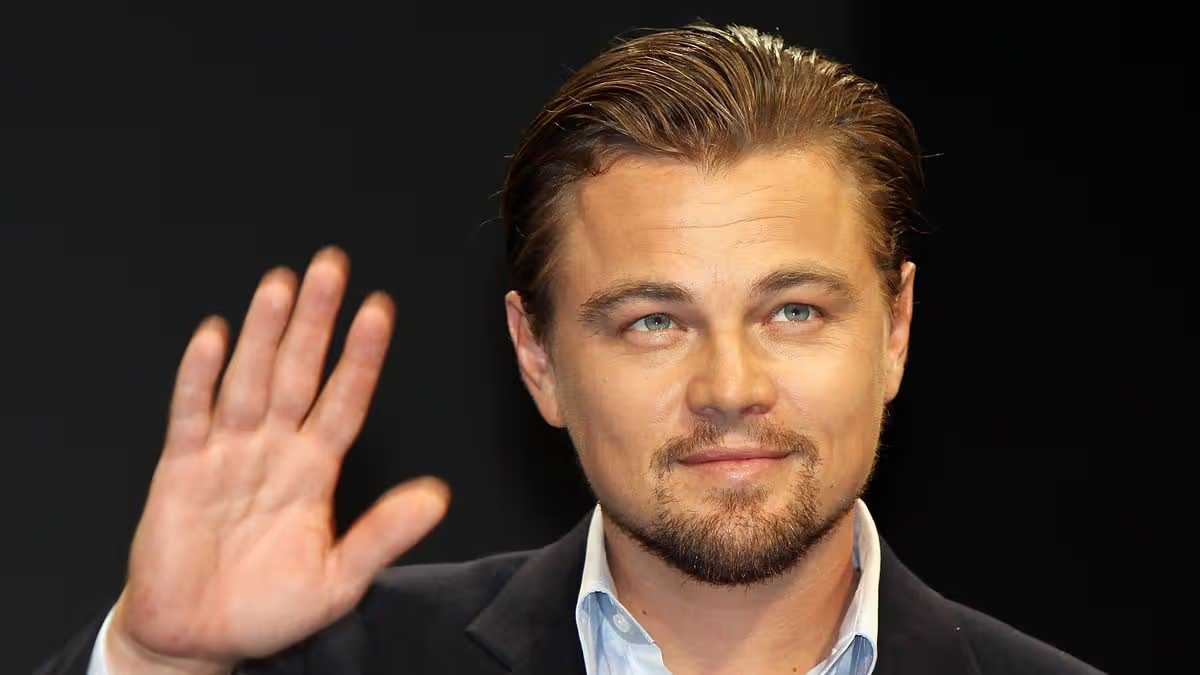
Of all the celebrated collaborations in modern cinema, the partnership between Martin Scorsese and Leonardo DiCaprio stands as one of the most prolific and enduring. Over the span of 24 years, they have crafted six films together, ranging from historical epics like Gangs of New York to frenetic biographies like The Wolf of Wall Street. Yet, nestled within their formidable catalogue is a particularly gripping and atmospheric gem: Shutter Island. This crime thriller, which will disappear from Amazon Prime Video after May 7, offers a masterful blend of psychological horror and detective noir, set against a backdrop of 1950s Boston and a remote, foreboding psychiatric institution.
The film immerses viewers immediately in its unsettling world. Leonardo DiCaprio stars as U.S. Marshal Teddy Daniels, a World War II veteran haunted by traumatic memories, who arrives with his new partner, Chuck Aule (Mark Ruffalo), at Ashecliffe Hospital. The facility is located on Shutter Island, an isolated and grim fortress in Boston Harbor, where the environment feels charged with menace from the outset. The detectives are tasked with investigating the disappearance of a patient, Rachel Solando, a woman who murdered her own three children and has now vanished without a trace from a locked room. As a hurricane approaches, cutting off any chance of escape or outside aid, the investigation takes on a desperate, claustrophobic urgency.
Within the imposing walls of Ashecliffe, Teddy and Chuck encounter a staff that is uniformly uncooperative and evasive, led by the cryptic Dr. Cawley (Ben Kingsley). The sense of a sinister conspiracy grows as the detectives peel back layers of institutional secrecy, encountering bizarre inconsistencies and unsettling patient behaviors. Simultaneously, Teddy is besieged by vivid, torturous visions. Flashbacks to the liberation of Dachau concentration camp merge with ghostly apparitions of his wife, Dolores (Michelle Williams), who died in a tragic house fire. These hallucinations blur the lines between his present mission and his past trauma, suggesting that the island itself is acting upon his fragile psyche.
Despite its pulpy, genre-driven premise, Shutter Island was a massive box office success and continues to hold a strong, if nuanced, critical reputation. On Rotten Tomatoes, it maintains a “fresh” rating with a 69% approval score from critics and an even higher 77% from audiences. The critical consensus acknowledges that while it may not rank among Scorsese’s most profound works, it represents “the director at his most unrestrained,” delivering “gleefully unapologetic genre thrills.” Reviews at the time captured this spirit: The New York Post called it “an exquisitely crafted potboiler,” while fans on IMDb often describe it as “masterful” and “one of the best movies I’ve ever seen,” praising its relentless atmosphere and tragic, impactful conclusion.
What makes Shutter Island a lasting and compelling entry in the Scorsese-DiCaprio partnership is its commitment to mood and psychological unraveling. It is a film that leans heavily into its creepy setting and period detail, using the 1950s aesthetic and Boston accents to ground its surreal events in a tangible reality. Scorsese’s direction ensures that every storm-swept cliff, every darkened corridor, and every cryptic exchange builds toward a devastating revelation about trauma, guilt, and identity. DiCaprio’s performance is central to this effect, as he embodies a man whose investigation is, ultimately, a journey into the deepest chambers of his own damaged mind.
For those who have yet to experience this particular collaboration, or who wish to revisit its haunting landscape, the opportunity is fleeting. Shutter Island remains available on Amazon Prime Video only until May 7. It stands as a distinctive work in the filmmakers’ shared history—less a straightforward crime drama than a deeply atmospheric and psychological exploration of memory and madness. In the pantheon of their joint projects, it is the eerie, storm-bound cousin to their more celebrated works, offering a potent reminder of Scorsese’s versatility and DiCaprio’s capacity to convey profound inner torment. To miss it would be to overlook a captivating, beautifully crafted detour into the shadows of the human psyche.