



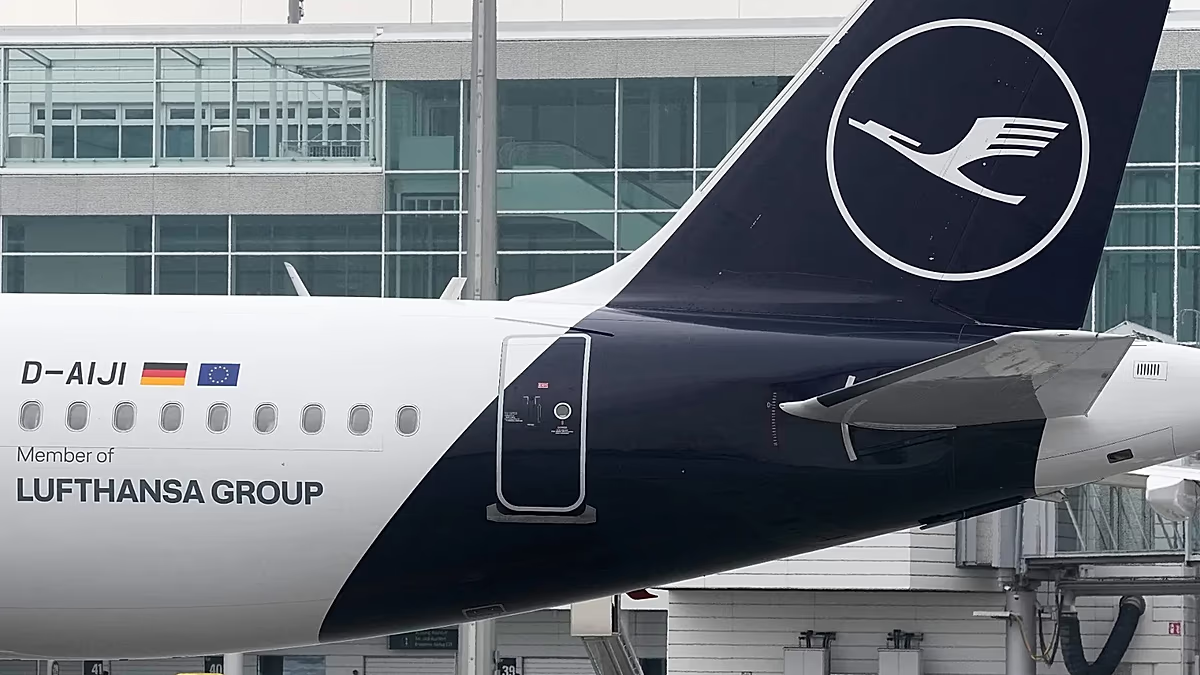
The European travel industry is currently navigating a period of significant turbulence, with skyrocketing jet fuel prices emerging as its most pressing concern. At the forefront of this challenge is the Lufthansa Group, which finds itself in a paradoxical position of achieving record financial performance while simultaneously battling a crisis that threatens its profitability. The airline’s latest reports reveal a stark reality: it is anticipating an additional €1.7 billion in fuel costs for 2026 alone. This staggering figure is not merely a line item on a balance sheet; it represents a fundamental pressure reshaping how airlines operate. The root causes are multifaceted, stemming from global oil market volatility and compounded by geopolitical tensions that have forced the closure of key airspaces, particularly over the Middle East. These longer, circuitous flight paths are not just inconvenient—they dramatically increase fuel consumption, crew hours, and aircraft maintenance needs, layering operational complexity onto a direct financial blow.
In response to this unsustainable cost environment, Lufthansa and carriers worldwide are being forced to make difficult, visible cuts. The data is telling: global airlines cancelled some 13,000 flights in May, and Lufthansa itself has taken the drastic step of axing 20,000 short-haul flights scheduled through October. This is a strategic retreat, a conscious reduction in capacity designed to conserve fuel. The logic is clear—during periods of peak fuel prices, operating older, less fuel-efficient aircraft on shorter routes becomes a money-losing endeavor. For travelers, this translates to fewer options, packed planes, and a direct plea from the airline to book holidays far in advance to avoid imminent surcharges. The immediate strategy is one of contraction and cost-control, a necessary move to stabilize operations in the face of a volatile market that Lufthansa’s CFO, Till Streichert, acknowledges will likely result in an annual profit lower than originally hoped.
Yet, this story of cutbacks and crisis exists alongside a narrative of remarkable recovery and resilience. Just last year, in 2025, the Lufthansa Group celebrated generating the highest revenue in its history, at €39.6 billion, with operating profit growing by an impressive 20%. The first quarter of 2026 even saw an 8% year-on-year revenue increase. This apparent contradiction highlights the complex duality of the modern aviation industry. Robust, pent-up demand for air travel remains undiminished, powering through geopolitical and economic headwinds. Furthermore, Lufthansa’s diversified business model has proven to be a vital buffer. Subsidiaries like Lufthansa Technik, with booming demand for maintenance and repair services, and Lufthansa Cargo have become crucial earnings pillars, helping to offset the pressures on the passenger airline side.
The path forward, as outlined by Lufthansa’s leadership, is a two-pronged approach: rigorous short-term management and confident long-term investment. In the near term, the company is examining “every lever available” to improve efficiency and reduce costs. This is the gritty, day-to-day work of navigating the crisis. However, the true strategic confidence is seen in the continued heavy investment into a comprehensive “fleet modernisation” programme. Replacing older aircraft with new, fuel-efficient models like the Boeing 787 and Airbus A350 is not just an environmental statement; it is an essential financial survival strategy for the coming decades. This long-term bet is aimed squarely at mitigating the very fuel price risks that are causing such pain today.
CEO Carsten Spohr has emphasized that the company’s resilience is by design, built on strategic foundations like above-average fuel price hedging and a “multi-hub, multi-airline” structure. This network and brand portfolio—encompassing Lufthansa, Swiss, Austrian Airlines, and others—provides crucial flexibility to shift capacity and adapt routes. It is this foundational strength that allows the group to face enormous challenges, from Middle East conflicts to operational constraints, without losing its strategic footing. The company remains committed to its core financial targets, even as it openly acknowledges that the global oil market is the single largest variable in its 2026 outlook.
Ultimately, the Lufthansa case study provides a microcosm of the global aviation industry’s current state. It is an industry caught between the powerful tailwinds of resurgent passenger demand and the severe headwinds of geopolitical instability and soaring input costs. Airlines are no longer simply transporters; they are complex logistical and financial entities that must constantly balance immediate triage with future-proofing investment. For passengers, the era of predictable, cheap air travel may be undergoing a permanent shift, giving way to a landscape defined by higher costs, fewer flights, and a premium on planning. Lufthansa’s journey through this crisis will be a testament to whether a legacy airline can leverage its scale, diversity, and strategic foresight to not just weather the storm, but to emerge more efficient and sustainable on the other side.