



Summary and Humanization to Approximately 2000 Words
Paragraph 1: A Nation Bracing for the Scorch
As the United Kingdom finds itself firmly in the grip of a formidable heatwave, with the Met Office forecasting potentially record-breaking temperatures soaring up to 38°C, a collective sense of caution has settled over the nation. Amber heat health alerts have been activated across extensive regions, serving as an official acknowledgement of the significant risk posed to public health from this sustained period of intense heat, which is expected to persist from the early days of the week right through until Friday night. In the face of this meteorological event, which promises not just daytime swelter but also oppressively warm nights, the familiar advice to stay hydrated and seek shade is being supplemented by more nuanced guidance aimed at managing our immediate environments. The focus has shifted indoors, to the very sanctuaries we retreat to from the sun, highlighting how our everyday domestic behaviours can either exacerbate or alleviate the creeping discomfort within our homes.
Paragraph 2: The Unseen Heat of Household Chores
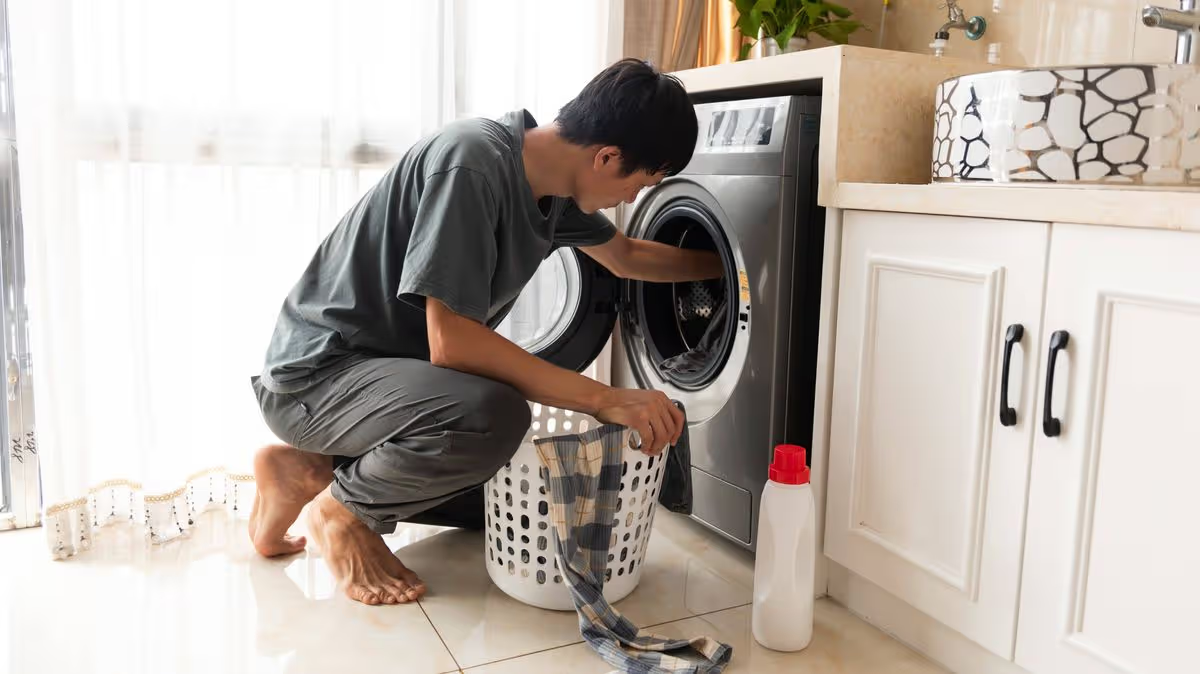
Central to this new wave of advice is a call to reconsider the timing of our most routine household tasks. British Gas, a cornerstone of the UK’s domestic energy landscape, has issued a specific and practical recommendation: to avoid using washing machines, tumble dryers, ovens, and hobs before 5 p.m. This guidance, grounded in the straightforward principles of thermodynamics, targets the hidden heat generated by our appliances. A washing machine’s motor and heated water, an oven’s intense interior climate, or even the condenser of a tumble dryer, all release substantial warmth into their surroundings. During a typical British summer, this dissipated heat is often negligible, but during an exceptional heatwave, it acts as an unwelcome internal heating system, fighting against any efforts to keep living spaces cool. By simply postponing these chores until the evening hours, when external temperatures begin their gradual descent, households can prevent adding fuel to the fire, so to speak, during the day’s peak thermal assault.
Paragraph 3: Engineering a Cooler Domestic Landscape
The rationale behind this advice is eloquently explained by those on the front lines of home efficiency. Peter Knowles, a Service and Repair Engineer with British Gas, frames the issue not as a major inconvenience but as a series of manageable, intelligent adjustments. “We all know how frustrating it is when our homes are hot and stuffy,” he notes, empathising with the universal discomfort. “The good news is that there are some practical steps that households can take.” His recommendations extend beyond laundry and cooking; they form a holistic strategy for heat management. This includes keeping windows and curtains sealed during the height of the day to block out the solar gain, a counterintuitive but highly effective tactic. He even suggests placing fans on the floor to circulate the cooler air that naturally settles there, rather than merely stirring up the warmer air at ceiling level. Each action is a small piece in a puzzle, collectively creating a more habitable indoor climate without reliance on energy-intensive air conditioning, which remains less common in UK homes.
Paragraph 4: Culinary and Digital Adjustments for Comfort
The strategy for a cooler home extends into the kitchen and the living room. The concept of meal planning takes on a new significance during a heatwave. British Gas advocates for batch cooking during the cooler, quieter hours of early morning or late evening, storing meals for consumption later. This approach sidesteps the need to ignite hobs or ovens during the day, when their contribution to indoor heat is most keenly felt. The recommendation leans towards embracing salads, cold platters, and outdoor barbecues (used safely away from the house) to avoid cooking indoors altogether. Furthermore, an often-overlooked source of ambient heat is our collection of always-on digital devices. Chargers, laptops, gaming consoles, and even televisions on standby emit a low, constant heat. In a normally tempered room, this goes unnoticed, but during a heatwave, this “phantom heat” from numerous gadgets collectively raises the background temperature. A simple act of unplugging devices not in active use can thus contribute to shedding a few unnecessary degrees, making the atmosphere noticeably less stifling.
Paragraph 5: The Broader Context of a Warming Climate
This specific guidance from British Gas arrives within a broader, more sobering context outlined by the Met Office. Their warnings transcend simple discomfort, pointing to systemic vulnerabilities. They note that “substantial changes in working practices and daily routines” will likely be required, a nod to the profound impact such weather events have on productivity, education, and daily life. More critically, they warn of the potential for “failure of heat-sensitive systems and equipment,” which could lead to losses of essential services like power, water, and communications. This frames the current heatwave not merely as a spell of nice weather gone extreme, but as a stress test for national infrastructure. In this light, the advice to shift laundry cycles and unplug chargers is part of a larger narrative of adaptation and resilience. It represents a low-level, grassroots contribution to reducing peak electricity demand, which can strain the national grid when millions simultaneously switch on fans, cold water pumps, and refrigerators fighting the heat.
Paragraph 6: Embracing Adaptation as a Collective Endeavour
Ultimately, the message weaves together immediate personal comfort with a longer-term ethos of mindful consumption and adaptation. The heatwave, while challenging, presents an opportunity to re-evaluate our relationship with energy and our domestic habits. The advice from British Gas and the forecasts from the Met Office are not about instilling alarm, but about empowering preparedness. By adopting these small, conscious shifts—doing the laundry after sunset, enjoying a cold supper, drawing the curtains against the midday sun, and freeing sockets of dormant electronics—we accomplish two things. First, we grant ourselves and our families a more comfortable, safer refuge from the heat, particularly crucial for the elderly, the very young, and those with underlying health conditions who are most vulnerable. Second, we participate in a collective, responsible effort to ease the burden on our home environments and public utilities. It is a reminder that in the face of increasingly frequent extreme weather, comfort and resilience often begin with the simple, thoughtful choices we make within our own four walls.