


The horrific railway collision near Bedford last Friday has left a community in mourning and a nation grappling with the profound human cost and logistical aftermath of the disaster. The incident, which occurred on the afternoon of June 19th, involved the 4.40pm East Midlands Railway service from Corby colliding with the rear of the 3.50pm service from Nottingham, both bound for London St Pancras. The human toll is devastatingly clear: one life was tragically lost, and one hundred passengers sustained injuries, with nine individuals remaining in critical condition fighting for their lives. The driver who perished has been identified as 60-year-old Shaun Burton, a dedicated railway professional remembered by East Midlands Railway for his deep commitment and service, which touched the lives of countless colleagues and passengers over his career since 2019. As investigators work tirelessly to piece together the sequence of events that led to this catastrophe, the immediate focus has turned to the arduous task of recovery and the support needed for the injured and the bereaved.
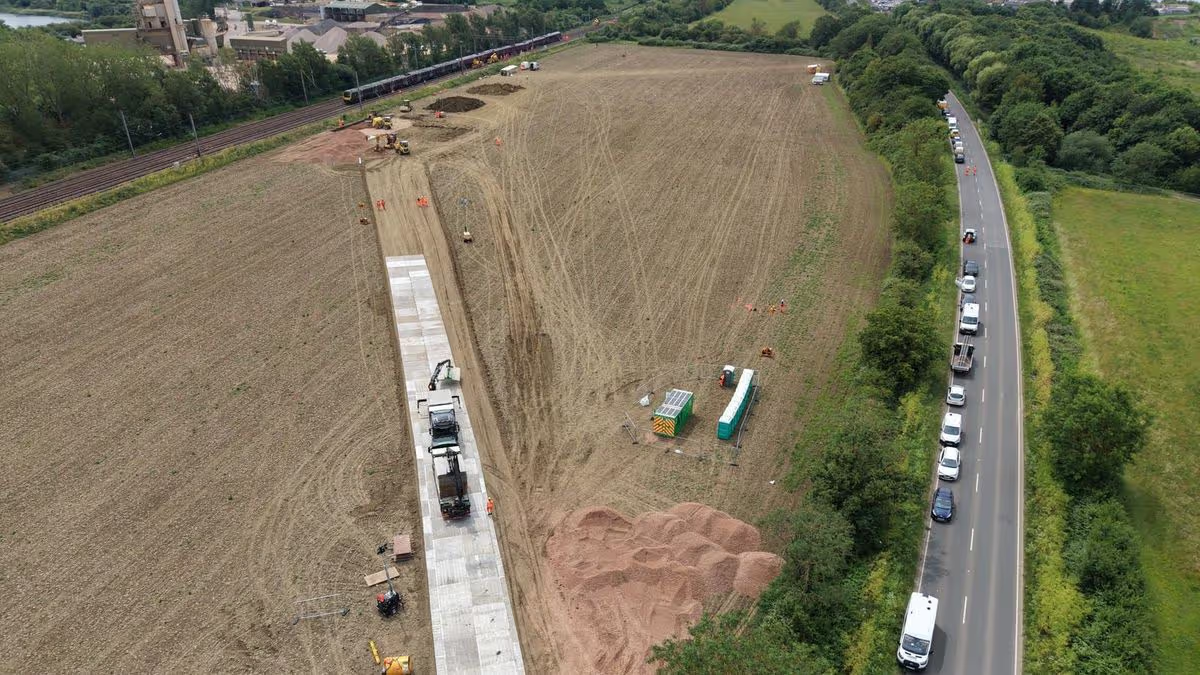
In the wake of the crash, the scene near Bedford has been transformed into the site of a massive and complex recovery operation, a somber ballet of heavy machinery necessitated by the scale of the damage. Network Rail has commenced a meticulously planned process to clear the wreckage, a task requiring extraordinary engineering effort. A temporary access road has been constructed across the adjacent field to provide stable ground for the specialized equipment required. The first phase involves two immense 110-tonne rail-mounted Kirow cranes, which will carefully lift the damaged carriages. Following this, a road-mounted crane will then transfer the carriages onto a specialized trailer engineered to transport such heavy loads, after which they will be moved away from the site by road, clearing the way for the next critical steps.
Once the wreckage is removed, the painstaking work of healing the railway itself will begin. Engineers will conduct a thorough forensic assessment of the track infrastructure, examining every meter of rail and sleeper for damage. Any compromised sections will be repaired or replaced entirely. Additionally, the Overhead Line Equipment (OLE)—the vital electrical wires that power the electric trains—had to be carefully removed to facilitate the crane operation and will now need to be fully reinstated. Only after these extensive repairs are completed can final, rigorous safety checks be performed. Network Rail has been unequivocal in its messaging, warning passengers that the route will remain closed and disrupted until at least June 28th, with no Thameslink services north of Luton and no East Midlands Railway services south of Bedford, underscoring the severity of the damage.
Behind the technical bulletins and operational updates lies a profound human tragedy that extends far beyond the physical site. Each of the one hundred injured passengers represents a life suddenly and violently upended, from those with minor wounds to the nine individuals whose critical conditions have left families in agonizing suspense. The railway community is cloaked in grief for Shaun Burton, a colleague who went to work and did not return home. His loss reverberates through the close-knit network of railway staff, for whom safety is a shared covenant. The collective trauma experienced by the survivors—the shock, the fear, the physical pain—will require compassionate, long-term support, highlighting that the recovery from such an event is measured not just in repaired track, but in healed lives.
As the recovery crews work under the glare of public attention, the parallel and paramount investigation into the cause of the crash continues with utmost urgency. Specialists from the Rail Accident Investigation Branch (RAIB) and other authorities will be scouring every piece of evidence, from data recorders and signal logs to maintenance records and witness statements. Their goal is not to assign blame in haste, but to understand the precise chain of failures—whether human, technical, or systemic—that culminated in this disaster. The answers they seek are crucial for providing accountability to the victims and the public, and, most importantly, for informing future safety protocols to prevent a repeat of such a heartbreaking event.
The collision near Bedford serves as a stark and sorrowful reminder of the immense responsibility inherent in transporting millions of people safely every day. While the engineering response showcases human ingenuity in the face of disaster, the event itself lays bare our shared vulnerability. The coming days will see the slow restoration of a railway line, but for the families of Shaun Burton and the critically injured, the journey toward any semblance of normalcy will be far longer and more arduous. The nation’s thoughts remain with them, even as the work to rebuild, understand, and ultimately ensure such a tragedy never happens again moves forward, step by heavy step.