


A Bridge to Nowhere: The Frustrating Saga of Bristol’s Unused £50m Motorway Junction
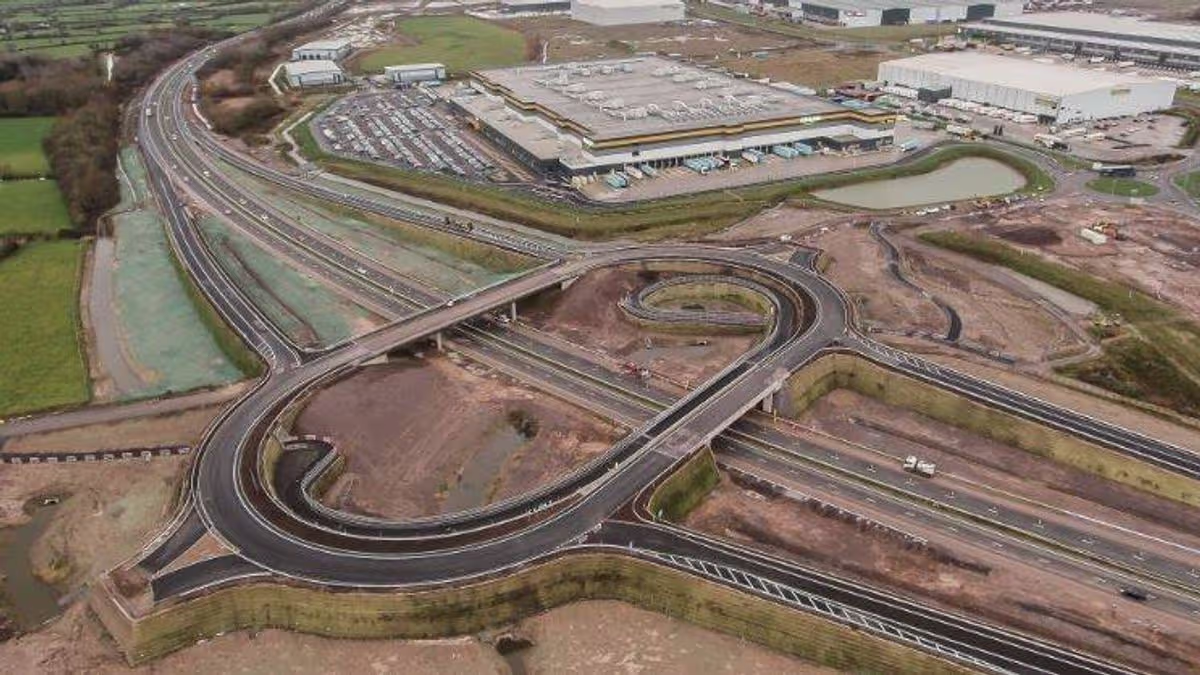
In a story that encapsulates the very essence of bureaucratic delay and infrastructural frustration, the opening of a £50 million motorway junction near Bristol, which has stood eerily empty for seven years, now faces yet another setback. National Highways, the government-owned company responsible for England’s roads, has revealed that “defects” have been identified at the M49 junction. This announcement casts a fresh cloud of uncertainty over a project originally intended to be a catalyst for regional economic growth. Built in 2019, the twin-bridge junction has become a notorious local landmark—a fully constructed “dead-end” leading literally nowhere, a symbol of promise unfulfilled. The prospect of finally connecting it to the nearby Severnside industrial estate, home to major distributors like Amazon and Tesco, has now been pushed further into an indeterminate future, leaving communities and businesses in a state of exhausted disbelief.
The core of this prolonged saga stems from a fundamental disconnect—both literally and figuratively. While National Highways completed the junction itself years ago, plans to link it to the local road network stalled due to a dispute over responsibility for building the final connecting stretch. This left a perfectly good motorway off-ramp terminating abruptly in a field. South Gloucestershire Council eventually stepped in to construct this crucial link road, with work progressing toward an anticipated completion this year and an opening to traffic in early 2027. However, this timetable was always contingent on the junction being ready and able to receive traffic. The recent discovery of unspecified defects during an independent engineering survey has now thrown that contingency into chaos. National Highways states that for safety reasons, these issues must be resolved before any connection can be made, directly impacting the council’s project and dashing hopes for a near-term resolution.
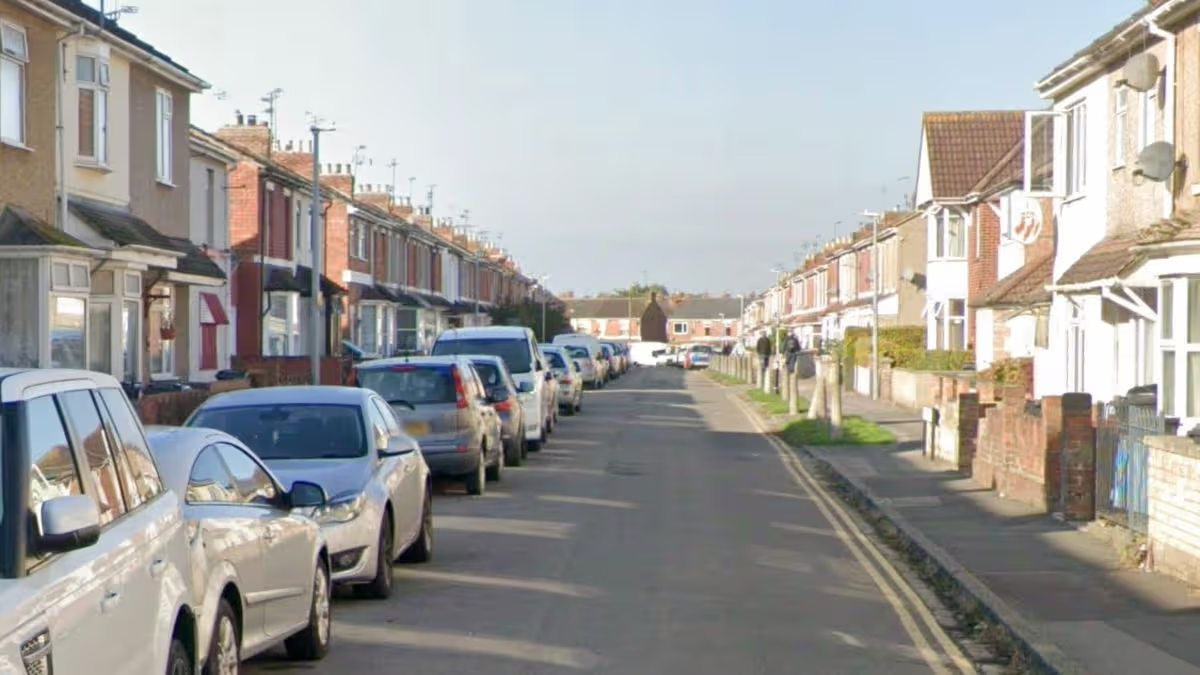
The human and economic impact of this ongoing impasse is profound and multifaceted. For local residents in communities like Pilning and Severn Beach, the delay translates directly into a degraded quality of life. The massive distribution centres were built with the promise of direct motorway access, yet in its absence, their fleets of heavy goods vehicles are forced to navigate narrow, winding country lanes never designed for such intensive use. The result is incessant noise, constant vibration, and roads being, as one MP described, “ripped to shreds.” This is not merely an inconvenience; it’s a persistent assault on the tranquillity and safety of local villages. For businesses in the Severnside enterprise area, the continued closure represents a significant drag on efficiency, increased operational costs, and a glaring black mark against the region’s logistics appeal for future investment. The junction was meant to unlock economic potential; instead, its inactivity acts as a persistent brake.
Local political frustration has reached a boiling point, with accusations of poor communication and mismanagement flying. Claire Young, the MP for Thornbury and Yate, labelled the situation “farcical,” criticising National Highways for the lateness of the defect disclosure and the continued lack of transparency regarding the exact nature of the problems. South Gloucestershire Council, while reiterating its commitment to finishing the link road by late 2026, expressed its “anger and disbelief” and placed the responsibility for the junction’s readiness squarely on National Highways. The council highlighted the “deeply concerning” uncertainty for residents and the hindrance to regional growth. This finger-pointing and lack of a unified, public-facing plan only exacerbate the community’s sense of powerlessness and neglect, reinforcing the perception of a project lost in an accountability void.
Compounding the frustration is the historical context of accumulated delays. This project has been beset by a perfect storm of obstacles since its inception, including complex landownership negotiations, disagreements over funding responsibilities, and the need to navigate sensitive ecological considerations. Each hurdle has added years to the timeline and millions to the cost, with an additional £7 million in government funding allocated just last year to try and untangle the mess. The junction has earned the moniker “ghost junction” for a reason—it stands as a silent, concrete monument to these cumulative failures in planning and execution. The latest defect issue is not an isolated incident but another chapter in a long-running saga of disappointment, where every step forward seems to be followed by two steps back.
As it stands, the path forward remains shrouded in ambiguity. National Highways has stated that discussions with its contractor are ongoing and that an update on a timeline for remedial work is not expected until autumn 2024. This leaves all parties—the council, businesses, and most importantly, the long-suffering residents—in a state of suspended animation for months to come. The community, as voiced by parish council chair Peter Tyzack, rightly insists that while safety is paramount, they cannot be expected to endlessly absorb the impacts of this delay without support and clear communication. The promise of relieving congestion, boosting the economy, and restoring peace to local roads now seems more distant than ever. Until a definitive plan emerges from National Highways, the M49 junction will remain what it has been for seven years: a costly, concrete question mark, and a stark lesson in how not to deliver critical infrastructure.