
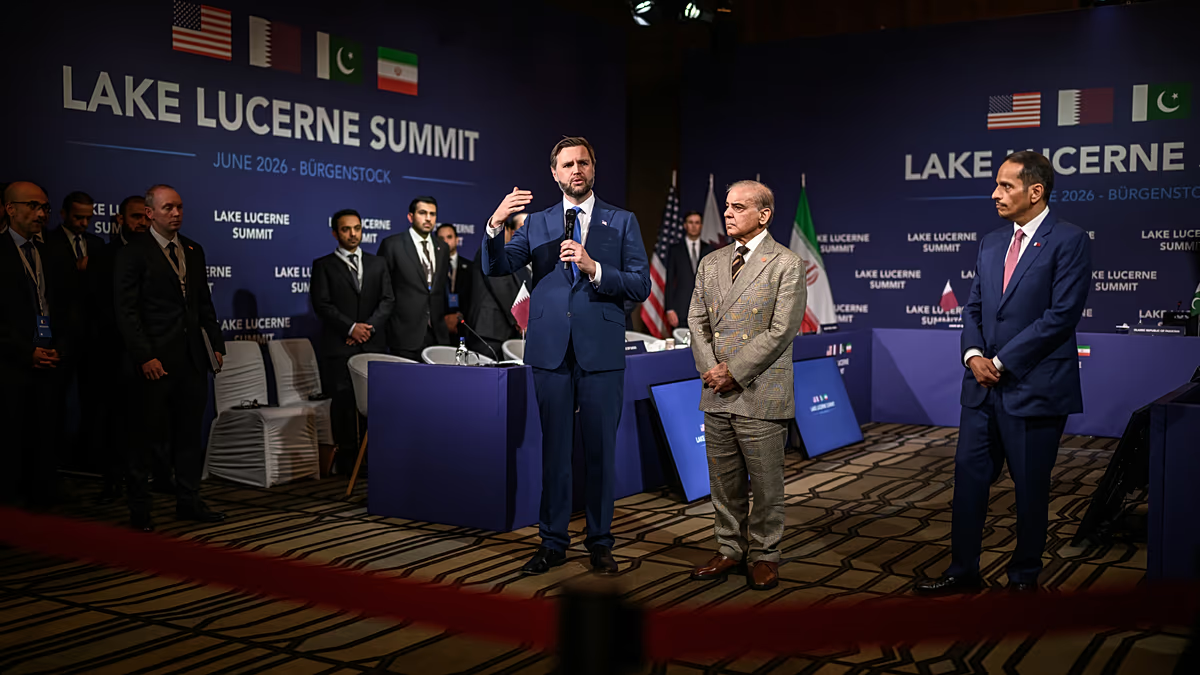


In the quiet corridors of a Swiss negotiation room, American and Iranian diplomats worked with tense urgency to finalize a peace deal, a potential landmark agreement aimed at ending a protracted war. This conflict has been a source of severe instability across the Middle East, shaking regional foundations and sending shockwaves through the global economy. The proposed framework sought not only a ceasefire but also to initiate a critical 60-day period to address deep-seated issues that have poisoned U.S.-Iran relations for decades. Yet, even as these delicate talks proceeded behind closed doors, the public rhetoric from both nations remained fiercely confrontational, with key sticking points—particularly the situation in Lebanon—threatening to derail the entire fragile process at any moment.
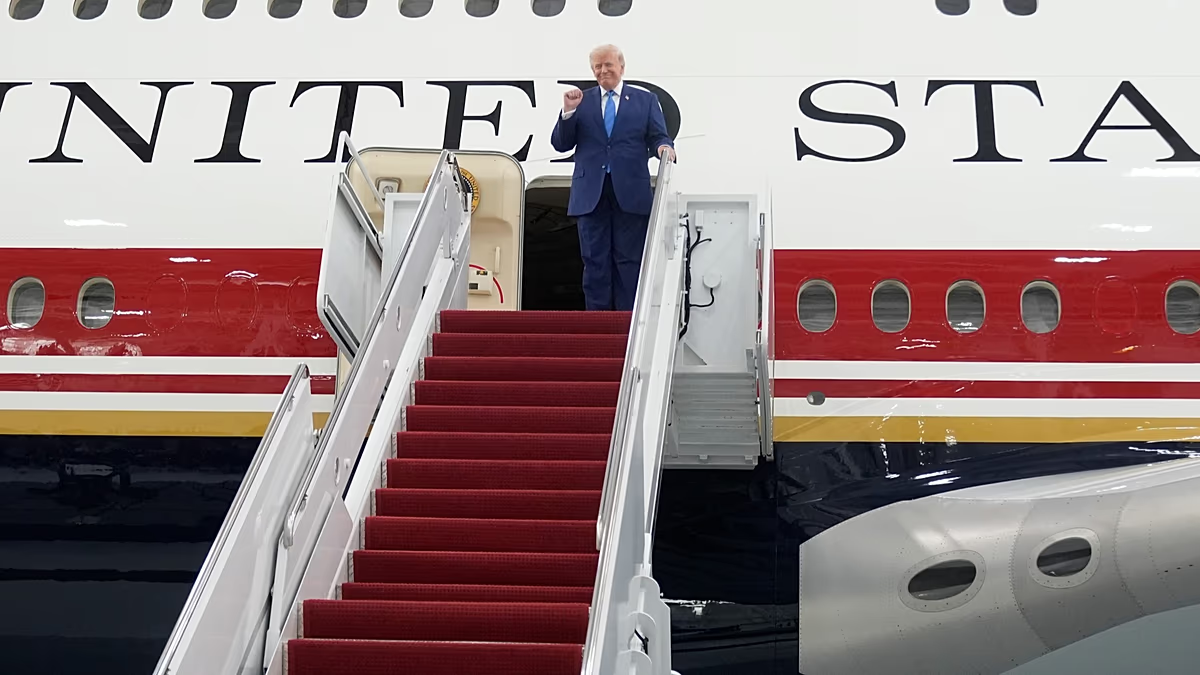
The shadow of recent violence loomed large over the negotiations. The talks opened against a backdrop of fresh clashes between the Israeli army and the Iran-backed Hezbollah militant group in southern Lebanon. It was this very context that prompted a stark public threat from U.S. President Donald Trump on his Truth Social platform. He warned Iran to stop Hezbollah from “causing trouble” in Lebanon, threatening, “If they don’t, we’ll hit Iran very hard again, just like we did last week, only harder.” This bellicose statement stood in stark contrast to the memorandum of understanding reportedly signed just days prior, which stipulated a cessation of hostilities on all fronts, including Lebanon. Trump’s words underscored the volatile gap between diplomatic documents and the reality of entrenched hostilities.
Iran’s response was swift and uncompromising. Chief negotiator Mohammad Bagher Ghalibaf fired back, dismissing American threats as ineffective and born of “desperation.” He warned, “They would do better to be careful with their statements; our armed forces are ready to respond to them in a different manner.” This exchange highlighted Lebanon as the most volatile sticking point. Israeli Prime Minister Benjamin Netanyahu reinforced this, vowing that Israeli forces would remain in southern Lebanon “as long as necessary” to protect its citizens. Hezbollah deputy chief Naim Qassem flatly rejected this, declaring any ongoing Israeli presence on Lebanese land “impossible.” This intractable standoff risked unraveling the entire peace framework, demonstrating how a regional flashpoint could overwhelm broader bilateral talks.
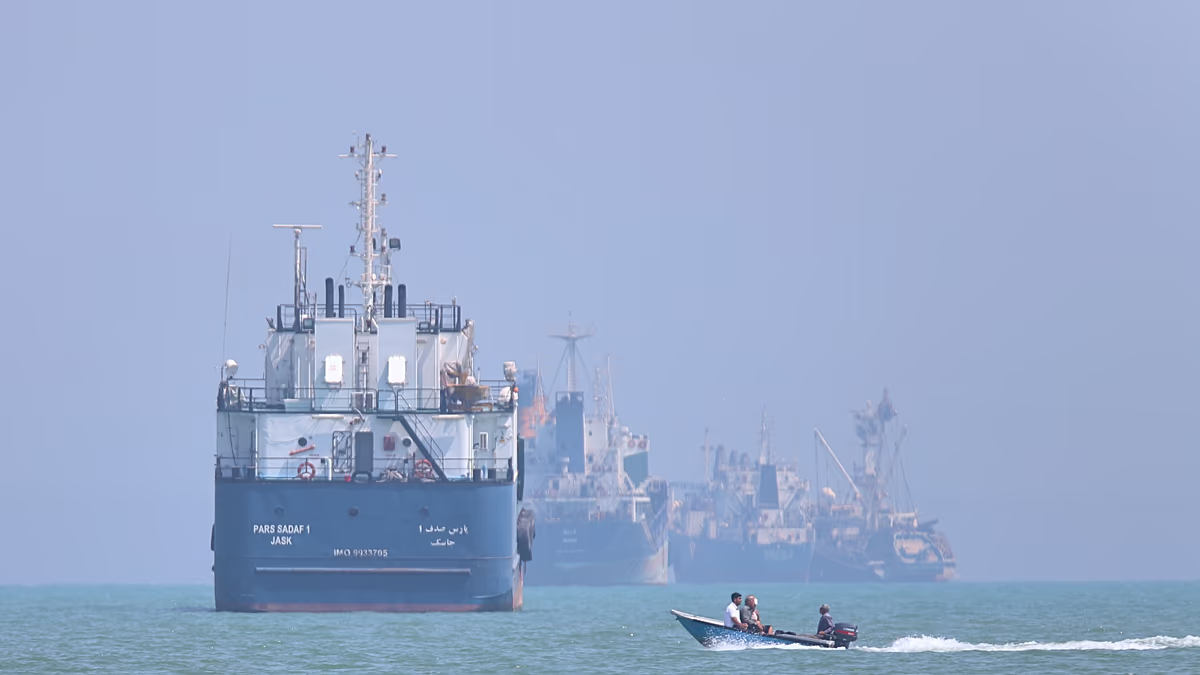
Further complicating the negotiations were other profound issues of security and global commerce. Iran had once again closed the strategic Strait of Hormuz, a critical waterway for approximately twenty percent of the world’s traded oil, in response to Israeli actions in Lebanon. Iranian foreign ministry spokesman Esmaeil Baqaei explicitly linked reopening the strait to ending the war, stating that moving to a final agreement was impossible without peace in Lebanon. Concurrently, the United States, represented in Switzerland by Vice President and negotiators Jared Kushner and Steve Witkoff, aimed to use the talks to permanently secure the strait and, more ambitiously, lock Iran into binding negotiations over its nuclear program. U.S. concerns about the potential military dimensions of the program clashed directly with Iran’s assertions of its peaceful intentions.
Amidst these threats and deep-seated mutual suspicions, there were fragile glimpses of diplomatic hope. U.S. Vice President hailed the meeting as “historic” and expressed a desire to “turn over a new leaf” with Iran, posing the fundamental question of whether the two nations could permanently change relations in the Middle East. On the ground in Lebanon, a tentative, uneasy calm had taken hold by Sunday evening, with some residents cautiously returning to their homes in the south, suggesting that the promised cessation of hostilities might be taking precarious effect. However, Iranian state media claimed the nuclear program was not discussed, a point not independently verified, while President Masoud Pezeshkian reiterated Iran’s refusal to relinquish its right to enrich uranium, even as he again denied any intention to build a nuclear weapon.
Thus, the negotiations unfolded as a study in stark contrasts: private diplomacy striving for a comprehensive peace against a public arena of military threats and geopolitical posturing. The path forward remained fraught, balanced between the cautious optimism of officials speaking of a “new leaf” and the ever-present risk of escalation from any single incident in Lebanon or the Persian Gulf. The outcome hinged on whether the parties could translate a signed memorandum on paper into a durable reality on the ground, overcoming decades of enmity to settle not just the immediate war, but the foundational conflicts that had made it inevitable. The world watched, hoping the fragile calm would hold long enough for diplomacy to succeed.