



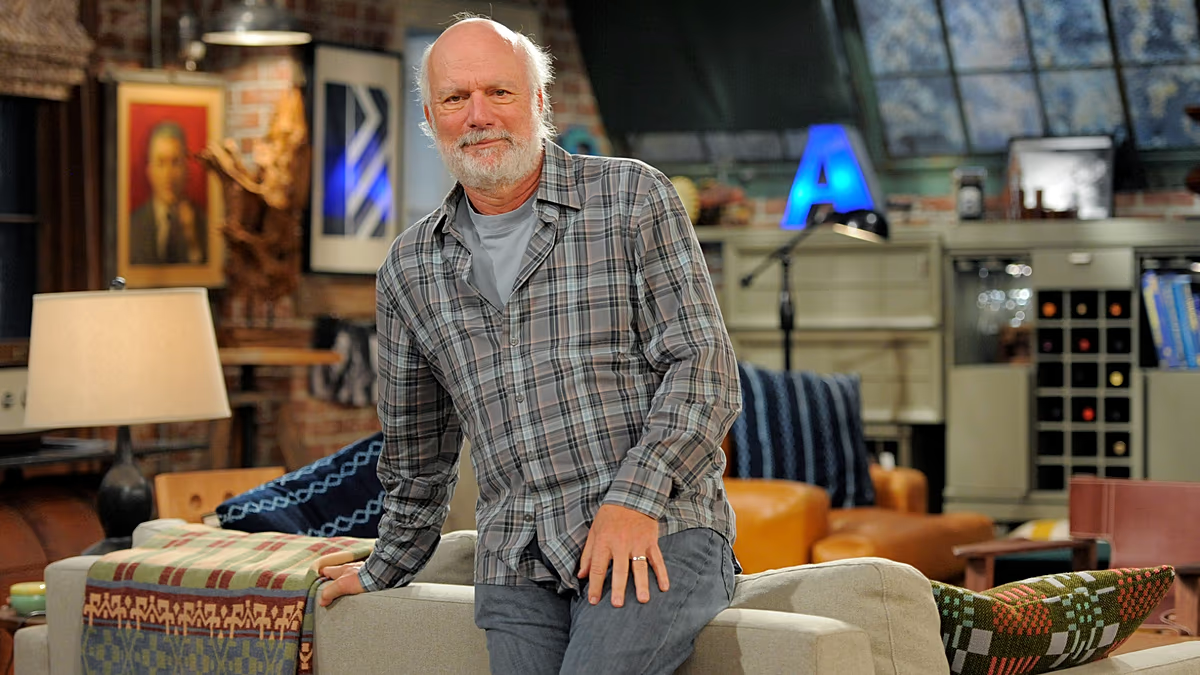
The world of television comedy has lost one of its foundational architects with the passing of James “Jimmy” Burrows at the age of 85. His family shared the news, stating, “We celebrate the extraordinary life and enduring legacy of James ‘Jimmy’ Burrows, who passed away peacefully today surrounded by his loving family.” While specific details were not disclosed, the announcement marks the end of an era for an artist whose work was the heartbeat of American living rooms for generations. Burrows was not merely a director; he was a quiet giant whose behind-the-scenes genius crafted the look, rhythm, and soul of the modern sitcom, leaving an indelible imprint on popular culture.
Burrows’s career was one of staggering productivity and peerless excellence, earning him 11 Emmy Awards and the distinction of directing over 1,000 episodes of television. His journey began in the 1970s, a pivotal time for the medium, where he helped pioneer and perfect the multi-camera sitcom format. Working on classics like The Mary Tyler Moore Show, Laverne & Shirley, and The Bob Newhart Show, Burrows learned and later defined the art of filming before a live audience, mastering the precise timing of jokes and the intimate, theatrical staging that made viewers feel like part of the show. His first Emmy win was for the critically adored Taxi, a series that balanced brilliant, offbeat humor with poignant humanity, showcasing his ability to draw profound performances from an ensemble cast including Danny DeVito and Andy Kaufman.
Perhaps his most legendary contribution was the creation, alongside Glen and Les Charles, of the iconic Boston bar Cheers. As a co-creator and its primary director, Burrows was instrumental in establishing the show’s warm, enveloping atmosphere where everybody truly did know your name. He directed a remarkable 236 episodes of the series, shaping its unique blend of witty repartee and heartfelt camaraderie. This creative partnership also birthed the sophisticated spin-off Frasier, further demonstrating his versatility and keen understanding of character dynamics. His Midas touch extended to launching and guiding countless other hits, including The Big Bang Theory, 3rd Rock from the Sun, and Mike & Molly, where his steady directorial hand ensured comedic consistency and emotional authenticity.
While his legacy is cemented by these titanic achievements, Burrows also played an integral, though less publicized, role in the launch of television’s most famous friend group. He directed the pilot and numerous pivotal episodes of Friends, expertly calibrating the chemistry between the six stars and establishing the visual language of Central Perk and their apartments. His skill in pilot direction made him the industry’s most sought-after “show doctor,” trusted to set the tone for a series’ entire run. In a delightful, meta twist late in his career, he stepped briefly in front of the camera to play himself in The Comeback, reuniting with Lisa Kudrow to offer a wry, self-aware glimpse into the world of sitcom production he knew so intimately.
To those who worked with him, Burrows was far more than an award-winning director; he was a revered mentor and a generous creative force. His family’s statement beautifully captured this spirit, noting he “helped shape generations of comedy and brought immeasurable joy to audiences around the world.” On set, he was known for his collaborative nature, his keen eye for performance, and his famous “Burrows’s Button”—a direct line to the control room he would press when a scene was working perfectly, a sound that became the hallmark of comedic success. He nurtured writers, calibrated actors’ timing, and fostered an environment where creativity could thrive, leaving a profound influence on countless producers, directors, and performers who followed in his footsteps.
James Burrows’s passing closes a monumental chapter in television history. He was a master craftsman who operated with a light touch, allowing the characters and stories to shine while his impeccable guidance provided the foundation. From the gritty garage of Taxi to the cozy confines of the Cheers bar, from the quirky apartments of Friends to the scientific hub of The Big Bang Theory, he created spaces that felt like home and populated them with characters who felt like family. The joy, laughter, and comfort his work brought to millions around the globe stand as his true and lasting monument, ensuring that his extraordinary legacy will continue to resonate for generations to come.