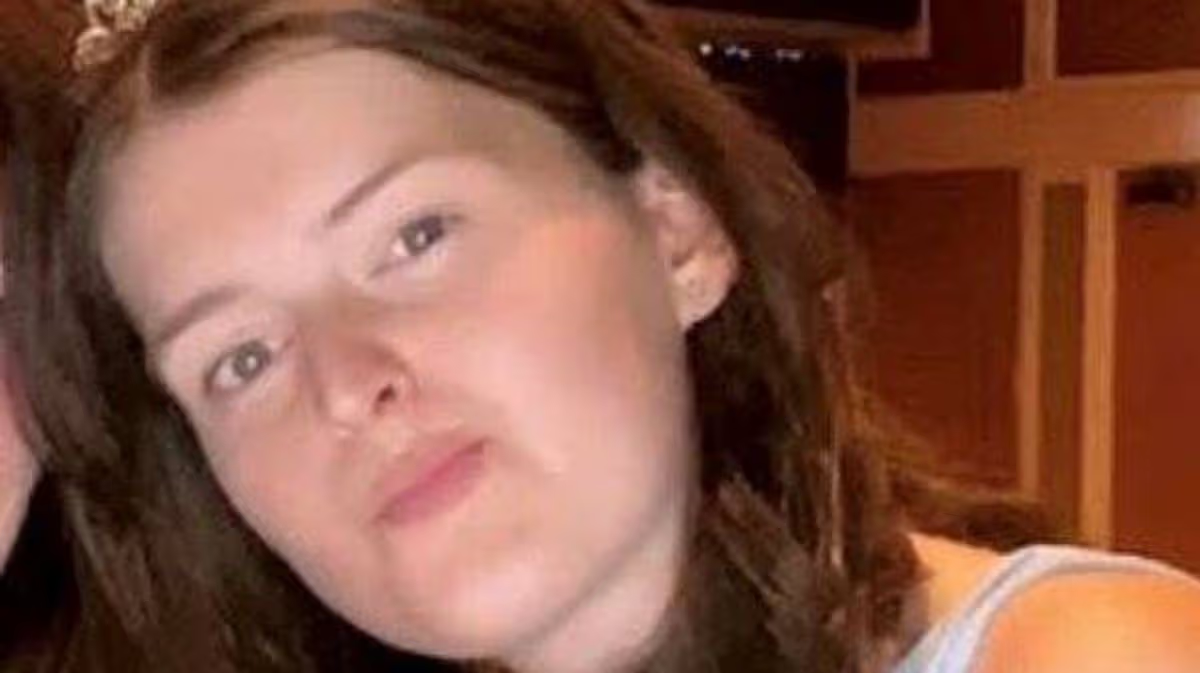



Sophie Barclay’s life changed forever when she was diagnosed with a brain tumour at just 15 years old, but her journey to that diagnosis was a painful lesson in not being heard. For years, she suffered from debilitating headaches, only to have her symptoms repeatedly dismissed by medical professionals. She was told her severe migraines were likely due to anxiety or simply “eating too much chocolate and dairy.” Made to feel like an “over-dramatic teenager,” Sophie describes being “fobbed off” during dozens of GP visits, a deeply isolating experience that left her frustrated and scared. Despite knowing in her heart that something was profoundly wrong, she faced a wall of skepticism, underscoring a troubling gap in how young people’s health complaints are sometimes perceived and prioritized.
The turning point came only after a persistent referral to a neurologist, who finally ordered an MRI scan. The results revealed a pilocytic astrocytoma, a type of brain tumour. For Sophie, the diagnosis was a horrifying yet strange relief—it validated her years of suffering and meant action could finally be taken. In 2021, she underwent successful surgery to remove the tumour. However, her battle was far from over. In the wake of the operation, she developed posterior fossa syndrome (PFS), a severe postoperative complication that robbed her of the most basic functions. Suddenly, she could not walk, talk, swallow, or even lift her head, feeling utterly trapped within her own, unresponsive body.
Sophie’s recovery from PFS was a monumental undertaking, a slow and arduous relearning of life’s fundamental skills. She embarked on intensive daily physiotherapy to regain her strength and coordination, eventually scaling back to weekly sessions as she painstakingly learned to walk again—a process that took about six weeks. Speech and language therapy helped her recover her voice after two weeks of silent frustration, while occupational therapy assisted in restoring her fine motor skills. Reflecting on this period, Sophie acknowledges that, while immensely challenging, her recovery timeline was relatively swift compared to some PFS cases, a small silver lining in an otherwise dark chapter.
Now 21 and studying psychology at De Montfort University, Sophie has regained her independence, walking and speaking without assistance. Her ordeal has forged a powerful sense of advocacy within her. She is determined to use her voice to ensure other young people feel empowered to pursue medical answers when something feels wrong. Her core message is one of self-trust and perseverance: “I’ve learned that I know more about what’s wrong with me than someone else,” she states, urging others to keep pushing past initial dismissals and seek second opinions. She highlights the critical need for young patients to be taken seriously, to bypass the feeling of being dismissed due to their age.
Channeling her experience into action, Sophie is now supporting a vital campaign to improve cancer diagnosis in children and young people. The initiative, funded by The Children’s Cancer and Leukaemia Group (CCLG) and led by experts at the University of Nottingham, aims to create clear referral guidelines to help GPs and clinicians recognize the often subtle and non-specific symptoms of childhood cancers like brain tumours. As Dr. Shaarna Shanmugavadivel explains, tumours like low-grade gliomas can grow slowly, causing symptoms that accumulate over time and are easily mistaken for less serious conditions, yet early diagnosis is crucial to prevent long-term injury.
The campaign’s goal, as emphasized by CCLG CEO Ashley Ball-Gamble, is to equip frontline healthcare professionals with better tools and knowledge to reduce dangerous delays. By providing clearer guidance, the initiative seeks to ensure that young people receive the right care at the right time, ultimately improving outcomes. Sophie Barclay’s story is a powerful testament to why this work is so urgent. It is a narrative of resilience in the face of medical adversity, a cautionary tale about the cost of not listening, and ultimately, a hopeful call to action for a system that must learn to hear the concerns of its youngest patients before it is too late.