

The ripple effects of the US-Israel military engagement with Iran in 2026 have extended far beyond the immediate geopolitical arena, profoundly impacting the global tourism industry. Early assessments indicate that travel to the broader Middle East region has plummeted, with the sector losing a staggering estimated €515 million per day. This precipitous drop underscores how swiftly conflict can destabilize an entire regional economy built on hospitality, cultural exchange, and business travel. While a ceasefire agreement in April provided a fragile sense of stability and encouraged a tentative return of some visitors, the deep-seated apprehension among travelers worldwide remains a significant hurdle. The anticipated signing of a Memorandum of Understanding between Iran and the US is a positive diplomatic step, yet for the average tourist or business traveler, abstract political agreements do not immediately translate into a feeling of personal safety. The shadow of the conflict continues to loom large over travel plans, creating a complex environment where desire to explore is tempered by legitimate concern.
The most tangible and formidable barrier for potential travelers now is not necessarily the situation on the ground, but the often-overlooked fine print of travel insurance policies. Governments across the globe issue travel advisories based on assessments of risk from civil unrest, war, and terrorism. The critical issue is that traveling to a destination against the explicit advice of one’s own government typically renders standard travel insurance null and void. This leaves travelers financially exposed to a vast array of potential losses, from last-minute trip cancellations to astronomical medical bills in the event of an emergency. While the UK’s Foreign, Commonwealth & Development Office has recently downgraded its warnings for several Middle Eastern and Gulf destinations, other major nations like France and Germany still maintain advisories against all but essential travel. This patchwork of official guidance creates confusion and leaves many would-be visitors in a paralyzing bind: they may feel a destination is safe enough to visit, but the financial risk without valid insurance is simply too great to bear.
In a shrewd move recognizing this exact dilemma, two aviation powerhouses from the Gulf have introduced innovative solutions to bypass the insurance deadlock. Etihad Airways, based in Abu Dhabi, has taken a proactive approach by offering complimentary medical travel insurance for all international visitors arriving on its flights. Available from July through December 2026, this coverage is valid for stays of up to 15 days within the United Arab Emirates and is also accessible for passengers utilizing the airline’s stopover programme. This initiative serves a dual purpose: it directly addresses a primary consumer fear by providing a basic safety net, while also powerfully reinforcing the UAE’s message as a secure and stable hub, distinct from regional tensions. It is a strategic investment in restoring traveler confidence and incentivizing visits to its home territory, effectively using insurance as a tool of reassurance and competitive advantage.
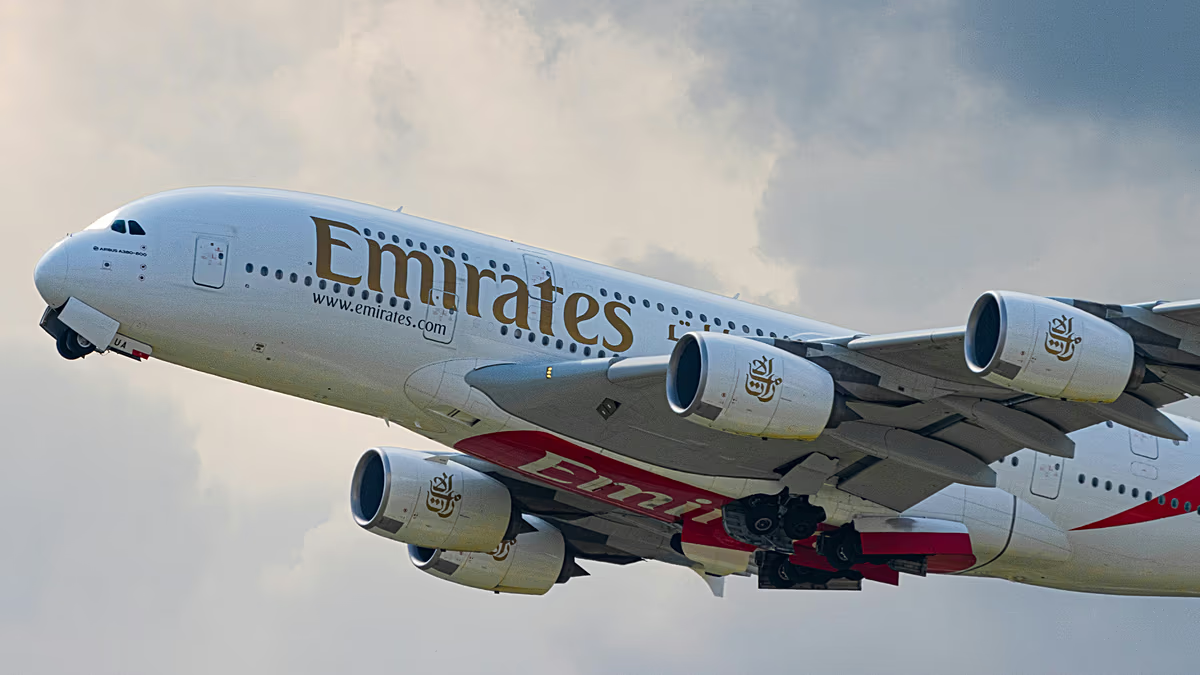
Its rival, Dubai-based Emirates, has launched a more comprehensive, fee-based alternative. Passengers booking directly through the airline’s website can opt for a tailored travel insurance policy designed specifically for the current climate. The coverage is notably direct in addressing conflict-related contingencies. It promises to rebook passengers on alternative airlines free of charge in the event of a conflict-induced cancellation and offers up to a 30-day trip extension if a traveler is unable to depart due to such disruptions. Most significantly, it provides up to US$25,000 (approximately €21,800) for conflict-related medical expenses. This policy thoughtfully layers these specific, anxiety-inducing scenarios on top of standard inclusions like trip cancellation protection and compensation for baggage issues, creating a holistic product that speaks directly to the contemporary traveler’s concerns.
These initiatives by Etihad and Emirates represent a significant evolution in the relationship between airlines and their customers. They are no longer just transportation providers but are positioning themselves as essential travel partners and risk mitigators. By offering their own branded insurance, they are effectively creating a parallel system that operates independently of volatile government travel advisories. This empowers the customer with choice and control, allowing them to make informed decisions based on the coverage provided, rather than being solely governed by blanket government warnings. Furthermore, it demonstrates a deep understanding of the modern travel economy, where perceptions of safety and financial security are as important as ticket prices and flight schedules. The airlines are effectively underwriting their own operational stability and the appeal of their hubs.
The broader implications of this trend are substantial. If successful, this model could encourage other airlines and tourism-dependent nations to develop similar financial safety net products, fundamentally changing how risk is managed in volatile regions. It places a measure of responsibility and innovative capacity back into the hands of the travel industry itself, rather than leaving travelers caught between government advisories and generic insurance exclusions. For the Middle East, a region perpetually navigating complex geopolitical narratives, such private-sector solutions are crucial for economic resilience. While diplomacy works to calm state-level tensions, these airline initiatives work on a human scale, providing the practical reassurance needed to rebuild the vital bridges of tourism, business, and cultural connection that benefit all parties involved. The true cost of conflict is measured not only in immediate losses but in the long-term erosion of trust; these insurance policies are, at their core, an investment in rebuilding that trust one traveler at a time.