
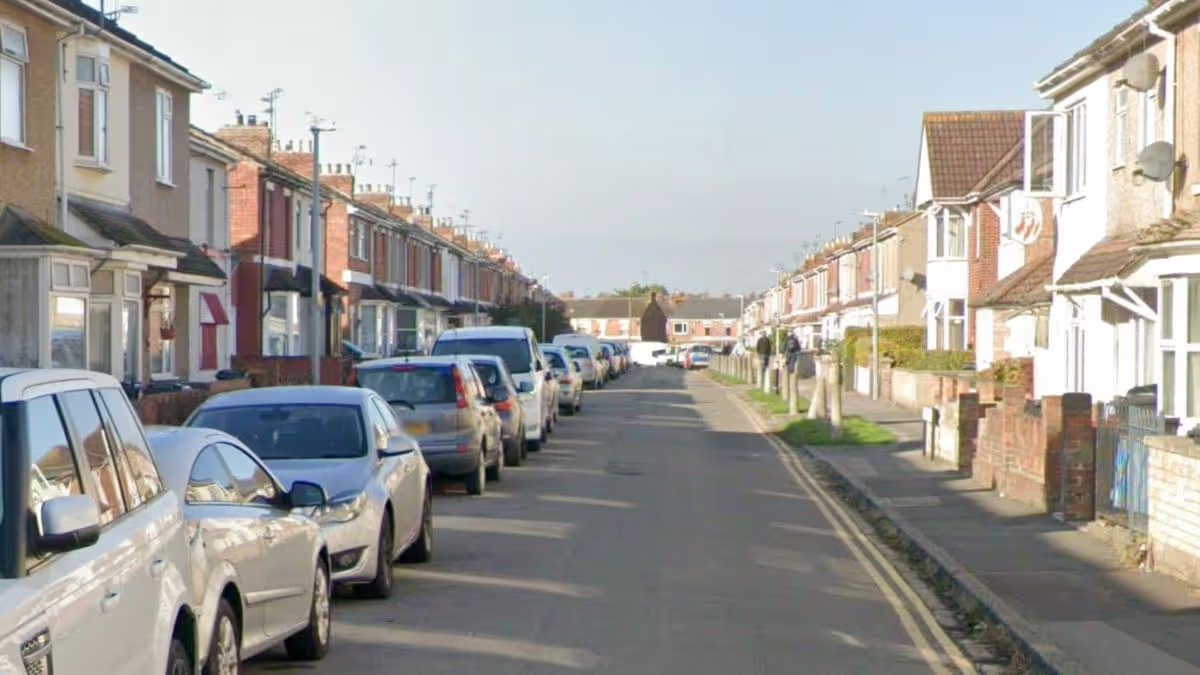


On a Friday evening in Swindon, a community was shaken by the sound of violence. Just before 9pm on June 20th, police were called to St Paul’s Street in the Gorse Hill area following reports of a gunshot. The incident, stark and alarming in its suddenness, left a man in his thirties with a gunshot wound. He was rushed to the hospital, where he remains in a critical but stable condition—a phrase that captures the precarious human reality behind the headlines, a life hanging in the balance while a family waits and hopes. The quiet residential street, now a cordoned-off crime scene, became an emblem of the fear and disruption that such acts of brutality bring, transforming an ordinary neighborhood into a place of forensic tape and urgent investigation.
In the wake of the shooting, Wiltshire Police launched a significant and ongoing operation, demonstrating the meticulous and wide-reaching nature of modern criminal investigations. The initial response led to the arrest of five individuals, who have since been released on bail as enquiries continue. This group itself paints a concerning picture of the incident’s periphery, ranging from a 51-year-old man arrested on suspicion of attempted murder to a 16-year-old boy suspected of assisting an offender and possessing nitrous oxide with intent to supply. The inclusion of drug-related charges, particularly involving a substance often dismissed as harmless, hints at the complex underworld of petty crime and exploitation that can intersect with more serious violence.
The investigation escalated significantly over the weekend, with police announcing three further arrests. Overnight, a 20-year-old man was detained on suspicion of attempted murder. Subsequently, a 19-year-old man and a 30-year-old man were arrested on suspicion of conspiracy to murder. All three now remain in police custody for questioning. This development signifies the authorities’ belief that this was not a random, isolated act, but a planned event involving multiple parties. Each new arrest represents a step in piecing together a puzzle of motives, relationships, and actions, moving closer to understanding not just who pulled the trigger, but who helped plan and facilitate the attack.
While the focus is rightly on the victim’s recovery and apprehending those responsible, the broader community implications are profound. A police cordon remains in place on Farnborough Road, a visible, daily reminder of the trauma. For residents, the incident shatters the sense of security they deserve in their own homes. It raises uneasy questions about the presence of weapons and organized conflict on their doorsteps. Beyond the immediate fear, there is the lingering societal concern about the ages of those involved—from teenagers to men in their fifties—suggesting cycles of criminality that span generations and the tragic recruitment of the young into dangerous enterprises.
The police have made a direct appeal to the public, underscoring that community cooperation is often the cornerstone of solving such crimes. They have asked anyone with information to come forward, contacting Wiltshire Police on 101 and quoting log number 416 of June 20th. For those who may fear reprisal or wish to remain anonymous, the independent charity Crimestoppers offers a safe alternative on 0800 555 111 or via their website. This appeal is more than a procedural request; it is an invitation for the community to reclaim its streets and participate in the pursuit of justice, acknowledging that the most crucial witnesses often are those who live in the neighborhood.
Ultimately, this incident in Swindon is a stark narrative of individual harm and collective anxiety. Behind the clinical details of ages, charges, and road names lies a human story of pain, fear, and a disrupted community. The path forward involves not only the continued diligent work of the police and the judicial process but also the longer, harder journey of community healing and addressing the root causes that allow such violence to fester. As the investigation proceeds, the hope is for a full recovery for the victim, clear accountability through the legal system, and a restoration of peace for the residents of Gorse Hill, who are now left to process the unsettling events that unfolded on their quiet street.