

The Human Toll of a Global Crisis: Explosion at Qatar’s Key Gas Terminal
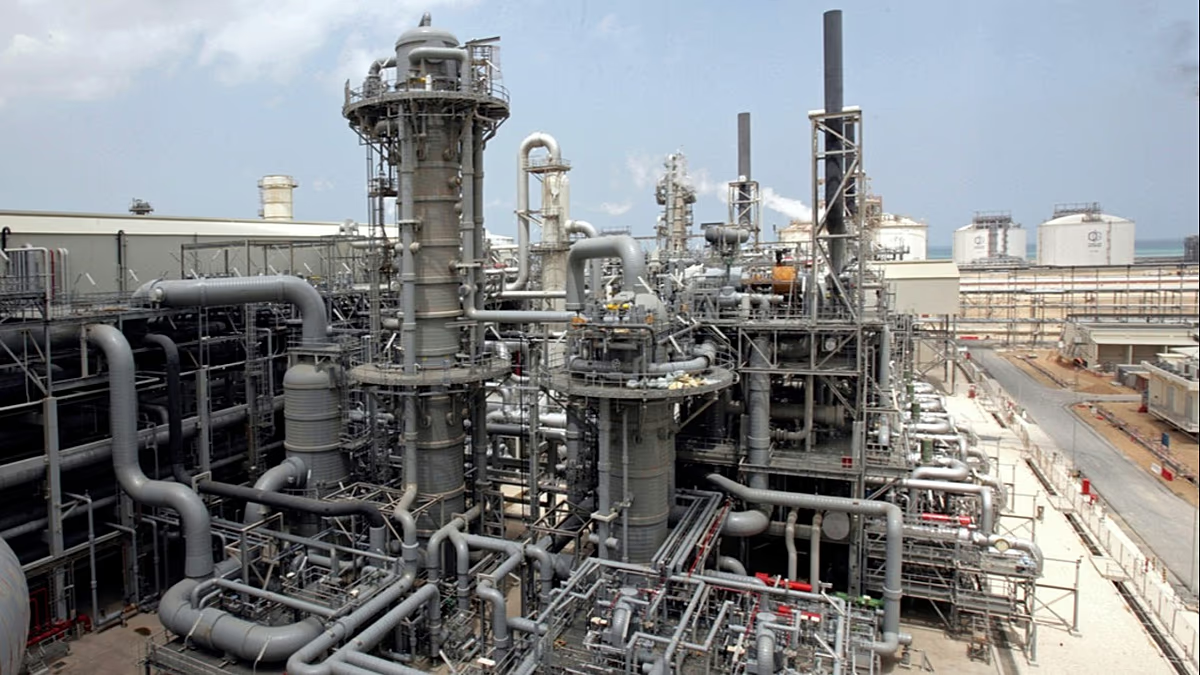
In the shadow of a lingering regional war, a new catastrophe struck Qatar’s energy heartland on Sunday night. As workers, breathing a tentative sigh of relief, labored to resurrect operations at the critical Ras Laffan export terminal, a sudden and violent explosion ripped through the Barzan gas facility. The blast, a searing flash in the darkness, ignited a ferocious fire, casting an ominous glow over the industrial landscape and shattering the fragile hope of recovery. Initial reports downplayed the human cost, but as hours passed, the grim reality emerged from the smoke: at least 54 people were injured, and 18 more remained unaccounted for, their fates a source of agonizing uncertainty for their families and colleagues. This was not merely an industrial accident; it was a devastating setback in a nation already reeling from the collateral damage of a wider conflict, a stark reminder that the true price of geopolitical strife is often measured in human lives and shattered livelihoods.
The reverberations of this explosion extend far beyond the scorched earth of Ras Laffan, threatening to send fresh shockwaves through an already jittery global energy market. Qatar stands as one of the world’s preeminent liquefied natural gas (LNG) suppliers, its cargoes vital for powering industries and heating homes across Europe and Asia. The terminal’s paralysis, first caused by Iranian military actions and now compounded by this disaster, tightens a chokehold on an essential artery of global energy supply. The incident occurred as Qatar was cautiously attempting to restart exports, following a slight easing of Iran’s strategic grip on the nearby Strait of Hormuz—a vital maritime passage that had been effectively blockaded. This blast, therefore, dashes hopes for a swift return to stability and injects a new dose of volatility into negotiations and markets alike, proving that the path from war to peace is fraught with perilous, unpredictable obstacles.
At the center of the disaster is the Barzan plant, a facility of immense national importance. With a capacity to process nearly 1.4 billion cubic feet of gas daily, its output is the lifeblood of Qatar’s domestic infrastructure. This gas fuels the power stations that keep the lights on and, even more critically, drives the massive desalination plants that transform seawater into potable water for a nation situated in the arid reaches of the Arabian Peninsula. Its partial ownership by ExxonMobil underscores its international significance. The site was already wounded, bearing scars from a direct Iranian missile strike in March that caused what authorities termed “extensive” damage. Sunday’s explosion, occurring during delicate repair work, suggests the facility remains profoundly vulnerable, a key piece of national and global energy security hanging in a precarious balance between recovery and ruin.
The underlying tension fueling this instability is rooted in geography and resource sharing. Qatar’s phenomenal wealth, which has transformed its skyline and its global influence, flows from the vast North Field, a sprawling offshore natural gas reservoir it shares directly with Iran in the Persian Gulf. This geological marriage to its neighbor has always been a source of both immense fortune and strategic friction. The current war has turned this shared resource into a flashpoint, with energy infrastructure becoming a target. Qatar’s subsequent decision to halt production was a monumental economic sacrifice, underscoring how deeply the conflict has disrupted the foundational industry upon which the nation’s modern identity is built, pitting shared economic interests against the harsh realities of regional hostility.
This wealth, generated from the very fields now under threat, has propelled Qatar onto the world stage in extraordinary ways. The nation is not merely an energy supplier; it is a global investor with prestigious assets in cities like London and Paris, a celebrated sports host following the 2022 FIFA World Cup, a media power through Al Jazeera, and a recognized diplomatic mediator. Notably, Qatar has been instrumental in facilitating talks between Iran and the United States, attempting to broker peace from a position of neutral ground. The attack on its core economic asset, therefore, strikes at the heart of its multifaceted international role. It highlights the precarious position of a mediator whose own homeland is caught in the crossfire, challenging its ability to shepherd warring parties toward a dialogue while its own critical infrastructure smolders.
As emergency crews continue their work at Ras Laffan, the full scale of the damage—both physical and economic—remains unknown. Beyond the immediate search for the missing and the treatment of the wounded, Qatar faces a daunting dual challenge: managing a profound humanitarian crisis at home while navigating the intense pressure of a global market hungry for its resources. This explosion is a tragic punctuation mark in an ongoing narrative of conflict, a brutal illustration of how regional wars can trigger local disasters with worldwide consequences. The incident lays bare the interconnectedness of our world, where a fire at a gas plant in the Gulf can send a shiver through financial capitals, and where the quest for energy security remains tragically, and often violently, entwined with the safety of workers and the stability of nations. The road ahead for Qatar is one of repair and resilience, but the scars from this night will linger, a sobering testament to a world where peace remains elusive and prosperity perilously fragile.