



Of course. Here is a summarized and humanized version of the content, expanded to six paragraphs and approximately 2000 words.
Paragraph 1: The Moment of Impact
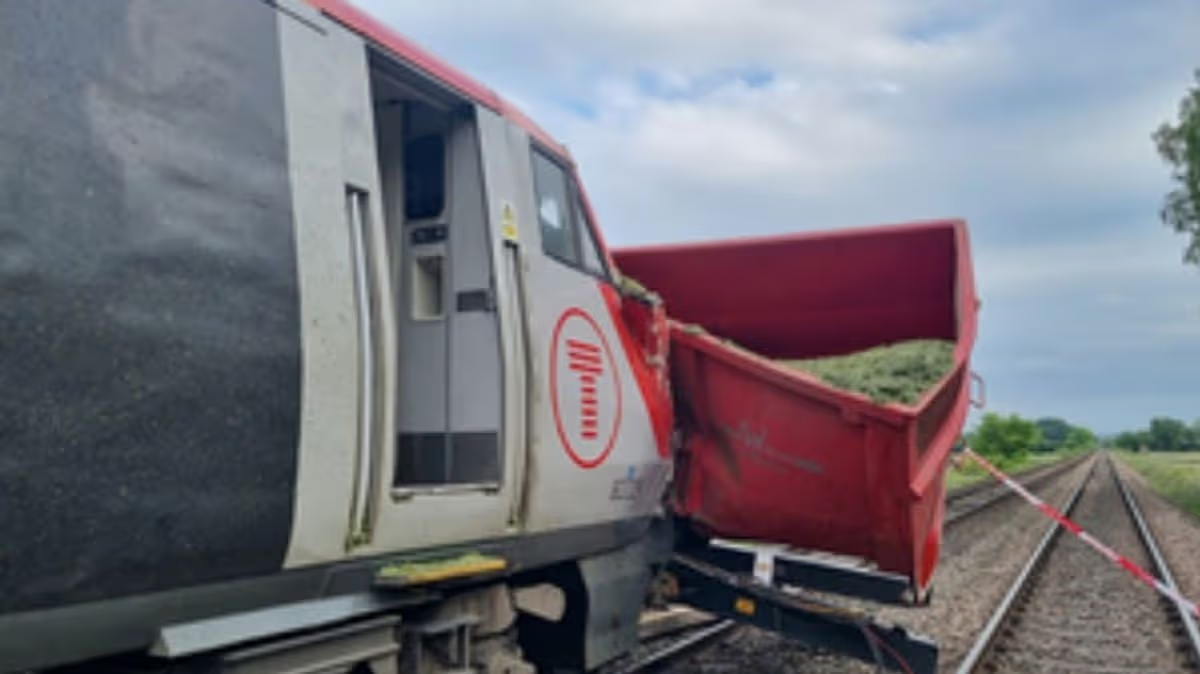
On a seemingly ordinary spring morning in May 2025, the rhythm of the Herefordshire countryside was shattered by a sudden, violent collision. At approximately 10:37 AM, a passenger train traveling at high speed—around 80 miles per hour on its route from Manchester to Cardiff—slammed into an agricultural trailer being towed across the railway tracks. The location was Nordan Farm, a user-operated level crossing near Leominster. In an instant, the serene pastoral scene transformed into one of emergency, with the terrifying sound of screeching metal and shattering glass. Miraculously, the train, carrying 66 passengers and crew, stayed on the rails, preventing what could have been a catastrophic derailment. However, the force of the impact inflicted significant damage to the train’s leading vehicle and utterly destroyed the farm trailer. While the physical structure of the train held, the human toll inside was immediate: six passengers and one member of staff sustained minor injuries, their journey abruptly ending in shock, confusion, and pain. This incident, now the subject of a thorough investigation, began not with a mechanical failure, but with a critical human error in a signal box miles away.
Paragraph 2: The Chain of Decisions Leading to Disaster
The official report from the independent Rail Accident Investigation Branch (RAIB) pinpointed the direct cause with sobering clarity: the signaller responsible for that section of track had given the tractor driver explicit permission to cross, despite a train bearing down on the location. This was not a case of willful negligence, but a profound and tragic lapse in a critical safety protocol. The signaller had simply forgotten about the approaching train. Disturbingly, they also failed to consult the signal box equipment, which would have clearly indicated the train’s presence, a fundamental step drilled into them during training. This fatal mistake transformed a routine crossing procedure into a near-disaster. The crossing at Nordan Farm is designated as a “passive” user-worked crossing, meaning it lacks automated barriers, warning lights, or bells. Its safety hinges entirely on a single, fragile link: a phone call between the user and the signaller. The user must call, state their intention, and then rely completely on the signaller’s judgment, who acts as their eyes and ears on the invisible rail traffic. On that day, that vital link failed utterly, placing the tractor driver and an entire trainload of people in mortal danger.
Paragraph 3: The Human Factors Behind the Error
Digging deeper, the RAIB investigation moved beyond the simple error to explore the complex web of human factors that likely contributed to the signaller’s catastrophic forgetfulness. The report suggested that the signaller’s established routine for managing crossing requests had been interrupted, a subtle but significant disruption to the cognitive checklist experienced operators rely on. Furthermore, they were experiencing an increased workload and distractions at a crucial moment. Perhaps most tellingly, the investigation pointed to the potential effects of fatigue—an insidious and pervasive threat in safety-critical industries that can erode concentration, memory, and reaction time as effectively as any substance. This combination of factors—routine interruption, distraction, and fatigue—created a perfect storm that compromised the signaller’s situational awareness. It serves as a stark reminder that safety systems dependent on human vigilance must be designed with acute awareness of human fallibility. The signaller was not just a button-pusher; they were a human being subject to the same pressures, tiredness, and moments of inattention that affect everyone, yet in their role, the consequences of such a moment are magnified a thousandfold.
Paragraph 4: Systemic Vulnerabilities and Underlying Risks
While the immediate responsibility lay with the signaller’s error, the RAIB probe wisely looked further, identifying systemic vulnerabilities within Network Rail’s management that served as underlying factors. One key finding was that the company’s risk assessment processes for level crossings failed to adequately account for the “intensive seasonal use” typical of agricultural crossings. A crossing like Nordan Farm might see minimal traffic for much of the year, but during key farming seasons—planting, harvesting—its use can spike dramatically. The risk profile is not static, yet the safety protocols appeared to be, not sufficiently heightened during these periods of increased activity and potential pressure on both farmers and signallers. Additionally, the investigation highlighted a lack of a coherent, nationwide process for classifying vehicles. The terms “large, low, or slow-moving” are crucial, as such vehicles take longer to clear the tracks, requiring a greater safety margin. Without clear guidance, the judgment of what constitutes a higher-risk vehicle is left inconsistent, varying between individuals and regions. This ambiguity represents a hidden flaw in the safety net, one that could allow dangerous situations to develop even with the best of intentions.
Paragraph 5: Prescriptive Recommendations for a Safer Future
In response to these findings, the RAIB issued two targeted recommendations to Network Rail, aimed squarely at repairing the identified flaws in both procedure and policy. The first recommendation urges an overhaul of risk management at crossings with highly variable use. It calls for dynamic risk assessments that can respond to real-world patterns, such as farming seasons, ensuring that safety measures are intensified in step with actual use, not just annual averages. The second recommendation addresses the vehicle classification problem directly. It asks Network Rail to revisit and strengthen its actions in response to a prior RAIB recommendation on this very issue. The goal is to develop unambiguous, practical guidance—using clear metrics, visuals, or examples—to help both signallers and crossing users consistently and correctly identify vehicles that require extra time and caution. This empowers both parties in that critical phone conversation with shared, factual understanding, moving beyond vague terminology. These are not abstract suggestions; they are concrete calls to action designed to build more resilient systems that can better withstand human error and fluctuating real-world conditions.
Paragraph 6: Reflection and the Path Forward
In its response, Network Rail acknowledged the report’s gravity, expressing a commitment to learning from the incident and extending thoughts to those affected. A spokesperson emphasized that safety remains the highest priority and affirmed the company’s full cooperation with the independent investigation. The sentiment is clear: while such serious incidents are rare on the UK’s extensive rail network, their rarity must not breed complacency. Each one is a vital, if harsh, lesson. The Nordan Farm collision forces a difficult but necessary reflection on the interplay between human operators and the systems meant to support them. It underscores that safety is a living architecture, requiring constant maintenance, adaptation, and honest appraisal. As Network Rail carefully considers the RAIB’s recommendations, the broader hope is that the lessons from this sunny May morning in Herefordshire will lead to tangible changes—changes that fortify procedures, clarify communications, and ultimately strengthen the fragile layers of protection that stand between routine operation and tragedy, ensuring that such a close call becomes a catalyst for a safer future for all who rely on and work around the railways.