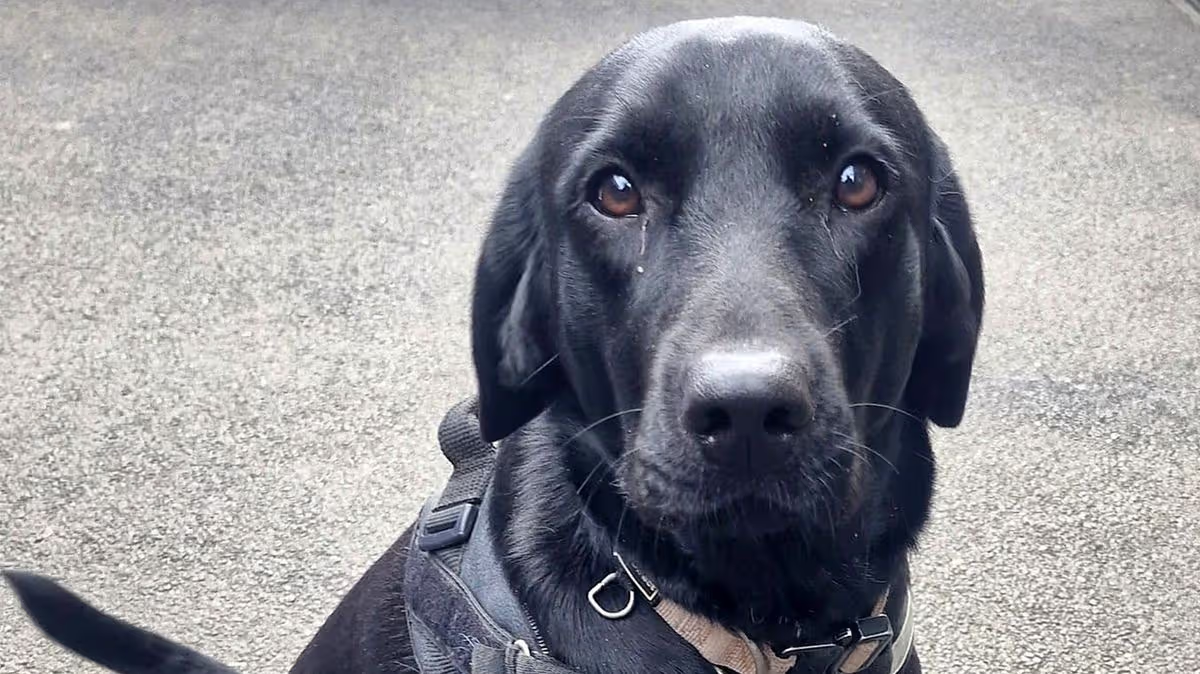




In a significant expansion of transnational law enforcement cooperation, three British sniffer dogs are now being deployed at one of the world’s most critical frontiers: the land border between Bulgaria and Turkey. This bustling crossing point serves as a major artery for illicit goods and human trafficking into Europe. The canine unit, comprising Labrador Luna, springer spaniel Callie, and springer-cocker spaniel mix Sprocket, brings a highly specialized skill set. Trained by the UK’s National Crime Agency (NCA), these dogs are not searching for narcotics or explosives, but for the distinct scent of rubber and materials used in small boats and dinghies. Their mission is to intercept the very equipment used by smuggling gangs to facilitate dangerous Channel crossings, stopping the supply chain far before it reaches northern European shores.
This new deployment builds upon a proven track record of success. Just last week, a UK-trained German short-haired pointer named Adele, already working with Bulgarian police at the same border, aided in a major interception of 48kg of cocaine. The announcement of the additional canine support was made by the UK’s Minister for Europe, Stephen Doughty, during meetings in Sofia with Bulgaria’s new government. Doughty emphasized that this deep cooperation is yielding tangible results, stating that joint work in the previous year alone intercepted 91 boats capable of transporting thousands of people on perilous journeys. He framed the partnership as a cornerstone of the UK’s commitment to European security and a priority for building a closer relationship with the EU, underscoring that stronger international alliances directly translate to greater security at home.
The UK’s support to Bulgarian border security is multifaceted and technologically advanced. Beyond the canine units, the partnership includes the provision of drones to monitor illegal migration through Bulgaria’s challenging mountainous terrain and advanced vehicle scanning equipment to detect concealed contraband and people hidden within lorries. Bulgaria, with its southern border being a primary EU entry point, already seizes more small boats than any other nation. Its recent accession, alongside Romania, to the EU’s Schengen Area in 2025, which eliminates internal border checks, further elevates the importance of robust external border controls. This comprehensive strategy aims to fortify the first line of defense against organized crime networks seeking to exploit European routes.
The international effort to dismantle the small boat supply chain is extensive and coordinated. The NCA and the Home Office International Operations collaborate with a wide network of partners, including Europol and the law enforcement agencies of Belgium, France, and Germany. This concerted action has led to the seizure of more than 1,000 boats and engines since early 2023, with over 500 confiscated in 2025 alone. Kenny Dron, NCA Head of Region, expressed his delight at expanding the work with Bulgaria, a key partner, and highlighted that the new dogs will significantly enhance the ability to disrupt the criminal networks that threaten the security of both nations. This work is part of a broader diplomatic push, following Foreign Secretary Yvette Cooper’s successful agreement with 46 European partners to modernize how the European Convention on Human Rights handles migration cases, thereby strengthening the UK’s operational capacity on border security.
The gravity of the threat these measures combat was starkly illustrated by the case of Hewa Rahimpur, a 32-year-old gang leader recently jailed in Belgium for 11 years. Rahimpur headed one of the largest human trafficking gangs smuggling people across the English Channel, believed to have masterminded the movement of 10,000 individuals. Having arrived in the UK and claimed asylum in 2016, he was granted leave to remain in 2020. He then used Britain as a base to orchestrate a vast criminal operation, sourcing boats, engines, and life jackets from suppliers in Turkey and China and transporting the equipment through Germany, Belgium, and the Netherlands. His operation epitomizes the sophisticated, international nature of the smuggling networks that the UK and Bulgarian authorities are determined to dismantle from the source.
In conclusion, the deployment of Luna, Callie, and Sprocket represents a strategic and proactive shift in combating Channel crossings. By targeting the physical tools of smuggling—the boats and engines—at a distant, primary EU border, the UK and Bulgaria are working to sever the logistical roots of the crisis. This collaboration, blending cutting-edge technology, canine precision, and shared intelligence, underscores a modern approach to transnational security. It recognizes that domestic border protection begins thousands of miles away, through deep partnerships that aim to intercept threats before they ever near the coastline, ensuring safer borders for all involved nations.