


As summer approaches and the promise of warm, sunny days beckons, a sobering reminder emerges from Cancer Research UK (CRUK). The charity has announced that annual new cases of melanoma, the most serious form of skin cancer, have surpassed 20,000 for the first time in the UK, marking a record high. This alarming milestone coincides with sun safety warnings ahead of a bank holiday weekend where temperatures could reach 33°C. The data underscores a pervasive and growing public health issue, driven largely by our relationship with the sun. While the warmth and light are a source of joy and vitality, the ultraviolet (UV) radiation it carries poses a silent, cumulative threat to our skin. Nearly nine in ten melanoma cases are attributed to excessive UV exposure, from both natural sunlight and the use of sunbeds. This statistic frames the rising incidence not as an inevitable fate, but as a largely preventable tragedy, urging a collective shift in how we enjoy the sun.
The patterns within these numbers tell a nuanced story. Women are more likely to be diagnosed with melanoma at younger ages, a trend often linked to social and aesthetic pressures around tanning. However, in later life, the rates become more common in men. For older men, this may reflect decades of accumulated sun exposure through outdoor work or leisure, without consistent protection. CRUK also cautiously notes that “overdiagnosis”—the identification of very early-stage melanomas that might never have become life-threatening—could be contributing to the statistical rise. Regardless, the overarching trajectory is clear and concerning: CRUK estimates that by 2040, annual melanoma cases could exceed 26,000, representing a rise of about 23% in men and 26% in women. This projection is not merely a future forecast but a present-day call to action.
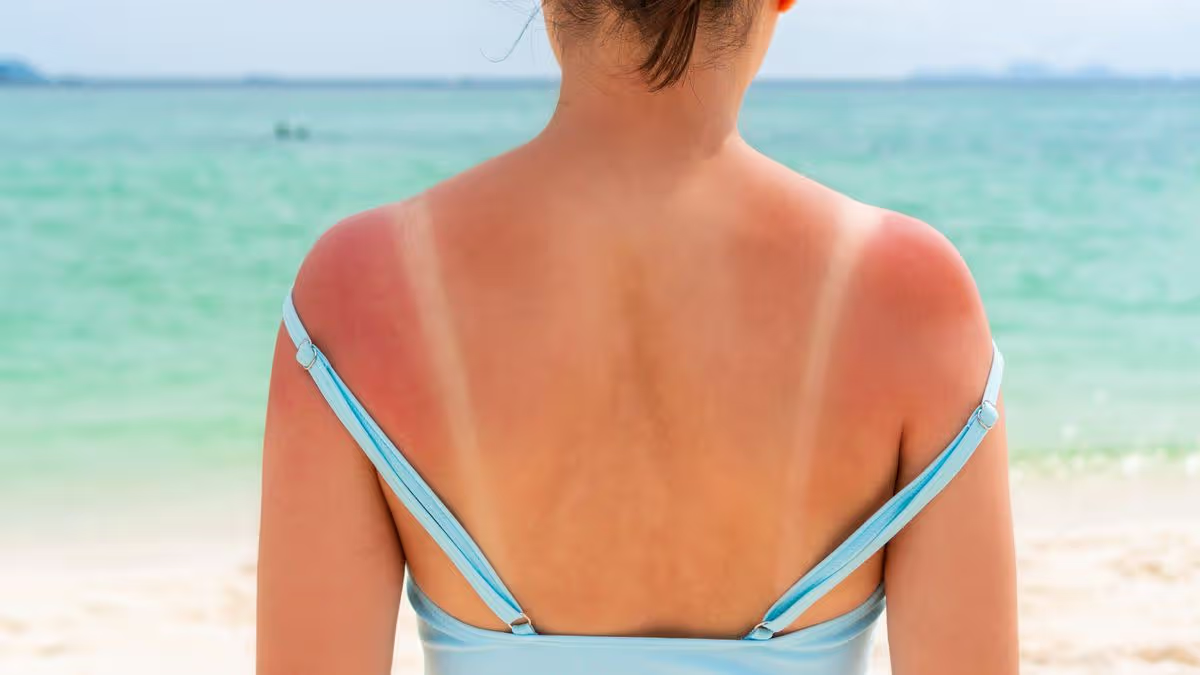
In response to this urgent data, CRUK has partnered with NIVEA Sun to distill sun safety into three fundamental, life-saving principles. First, seek shade, particularly during the peak intensity hours between 11am and 3pm. This simple act of stepping under a tree, umbrella, or going indoors provides a critical respite. Second, cover up with clothing, a wide-brimmed hat, and UV-protection sunglasses. Clothing remains one of the most effective barriers; the more skin covered, the better the protection. Third, apply sunscreen generously and regularly. Choose a product with at least SPF 30 and a high star rating (four or five stars) for UVA protection, and reapply it after swimming, sweating, or towelling. Fiona Osgun, Head of Health at CRUK, emphasizes, “Sunburn is a clear sign your skin has been damaged.” She adds a crucial point: this damage doesn’t only occur on hot, clear days—UV rays can be strong on cooler, cloudier days too. Protecting oneself is a constant requirement when the sun is strong.
Parallel to these public awareness efforts, the UK government is taking legislative steps to address a known risk factor: sunbed use by minors. While under-18s are already barred from using sunbeds, many circumvent the rules through unmanned, contactless systems. A new 12-week consultation, part of the National Cancer Plan, proposes mandatory ID checks by staff, alongside displayed health warnings. Furthermore, businesses making dangerous, misleading claims—such as suggesting sunbeds aid weight loss or prevent sunburn—would be banned. Public Health Minister Sharon Hodgson stated, “Sunbeds cause cancer and yet children as young as 14 are still accessing them illegally. That is not acceptable.” Professor Peter Johnson, NHS England’s Clinical Director for Cancer, reinforced this: “Sunbeds are not a harmless shortcut to a tan – we know they are a cancer risk.” This move aims to close a dangerous loophole and dismantle the myths that surround artificial tanning.
Ultimately, the message from health experts balances caution with empowerment. While the rising numbers are concerning, they highlight a disease where individual behavior plays a profound role in prevention. Michelle Mitchell, CRUK’s chief executive, reminds us, “It’s concerning to see the rising number of people being diagnosed with melanoma skin cancer across the UK. The fact that most of these cases are preventable underlines the importance of people taking sun safety seriously.” This isn’t about fostering fear of the sun, but about fostering respect for its power. It’s about integrating shade, cover, and sunscreen into our routines as seamlessly as we apply sunscreen.
The final, vital piece of the puzzle is vigilance. Early detection can dramatically alter the outcome of a melanoma diagnosis. Mitchell advises, “Whether it is a new or changing mole, a sore that doesn’t heal, or an area of your skin that looks out of the ordinary, it’s important to get it checked out. It probably won’t be cancer, but if it is, getting it diagnosed and treated early can make all the difference.” This combination of proactive prevention and responsive awareness forms our best defense. As we look forward to sunny days, let’s commit to enjoying them safely—protecting our skin today to ensure our health tomorrow, and turning the tide on this record-breaking trend.