


I. A Community’s Hope Extinguished
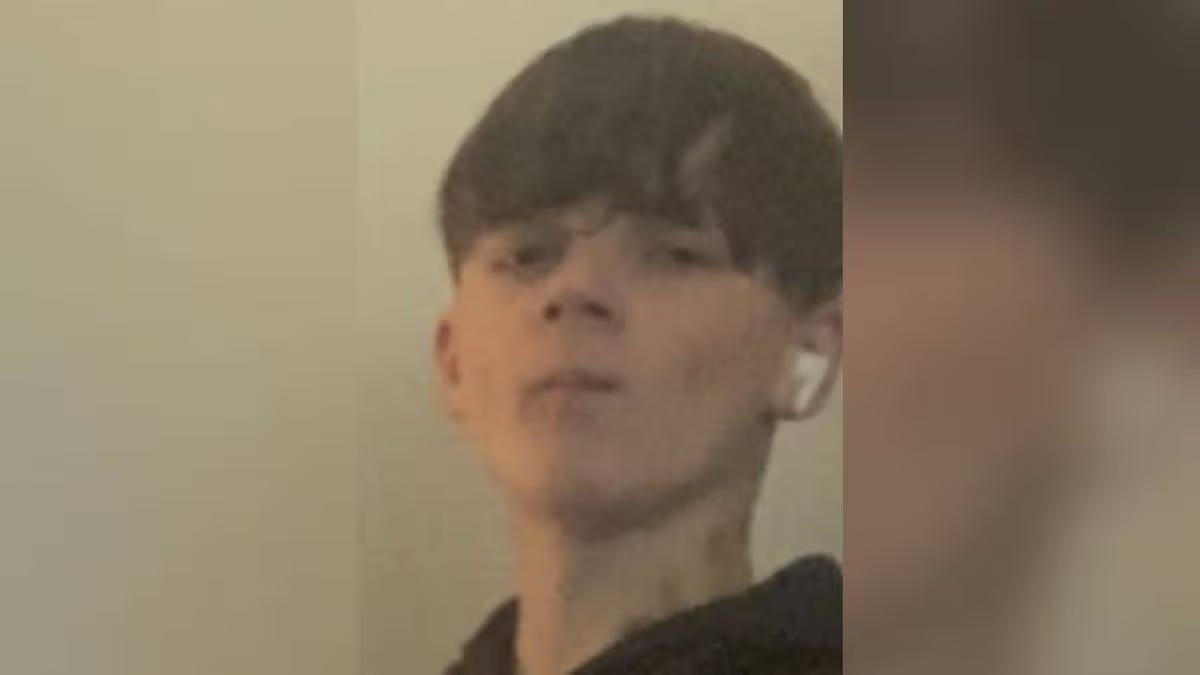
The desperate search for a missing child is a profound ordeal that grips a community, binding strangers together in a shared vigil of hope and dread. For four agonizing days, the residents of Stoke-on-Trent, alongside dedicated police officers, held onto that fragile hope for 14-year-old Tyler Townsend. He was last seen on a Sunday, 17 May, a boy stepping out into the world from which he would not return as the child his family knew. The search was extensive, a testament to the collective will to bring him home safely. Every passing hour stretched the tension thinner, as friends, neighbors, and volunteers likely scanned familiar streets and parks with new, fearful eyes. This pervasive hope, however, was devastatingly extinguished on the evening of Thursday, 21 May, casting the city into a profound and collective grief. The discovery of a body believed to be Tyler’s in a wooded area near Burslem Cemetery marked the tragic, somber conclusion to a community’s worst fears.
II. The Solemn Official Confirmation
In the wake of such a discovery, the formal statements from authorities carry a heavy, deliberate weight, designed to convey grim facts with necessary clarity and compassion. Staffordshire Police confirmed the heartbreaking update, their spokesman giving voice to the community’s silent dread. “We can sadly confirm that a body has been found in the search for missing 14-year-old Tyler,” the statement began, immediately anchoring the event in a painful reality. The confirmation that the body was discovered shortly after 7pm localised the tragedy in time and place—a wooded area near the local cemetery, a setting that adds a layer of poignant solemnity. The police spokesman carefully outlined the timeline, from Tyler’s disappearance on Sunday to the extensive searches undertaken, before delivering the devastating news. This formal communication, while stark, serves as the crucial pivot from a story of a missing person to one of a profound loss, setting the stage for the processes of mourning and inquiry to begin.
III. Navigating Grief and Procedure
In the immediate aftermath, the human and procedural responses unfold in parallel, one deeply personal and the other systematically official. The police statement immediately pivoted to the most critical human element: Tyler’s family. Officers were reported to be supporting his family “at this deeply distressing time,” a simple phrase that encompasses a world of sorrow, shock, and unimaginable pain. Simultaneously, the machinery of understanding such a loss began to turn. The authorities indicated that formal identification would follow, a necessary but harrowing step for the family. In a detail that perhaps offers a small, cold comfort amid the tempest of grief, they stated his death was “not being treated as suspicious.” This suggests an absence of foul play, potentially pointing toward tragedy or misadventure, though it in no way diminishes the loss. A file will be prepared for HM Coroner, who will seek to establish the final, official circumstances surrounding this young life cut short.
IV. The Ripple Effect of Loss
The impact of a child’s death never exists in isolation; it radiates outward, touching every layer of the community and the professional networks tasked with response. Local media, represented here by StokeonTrentLive, immediately sought broader context, reaching out to the West Midlands Ambulance Service for comment following what they rightfully termed a “heartbreaking incident.” This outreach highlights the collaborative nature of such emergencies, involving not just police but also paramedics and first responders who attended the scene. Their perspective would shed light on the final, frantic moments of the search and the medical response. Furthermore, this tragedy reverberates through Tyler’s school, where classmates and teachers must now grapple with a crushing absence. It echoes in the streets where he played and in the hearts of all who followed the search, transforming a city’s landscape into a memorial of what was and what has been lost.
V. The Unanswerable Questions and Enduring Memory
As the initial shock subsides, the void left behind fills with unanswerable questions and the slow, painful work of memory. Why did this happen? What occurred in the moments between Tyler being last seen and this tragic discovery? The coroner’s inquest may provide some clinical answers, but for a family and a community, the existential questions of grief have no such tidy resolution. Tyler ceases to be a name in a news bulletin and becomes a remembered smile, a favorite hobby, an unfinished story. The community of Stoke-on-Trent, and particularly the neighborhood near Burslem, is now forever marked by this event. The wooded area where he was found transitions from a simple part of the local geography into a site of profound sorrow. The collective focus now must shift, from the frantic energy of a search to the quiet, enduring support required for a family navigating the darkest of paths.
VI. A Reflection on Fragility and Community
Ultimately, this tragedy is a stark, sorrowful reminder of the fragility of life and the bonds that hold a community together in times of crisis. The loss of Tyler Townsend, a 14-year-old schoolboy with his entire future ahead of him, is an incalculable tragedy. It underscores how quickly normalcy can shatter and how the universal hope of seeing a missing child return home safely can be devastatingly denied. In the coming days, as formalities are completed and headlines fade, the real work of healing begins. It will be found in the compassion of neighbors, the sensitivity of Tyler’s school in supporting grieving students, and the long-term embrace of a family facing an unimaginable journey. The story that began with a missing person report ends not with closure, but with a legacy of grief and a testament to a community that searched, hoped, and now must mourn together, remembering a young life lost far too soon.