



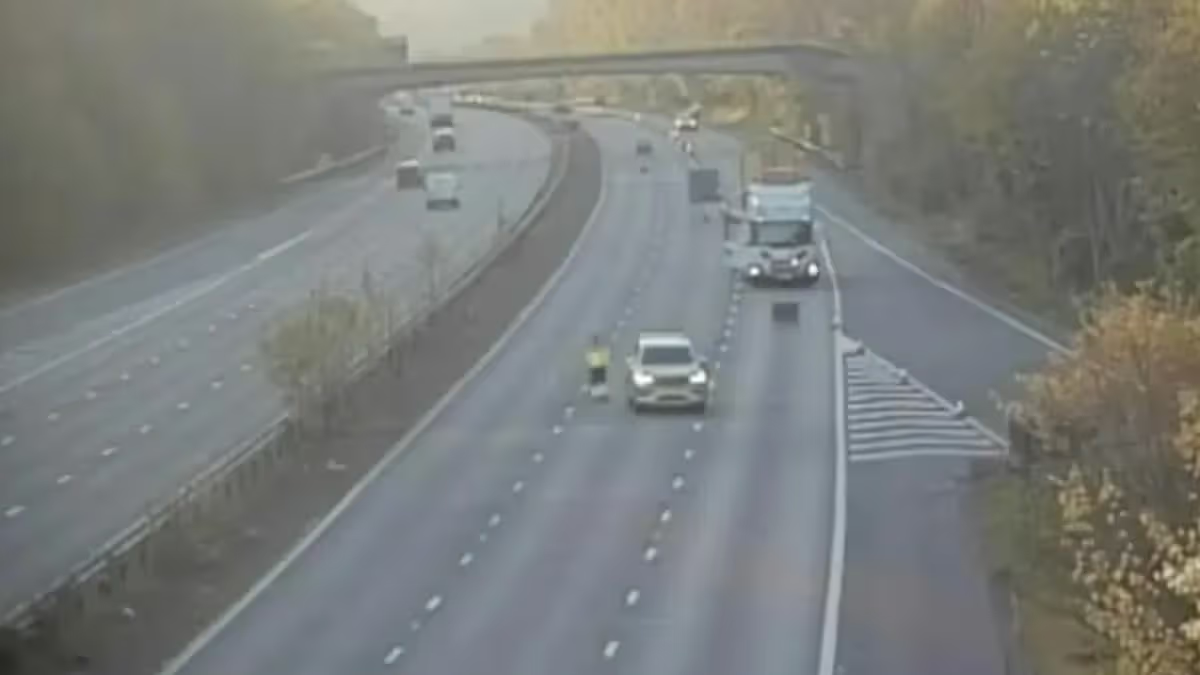
Of the numerous incidents that strain the United Kingdom’s road networks each year, few are as disruptive as a major motorway closure. This was starkly illustrated on a recent Sunday when the M4, a critical artery for travel and commerce connecting London to South Wales, was struck by not one, but two serious collisions within hours of each other. The initial incident, a significant crash involving a coach, was severe enough on its own to bring traffic to a standstill and demand a large-scale emergency response. However, the day’s toll was tragically compounded when a second serious collision was reported later, unfolding in the same westbound corridor. This one-two punch of accidents created a cascading crisis, effectively trapping vehicles for miles and overwhelming recovery efforts, turning a section of the motorway into a tableau of halted lives and logistical nightmare.
The specific stretch impacted was the M4 in Wiltshire, westbound between Junction 16 near Swindon and Junction 17 near Chippenham. Following the collisions, National Highways, the government company responsible for England’s motorways, had no choice but to confirm a full closure of these lanes. This decision, while necessary for the safety of emergency responders, the injured, and recovery crews, sent ripples of disruption across the region. The closure severed a primary route for countless individuals: families returning from weekend trips, commercial drivers on tight deadlines, and residents commuting between towns. What is often taken for granted as a conduit of seamless movement became an impassable barrier, forcing a sudden and chaotic recalibration of journeys for thousands of people.
Behind the official statements and traffic alerts lies a more human story of anxiety, frustration, and concern. Imagine the scene within the snaking queues of stranded vehicles: parents worrying about restless children and dwindling fuel, couriers frantically calling clients about delayed deliveries, and individuals straining to hear any crumb of information over the radio. For those directly involved in the crashes and their loved ones, the situation was fraught with far graver fear and uncertainty. Meanwhile, in the surrounding villages and alternative routes like the A3102, an unexpected influx of redirected traffic likely brought its own form of chaos to normally quiet communities, a secondary effect of the motorway’s failure.
The emergency response to such a dual incident is a monumental undertaking, a symphony of coordination under immense pressure. Police, fire and rescue services, and ambulance crews were first on the scene, their priority being to save lives, treat the injured, and secure the hazardous sites. National Highways officers then worked to implement the closure, set up diversions, and assist recovery operators tasked with the delicate job of removing damaged vehicles, including the sizable coach, and clearing debris. Each hour of closure represents an enormous logistical effort, with crews working meticulously to ensure the roadway could be reopened safely, all while managing the ever-present risk to their own safety beside a live, though stalled, motorway.
This severe disruption forces us to confront our collective vulnerability to such events. Our modern society is built on assumptions of connectivity and predictable transit times, yet a single accident—let alone two—can unravel those assumptions in minutes. The economic cost is significant, from lost working hours and wasted fuel to delayed freight and missed appointments. However, the human cost is more profound: the stress inflicted on stranded motorists, the trauma experienced by those involved, and the anguish of families awaiting news. It is a stark reminder that behind every traffic report are real people having a profoundly difficult day, their plans and peace of mind collateral damage in an unexpected crisis.
Ultimately, the reopening of the westbound M4, whenever it safely occurred, would have been met with a collective sigh of relief from drivers and residents alike. Yet, the memory of that disrupted Sunday lingers as a sobering lesson. It underscores the incredible skill and bravery of our emergency services who manage these crises, and the fragility of the infrastructure we so heavily rely upon. While we hope all those affected are on the path to recovery, incidents like these leave a lasting imprint, encouraging us to reflect on our dependence on these ribbons of tarmac and to foster greater patience and empathy for others when the journey, through no one’s fault, becomes unexpectedly and severely interrupted.