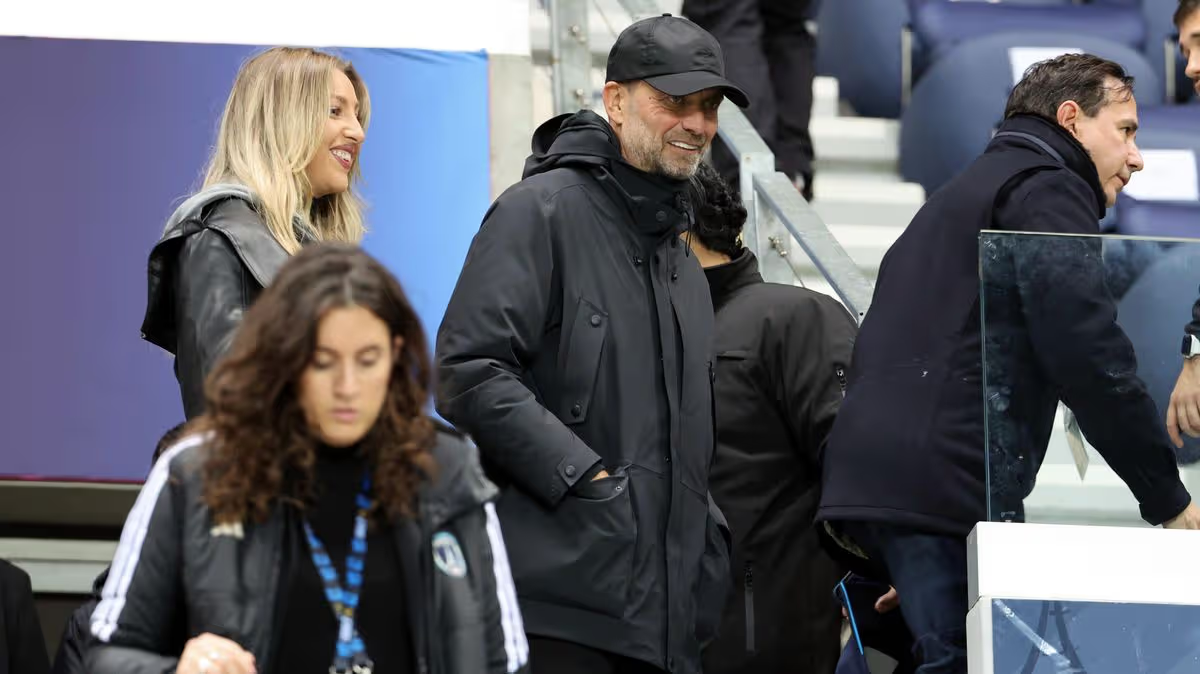


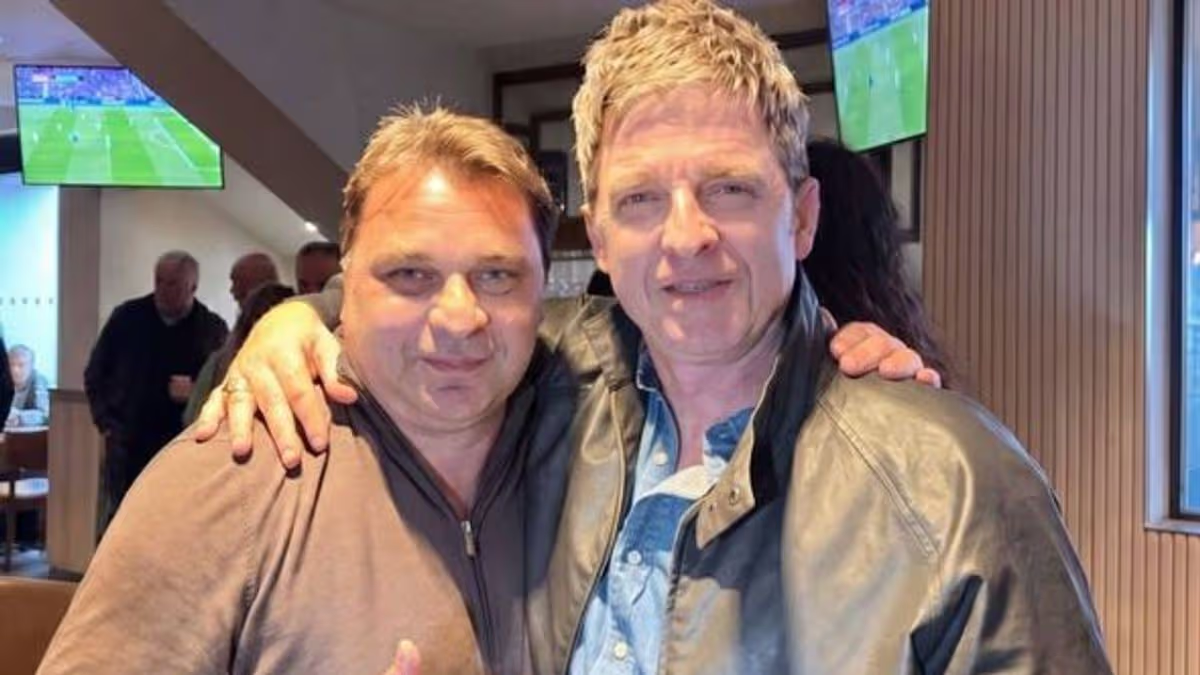
It felt like a perfect distillation of Manchester City’s journey: a crucial, character-revealing victory over title rivals Arsenal witnessed not just by thousands in the stadium, but by two men who symbolise the club’s soul across different eras. In the stands at that pivotal match, Oasis icon and lifelong City fan Noel Gallagher was photographed alongside a figure from a more turbulent past, Georgian midfield maestro Giorgi Kinkladze. The image posted by Kinkladze himself prompted a wave of affectionate nostalgia from supporters, many of whom were struck by how different the former player looked from his iconic, floppy-haired playing days. His caption, celebrating “football, music, and Manchester as it should be,” bridged the gap between the club’s gritty past and its glittering present, reminding everyone that the current dominance was built on the memories and magic of a different time.
Kinkladze’s presence was a direct link to that time, a period in the mid-1990s that City fans recall with a unique blend of fondness and pain. His three seasons at a struggling City, then playing at Maine Road, coincided with one of the club’s darkest chapters, including relegation. Yet, amidst the gloom, Kinkladze provided precious, dazzling flashes of artistry. He became a cult hero, revered for his mesmerizing dribbling, weaving solo runs, and spectacular goals—precious moments of brilliance that offered hope and pure footballing joy when results often did not. The outpouring of comments on his post, calling him a “hero,” an “icon,” and “one of City’s greats,” is a testament to the enduring legacy he forged not through trophies, but through sheer talent and heart.
Noel Gallagher’s own recollection of first seeing Kinkladze perfectly captures the thrilling, chaotic essence of that era. He famously described the experience of watching the Georgian’s debut as being simultaneously the “most frightening” and “best” thing he’d ever seen on a pitch, a sentiment that encapsulates the unpredictable, edge-of-your-seat nature of following City before the modern transformation. Gallagher’s anecdote about sitting next to Terry Venables and being stunned into disbelief is a fan’s story, highlighting how Kinkladze’s talent was so extraordinary it transcended the team’s struggles and became a personal, cherished memory for everyone who witnessed it.
This reverence for Kinkladze’s ability extends far beyond the fanbase. His former teammate, Chris Greenacre, offered perhaps the ultimate compliment by comparing him to Diego Maradona, citing his low centre of gravity, explosive agility, and surprising strength. Greenacre’s awe-struck memories of training sessions, where Kinkladze would routinely glide past multiple players with ease, paint a picture of a natural genius. To be considered “quite arguably the best I’ve ever been involved with” by a fellow professional, despite the team’s collective hardships, underscores that Kinkladze’s talent was objectively sublime, a bright diamond in the rough.
The powerful contrast between then and now is the unspoken heart of this reunion. The man who once provided solitary beacons of hope for a club fighting relegation was now a guest watching that same club, transformed into a global powerhouse, secure a potentially title-deciding win against the league’s best. City’s current position at the Premier League summit, locked in a fierce battle with Arsenal, is a reality that once seemed like a distant dream during Kinkladze’s tenure. His return to witness this modern pinnacle serves as a poignant full-circle moment, validating the faith and passion of those who loved the club through its less glamorous days.
Ultimately, the image of Kinkladze and Gallagher together is more than just a celebrity snap from the stands. It is a symbolic handshake between two eras of Manchester City. It honours the artistic brilliance that sustained the spirit of the club when little else did, and it celebrates the world-conquering institution that spirit helped to build. Their shared moment is a reminder that while the club’s landscape has changed beyond recognition, its soul—forged in moments of individual magic, unwavering fan loyalty, and a distinctly Mancunian blend of football and music—remains beautifully, and triumphantly, intact.