



A Promising Life Lost to Darkness
In April of last year, Zara Afua Ampong-Appiah, a 30-year-old postgraduate psychology student at Royal Holloway, University of London, was found deceased in her bed in Leytonstone, East London. Hers was a life filled with promise—as a research student and a talking therapist with an NHS mental health service, she had dedicated herself to understanding and helping others. Yet unbeknownst to her family, colleagues, and friends, Zara had been privately struggling with her own mental health for over a year. Beginning in February 2023, she had sought medical help for depression and anxiety, was prescribed anti-depressants, and was repeatedly signed off from work. Despite these challenges, she assured her doctor she had no thoughts of self-harm, leaving those closest to her completely unaware of the depth of her suffering.
The Digital Trail of Despair
After her death, an examination of Zara’s digital devices revealed a heartbreaking search history, filled with dozens of references to suicide. She had repeatedly searched for a specific lethal substance commonly associated with so-called “suicide kits” and had visited a U.S.-based pro-choice suicide website. Police discovered that, shortly before her death, intelligence suggested a potentially harmful substance may have been delivered to her address from overseas. Although no direct evidence of a purchased kit was found in her home, the digital clues painted a clear and tragic picture. Zara’s case is now part of a broader Metropolitan Police investigation into at least five UK deaths potentially linked to overseas sellers of such dangerous kits.
A Family Shattered by Unseen Pain
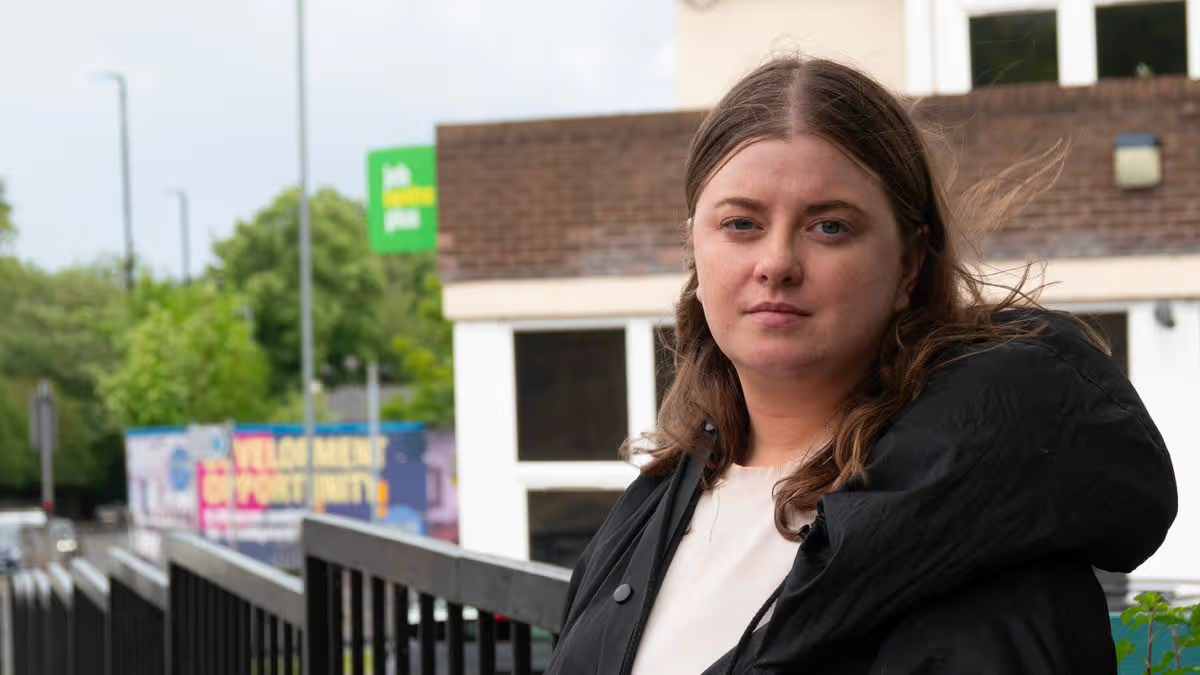
Zara’s mother, Elly Oppong, a retired cook from Hackney, described her daughter as a calm, likable, and ambitious person who “loved learning.” In a statement to the coroner, she expressed utter devastation, noting there had been “absolutely no warning” and that not one family member or friend saw any sign of what was to come. Mrs. Oppong lamented the strict confidentiality rules that prevent healthcare providers from informing family members when an adult child is struggling mentally, questioning whether greater openness could have allowed her to provide support. “It would have been easier if I knew she was struggling,” she said. “We could have supported her.”
A Growing and Deadly Phenomenon
Zara’s death highlights a disturbing and growing trend in the UK and internationally, where individuals in acute mental distress are able to obtain lethal substances online. Estimates suggest hundreds in the UK may have died after ordering such “suicide kits” from abroad. The U.S. website Zara visited is now blocked for UK users, though some find ways to bypass the restriction. In the UK, under the Suicide Act 1961, it is a criminal offence to assist or encourage suicide, including the importation or supply of kits or substances intended for self-harm. This legal framework is being tested by the borderless nature of the internet and international trade in these dangerous goods.
Broader Cases and Calls for Action
The issue has drawn increasing scrutiny from authorities. In Canada, chef Kenneth Law is awaiting trial, accused of supplying lethal substances linked to scores of deaths worldwide—including many in the UK. Closer to home, a 2021 coroner’s report following the death of 23-year-old James Nowshadi warned of the need for national guidance to address these substance-linked deaths, stating that without action, future deaths could occur. Just months before Zara’s death, 44-year-old Jane Louise Colechin was also found to have died from the effects of the same substance, underscoring the repeated and tragic pattern.
A Conclusion and a Plea for Awareness
At the inquest into Zara Afua Ampong-Appiah’s death, Area Coroner Nadia Persaud recorded a conclusion of suicide, citing the toxicology results and the digital evidence of her searches. Zara’s story is a poignant reminder of the hidden battles many face and the devastating consequences when despair meets easy access to lethal means. It also raises urgent questions about mental health support, patient confidentiality, and the regulation of online content. For anyone struggling, or for those worried about a loved one, support is available through organizations like the Samaritans, who offer a confidential listening ear at any time. In Zara’s memory, and for countless others, greater awareness, conversation, and intervention are vital to prevent such profound loss.