



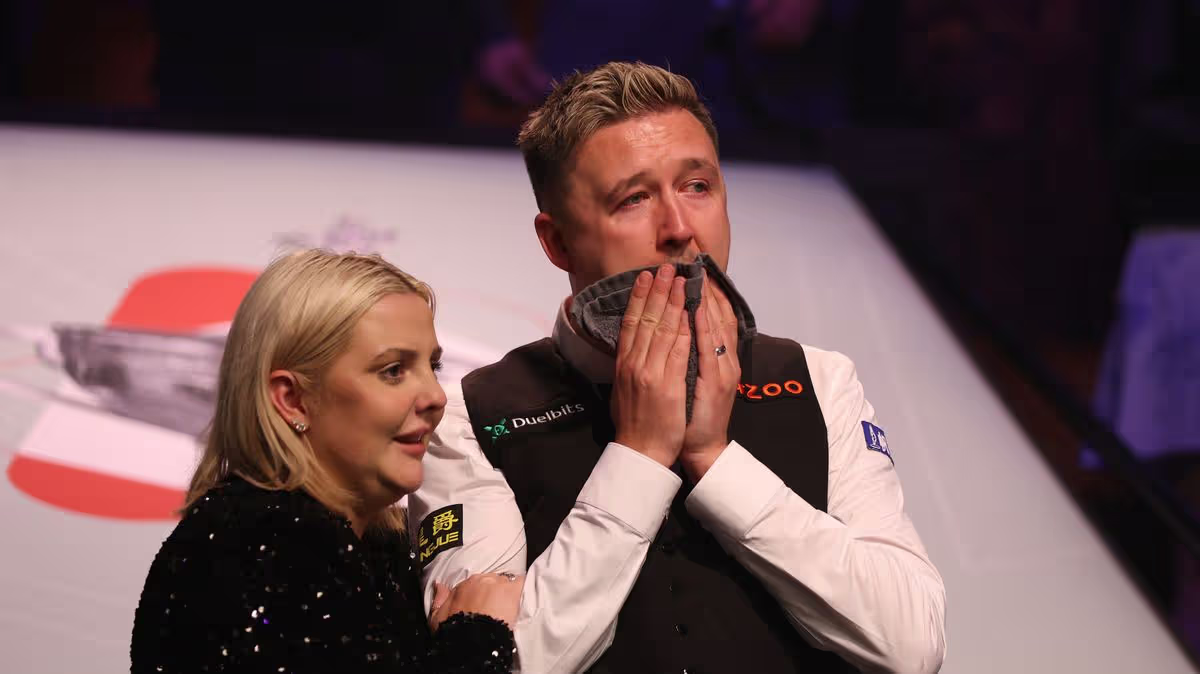
Kyren Wilson’s departure from the 2026 Snooker World Championship was more than a sporting defeat; it was the culmination of a season played under the heavy weight of personal adversity. After losing 13-9 to Mark Allen in the second round at the Crucible, the 2024 champion offered a raw and forthright assessment of his campaign, revealing that his struggles on the table were inextricably linked to profound challenges at home. His wife, Sophie Lauren, has faced serious health issues, including a previous stroke and an epilepsy diagnosis, and was scheduled for surgery just as the sport’s most prestigious tournament began. Wilson confessed he hadn’t seen her in over a week, a sacrifice that laid bare the immense personal cost behind his professional appearance. This context transforms his season from a simple sporting narrative into one of human resilience, where merely competing was an act of defiance.
Despite the emotional toll, Wilson’s season was paradoxically punctuated by significant, high-profile victories that underscore his remarkable fortitude. While he failed to capture a ranking title—a fact that will see his world ranking drop from No. 2 to an estimated No. 6—he triumphed in two of snooker’s most lucrative and prestigious invitational events: the Shanghai Masters and The Masters, earning a combined £560,000. Reflecting on this, Wilson framed these wins not just as achievements, but as vital affirmations of his character during a tumultuous period. “To have so many different variables going on, I’m proud that I managed to win two tournaments off the back of that. It’s just a testament to what a winner I am really,” he stated. This perspective reveals an athlete measuring success not solely by rankings or consistency, but by the ability to summon elite performance while carrying a private burden.
The Crucible campaign itself was, by Wilson’s own admission, a grueling “tough outing” from the very start, a stark contrast to his dominant 2024 title run where he felt he “coasted through.” This year, he found himself battling on multiple fronts. His first-round match against young Stan Moody was a struggle, and he could never establish a commanding rhythm against a determined Mark Allen. The Northern Irishman, a perennial contender still seeking his first world title, capitalized on Wilson’s uncharacteristic vulnerabilities, winning four of the six frames in their concluding session to seal the match. Wilson acknowledged the difference in his mental and physical state, conceding, “I felt I could win the world championships because I feel like I’ve got that determination… but I knew it was gonna be a struggle.”
In a display of sportsmanship that transcended his own disappointment, Wilson was effusive in his praise for Allen, the player who ended his title defense. He described Allen as “a great lad, down to earth” and a battler with every chance to go on and claim the championship. “I said to him ‘you’ve got every chance of winning it’… I would love to see him win it,” Wilson shared. This generous sentiment in a moment of personal and professional setback highlights the deep mutual respect among competitors at the highest level and Wilson’s inherent grace, shifting the focus from his own exit to the potential triumph of a respected peer.
Now eliminated, Wilson’s immediate priority is a clear and heartfelt one: family. His statement, “I’m just going to spend a bit of time with my wife, my kids. I miss my dog,” cuts through the usual rhetoric of practicing harder or analyzing technique. It signals a necessary and deliberate retreat from the pressures of the tour to focus on being a husband and father, to provide support after a period where his family’s stability was paramount to his own ability to perform. This homecoming represents the most important frame he will now play, one of reconnection and care after a prolonged period of strain and separation.
Looking ahead, Wilson departs Sheffield with a sense of perspective and quiet confidence. The difficulties of the past season are not seen as a permanent decline, but as a challenging chapter that, once navigated, will allow his best snooker to reemerge. “Once I do settle down, you’ll see the best version of me again,” he affirmed. This promise is not just for his fans, but perhaps a reassurance to himself. Kyren Wilson’s story this season is a poignant reminder that athletes compete as whole people, and that sometimes the most significant victories are not those etched on trophies, but those fought in the quiet spaces of personal life, from which true resilience is forged.