


The Forgotten Revolution: Britain’s Nine-Day General Strike of 1926
In the predawn hours of May 4, 1926, an eerie silence descended upon Britain. The familiar rumble of trains and trams was absent; factory whistles remained silent. For the first time in history, the nation’s industrial heartbeat had voluntarily stilled. This was the beginning of the General Strike, a seismic nine-day event where over two million workers from docks, railways, printworks, and factories walked out in solidarity. Their cause was the defense of one million coal miners, who had been locked out of the pits for refusing devastating wage cuts. The strike was not a sudden outburst, but the climax of years of simmering conflict in a coal industry that powered the British Empire yet treated its workforce with contempt. The nation’s economic backbone—its transport and heavy industry—ground to a halt, not for political revolution, but for the simple, dignified principle of a fair day’s pay for a fair day’s work.
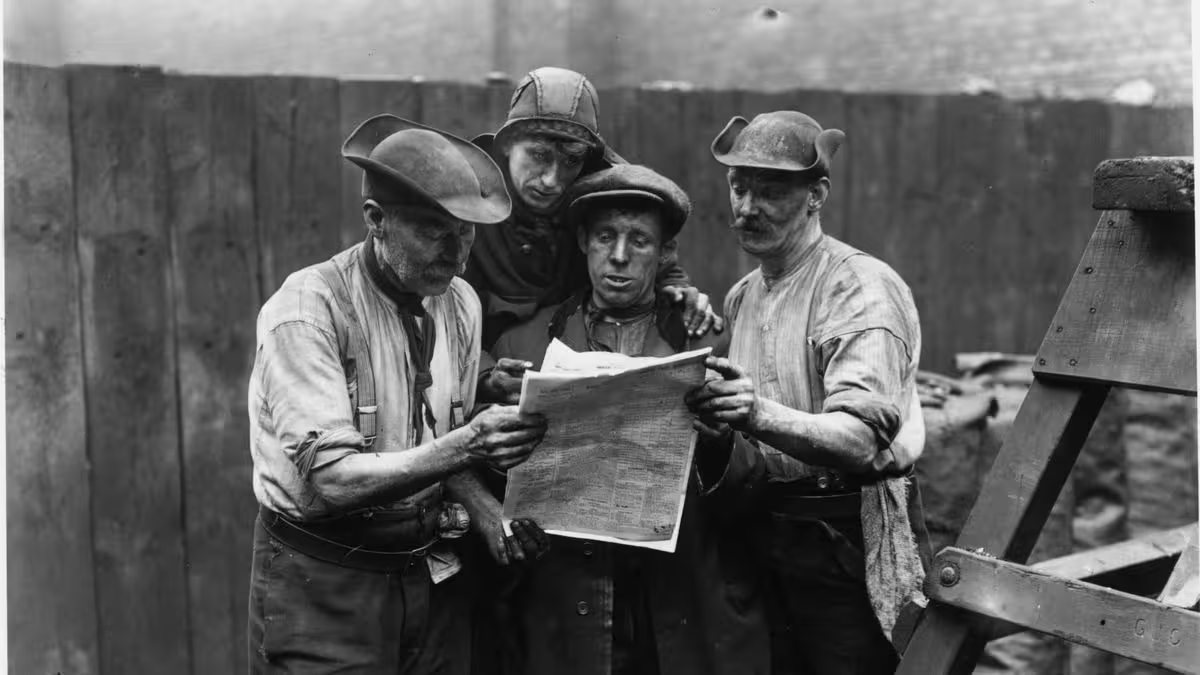
At the heart of the conflict were the miners themselves, men who led brutal, short lives deep underground. Their leaders, like the plain-speaking Yorkshireman Herbert Smith and the fervent orator A.J. Cook, were forged in the pits. They had witnessed death and injury firsthand and were fiercely protective of the hard-won rights their communities had scraped from the earth. Their famous slogan, “Not a penny off the pay, not a second on the day,” became a rallying cry. Arrayed against them were the coal owners, a class of aristocrats and industrialists famously derided by a government minister as “the stupidest men in England.” Facing falling profits due to a struggling post-war economy and Winston Churchill’s decision to return to the gold standard, which made British coal less competitive, their only solution was to slash miners’ wages. A temporary government subsidy in 1925—a victory celebrated as “Red Friday”—had only delayed the inevitable confrontation, setting the stage for a monumental struggle between capital and labor.
When the strike began, it unleashed a war for the nation’s soul, fought not just on picket lines but in the newspapers and the new medium of the wireless. With traditional printers on strike, both sides launched their own propaganda sheets. The Trades Union Congress (TUC) published The British Worker, insisting this was an industrial dispute, not a political revolution. The government retaliated with The British Gazette, edited by a belligerent Winston Churchill, which framed the strike as a revolutionary plot. The fledgling BBC, under its director John Reith, became an unlikely government mouthpiece, broadcasting Prime Minister Stanley Baldwin’s appeals for “constitutional obedience” while refusing airtime to church leaders proposing compromise. The message from the establishment was clear: this was an attack on British law and order itself, a narrative that deeply frightened the moderate TUC leadership.
On the streets, however, the strike revealed astonishing working-class unity and disciplined organization. Strike committees effectively managed civic life, issuing permits for essential food supplies. The response from the middle and upper classes was a massive mobilization of volunteers. Oxbridge students drove buses and unloaded ships; society ladies ran canteens in Hyde Park; gentlemen from London clubs donned the armbands of special constables. This was class warfare in its most literal sense, and it sometimes turned violent. Stones were thrown at convoys, strike-breaking vehicles were sabotaged, and in one infamous incident, the Flying Scotsman express was derailed. Amidst the tension, thousands were arrested under emergency powers, and Churchill prepared a paramilitary force. Yet, for all the conflict, a remarkable civility often prevailed, exemplified by strikers and police pausing their confrontation for a friendly football match in Plymouth.
The strike’s end was not decided on the picket lines, but in secret, panicked negotiations. Fearing the situation was spiraling toward genuine revolution, moderate TUC leaders, desperate for a face-saving compromise, seized on a proposal drafted by Sir Herbert Samuel of the earlier Royal Commission. Believing they had secured a basis for negotiation to protect the miners, the TUC leadership called off the general strike on May 12. It was a catastrophic miscalculation. Prime Minister Baldwin immediately announced the government was not bound by Samuel’s memorandum. The solidarity had been surrendered for nothing. As the two million other workers returned, often to victimization and blacklisting, the miners were left isolated to fight a doomed, seven-month rearguard action before starvation forced them back to work for lower pay and longer hours. A bitter A.J. Cook later lamented they had been “bullied” more by their own union leaders than by the government.
The establishment swiftly recast the “Nine Days’ Wonder” as a misguided fever dream, a narrative that has persisted in popular culture, where the era’s defining class battle is often ignored or romanticized into background gangsterism. But in mining communities, the betrayal and solidarity of 1926 were never forgotten, breeding a deep-seated distrust that echoed for generations. A century later, the General Strike stands as a powerful, complex monument. It is a testament to the breathtaking potential of collective working-class action, and to the profound fear it instills in the powerful. It demonstrates both the extraordinary lengths to which ordinary people will go to protect one another, and the relentless determination of the state and privileged classes to defend the existing order, by propaganda, volunteer armies, and political betrayal. It remains not a dusty historical footnote, but a raw and resonant story of power, solidarity, and the high cost of both defiance and compromise.