




The Simple Boiler Setting That Could Slash Your Energy Bills
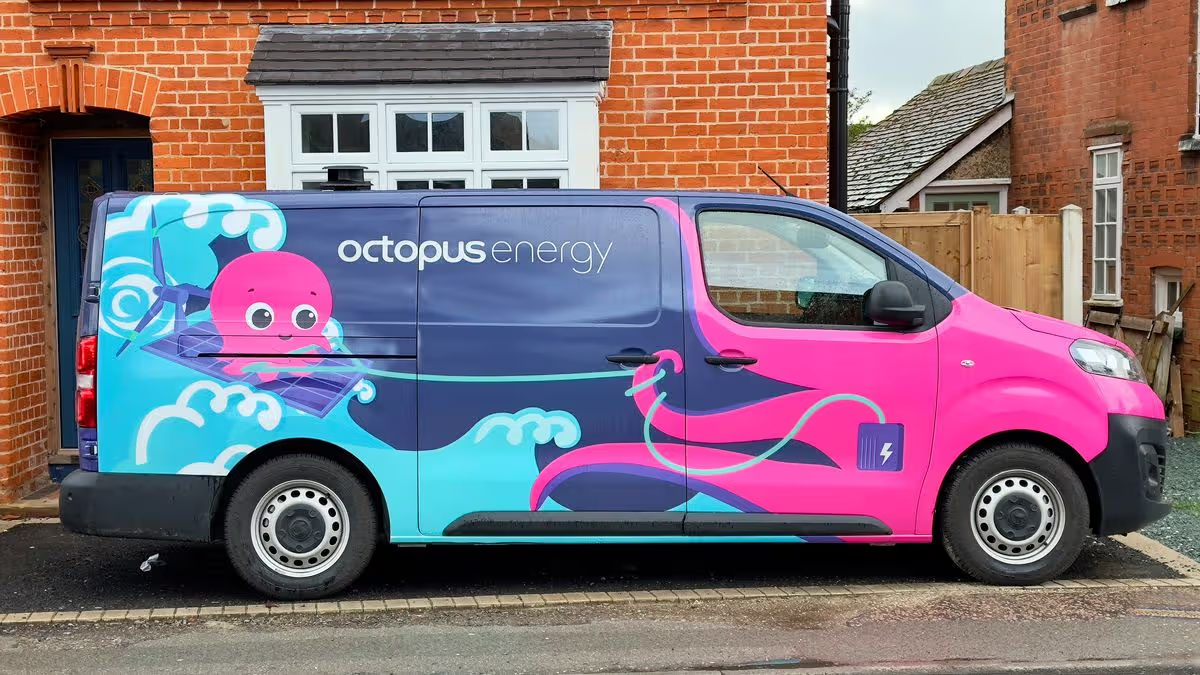
In countless British homes, the combi boiler hums away as an unsung cornerstone of modern comfort. As the most common type of boiler in the UK, this compact combination unit provides both hot water and central heating without the need for a bulky separate tank. While we rely on it daily, few of us realize that a single, often overlooked setting on this very appliance might be quietly inflating our gas bills. According to a compelling initiative from Octopus Energy and the innovation charity Nesta, adjusting this one setting could unlock significant savings for households and the environment alike. The message is clear: a change taking just minutes could put hundreds of pounds back into family budgets.
The secret lies in the boiler’s ‘flow temperature’—the temperature at which it sends water to your radiators. Many combi boilers are set by default or habit to a flow temperature between 70°C and 80°C. However, experts point out they operate most efficiently at 60°C or below. By simply turning a dial or pressing a few buttons to lower this setting to between 55°C and 60°C, a household could save up to £65 annually on their gas bill. This isn’t a drastic measure that leaves you shivering; it’s a smart optimisation. The boiler will still heat your home effectively, but by running in a more condensing, efficient mode, it uses less gas. Crucially, the change can be reversed instantly, so there’s absolutely nothing to lose by trying it.
The potential impact, when scaled up, is staggering. Nesta calculates that if 10 million households made this simple adjustment, the collective savings could wipe an astonishing £1 billion off the UK’s national energy bills. Furthermore, it would prevent around 1.7 million tonnes of carbon emissions, an environmental benefit equivalent to taking nearly six million transatlantic flights off the map. This frames the humble boiler dial not just as a household money-saver, but as a powerful tool for national energy security and climate action. It’s a rare win-win where personal finance and planetary health align perfectly through a no-cost, reversible tweak.
Lowering your flow temperature is just one of ten practical tips promoted by Octopus Energy, which together could save the average household approximately £517. The advice is a masterclass in realistic, everyday frugality. It encourages air-drying laundry instead of using the tumble dryer (saving £50), diligent draught-proofing of windows and doors (£85), and smarter use of the thermostat by timing heating to when you’re actually home (£90). Other steps include fitting an insulation jacket on a hot water tank (£40), switching devices off standby (£45), reducing shower time (£45), and swapping to LED bulbs (£45). Even laundry habits contribute: washing clothes less often and at 30 degrees can save £27.
Beyond active saving measures, there is another potential source of cash tied up in the energy system itself. Recent analysis reveals that energy suppliers are currently holding around £3 billion in customer credit balances—a sum that has grown by £179 million compared to the previous year. The average household is in credit by nearly £200. This often accumulates when direct debit payments are set higher than actual usage, particularly after a mild winter. Consumers are therefore urged to provide regular meter readings to ensure bills are accurate and to contact their supplier to request a refund of any significant overpayment, which can provide a helpful cash-flow boost.
Ultimately, navigating the cost of living requires a blend of vigilance and simple action. From the profound savings hidden in a boiler setting to the cumulative effect of mindful daily habits, significant financial relief is within reach. Empowering yourself with a few minutes to adjust your boiler, alongside a review of your account credit and home energy habits, can lead to tangible rewards. In an era of high bills, these actions represent more than just savings; they are a regained sense of control and a proactive step towards a more efficient, sustainable home. The power to cut costs, it turns out, has been at your fingertips all along.