

Paragraph 1: A Day of Disruption and Fear in a Royal Park
On a Friday in mid-April, the serene atmosphere of London’s Kensington Gardens was shattered by a wave of intense police activity. Following reports of a suspicious discovery near the Embassy of Israel, Metropolitan Police officers swiftly descended upon the iconic Royal Park, initiating a major security lockdown. The alert was triggered by the discovery of several items, including two jars containing an unidentified powdered substance. This discovery was immediately linked by authorities to an alarming online video, in which a group claimed to have used drones to target the Israeli Embassy with what they described as “radioactive and dangerous carcinogenic material.” The gravity of these claims transformed the peaceful gardens, frequented by families, joggers, and tourists, into the centre of a counter-terrorism investigation, casting a shadow of anxiety over the surrounding neighbourhoods.
Paragraph 2: An Overwhelming Security Response Unfolds
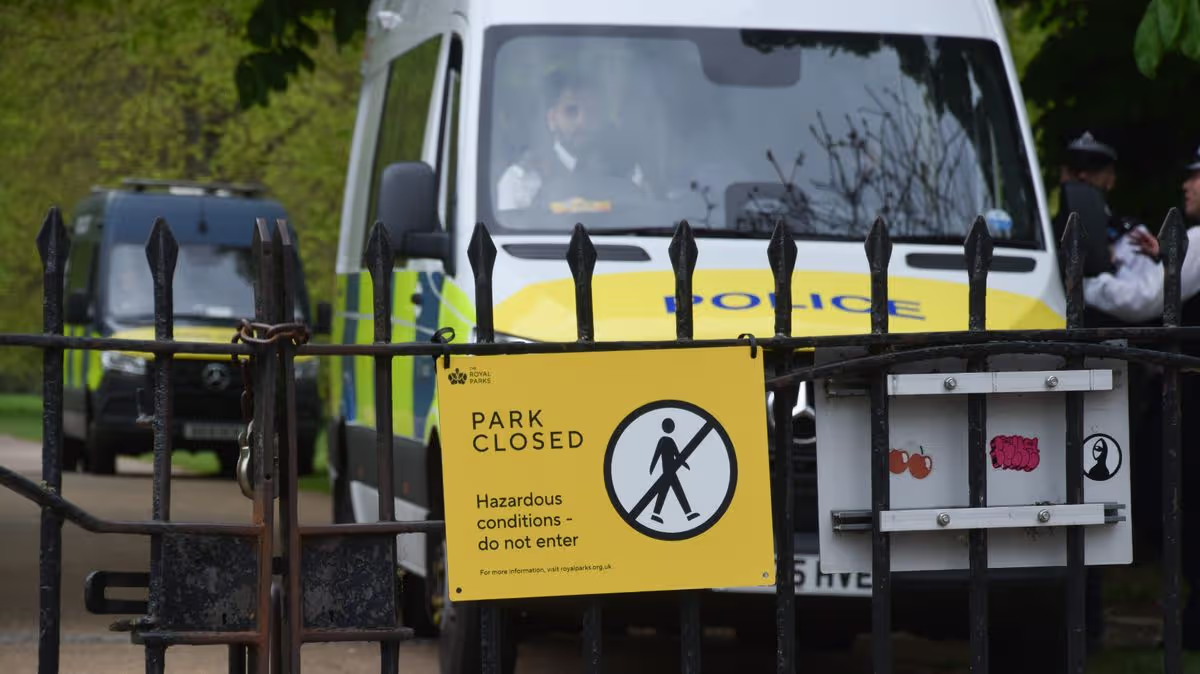
The police response was immediate and highly visible, designed to ensure public safety at all costs. The perimeter of the sprawling park was sealed with a substantial cordon, marked by stark signs warning of “Hazardous conditions – do not enter.” Inside, the scene resembled a meticulously coordinated operation. Armed police officers patrolled alongside counter-terrorism specialists, some clad in full protective suits, conducting a painstaking, inch-by-inch search of the grounds. The scale of the concern was further underscored by the deployment of divers from the police underwater search team, who scoured the ornamental Round Pond. Adding another layer of specialist capability, the London Fire Brigade arrived with investigation dogs specifically trained to detect traces of chemicals or accelerants. This multi-agency mobilization painted a stark picture of the perceived threat and the lengths to which authorities were prepared to go to contain it.
Paragraph 3: Community Impact and Lingering Anxiety
For local residents and visitors, the disruption was profound and unsettling. The sudden closure of a beloved and vast green space in the heart of the city caused significant inconvenience, but more deeply, it fostered a climate of fear. The sight of heavily armed officers and specialists in hazmat gear, combined with the ominous warnings of hazardous materials, inevitably stirred concerns about personal safety and the nature of the threat. The explicit connection to the Israeli Embassy added a complex geopolitical dimension to the incident, amplifying public unease. Throughout the day, the community was left in a state of suspended animation, urged to avoid the area while awaiting answers, their daily routines interrupted by a palpable sense of caution and uncertainty.
Paragraph 4: A Cautious All-Clear and the Path to Normalcy
After a thorough and exhaustive examination lasting into the following day, the Metropolitan Police provided a crucial update on Saturday evening. Commander Helen Flanagan of Counter Terrorism Policing London announced that the suspicious substances had been rigorously assessed and deemed to be non-hazardous. With this determination, the immediate danger was lifted, and Kensington Gardens was officially reopened to the public. In her statement, Commander Flanagan directly acknowledged the distress and disruption caused, expressing gratitude for the public’s patience and understanding during the intensive police operation. This announcement brought a collective sigh of relief, allowing life around the park to begin tentatively returning to its normal rhythm.
Paragraph 5: The Investigation Continues Amidst Relief
However, the reopening of the gardens did not signify the end of the matter. Police were careful to stress that their investigation remained very much active. While the physical substances posed no chemical or radiological threat, the central mystery of their origin and purpose persisted. Authorities confirmed they were continuing to investigate any potential link between the discovered items and the disturbing online video that had prompted the massive response. Crucially, Commander Flanagan also stated that, despite the claims made in the video, the Embassy of Israel was not actually attacked. Police reaffirmed their ongoing close cooperation with the Embassy’s security team to ensure its continued safety, indicating that the incident, whether a hoax or a failed plot, was being treated with utmost seriousness.
Paragraph 6: Vigilance as the New Normal
This incident in Kensington Gardens serves as a potent reminder of the complex security challenges faced by modern cities. It underscores how an act of malice, or even a sophisticated hoax leveraging credible threats, can trigger widespread disruption and consume significant public resources. The Metropolitan Police concluded their communications by reiterating a now-familiar but vital public safety message: the importance of collective vigilance. They encouraged the public to remain aware of their surroundings and to report anything that seems unusual or suspicious, providing dedicated hotlines and online portals for such reports. Thus, while the immediate scare in the park has passed, the episode leaves behind a reinforced awareness of the need for community and authorities to work in tandem to safeguard public spaces.