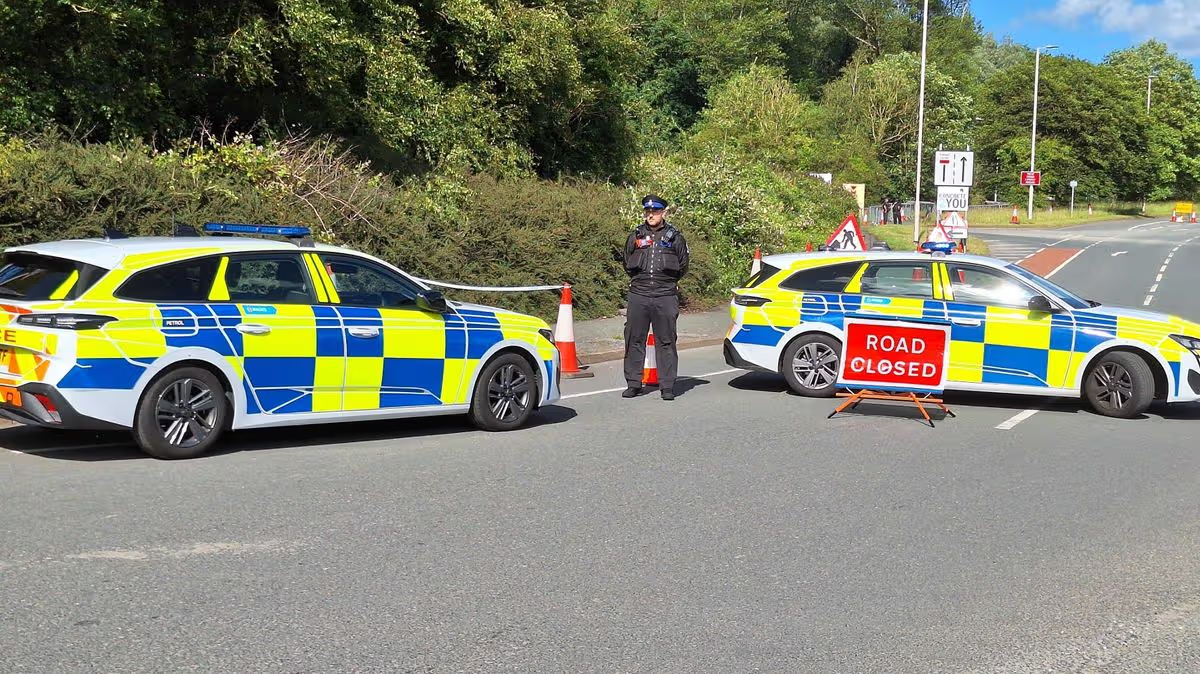


For the residents of Plymouth, the discovery of a suspicious object on Collesdown Hill this afternoon is a moment layered with a history both distant and disquietingly present. The immediate and cautious statement from authorities—that we do not yet know whether the object is a bomb—is a necessary protocol, but it carries a unique weight in this coastal city. This isn’t just another construction site find; it is a potential echo from a time when the skies over Plymouth were a source of terror, not traffic. The possibility, however remote, that the earth has relinquished a relic of war is a stark reminder that the past here is not entirely buried. It forces a pause, a collective holding of breath, as experts are called in to determine if this metallic curiosity is harmless scrap or a dormant danger, a procedure that has become, tragically, a recurring chapter in Plymouth’s modern storybook.
This recurrence is rooted in a period of immense sacrifice and destruction. Between 1941 and 1944, Plymouth endured the Blitz with ferocious intensity, targeted for its vital naval dockyards. In over fifty separate air raids, the German Luftwaffe sought to cripple the British war effort by devastating the city. The human cost was heartbreakingly high: approximately 1,178 civilians lost their lives, families were torn apart, and vast swathes of the cityscape were reduced to smoldering rubble. The iconic photograph of St. Andrew’s Church standing defiantly amidst a sea of ruins became a symbol of Plymouth’s resilience, but also of its profound suffering. Beyond the immediate devastation, the raids left a more insidious legacy, one that would outlast the war by generations.
Official records meticulously note that at least 2,820 bombs fell upon Plymouth during those dark years. Yet, the mathematics of war is often imperfect. It is estimated that roughly ten percent of these bombs—nearly 300 individual devices—failed to explode as designed. These munitions, ranging from large high-explosive bombs to smaller incendiaries, buried themselves deep in the soft Devon earth, in gardens, under new foundations, and within the reclaimed land that would reshape the post-war city. They became what are known as unexploded ordnance (UXO), hidden and forgotten but never inert. For decades, they have lain in wait, a hidden geography of risk woven into the very fabric of Plymouth, their locations lost to memory, recorded only in fragmented or destroyed archives.
Consequently, the discovery on Collesdown Hill is neither isolated nor surprising; it is part of a pattern that has persisted for nearly eighty years. In recent years alone, multiple unexploded bombs have been uncovered during redevelopment projects, routine gardening, or coastal erosion. Each discovery triggers a well-rehearsed but deeply disruptive response: evacuation perimeters are established, streets are cordoned off, and the specialized bomb disposal units of the Royal Navy are deployed. Life in the affected area grinds to a halt, mirroring, in a small but potent way, the disruptions of the past. These events are more than mere inconveniences; they are visceral, physical encounters with history, forcing a community to confront the lingering machinery of a war they thought was long concluded.
The process that follows such a discovery is a blend of high-tech precision and nerve-wracking manual skill. Experts, often from the Royal Navy’s Fleet Diving Squadron, will first assess the object using remote cameras or robots if possible, seeking to identify its type and condition without disturbing it. The immense danger lies in the instability of aged explosives and fusing mechanisms; corrosion can make them unpredictably sensitive. If the decision is made that removal is necessary, they may perform a controlled explosion on site—a startling, thunderous event that can shatter windows and rattle nerves—or, if the situation allows, they will carefully transport the bomb to a remote location for disposal. Each procedure is a calculated risk, a dance with a deadly partner from another era, carried out to secure the safety of the present.
Ultimately, the object on Collesdown Hill is a tangible symbol of a city forever in dialogue with its history. Whether it is confirmed as a bomb or not, its discovery has already served its purpose: it has reminded Plymouth of the price it paid, the resilience it showed, and the long shadow cast by conflict. The city, beautifully rebuilt from the ashes, is a testament to moving forward. Yet, the earth itself occasionally protests this forward march, offering up these grim souvenirs. They are solemn reminders that the work of the war did not end in 1945; it continues in the diligent, dangerous work of making the ground safe, and in the collective memory of a community that understands, better than most, the profound and lasting cost of peace.