



Here is a humanized and expanded summary, structured into six paragraphs as requested.
Paragraph 1: The Night Shattered
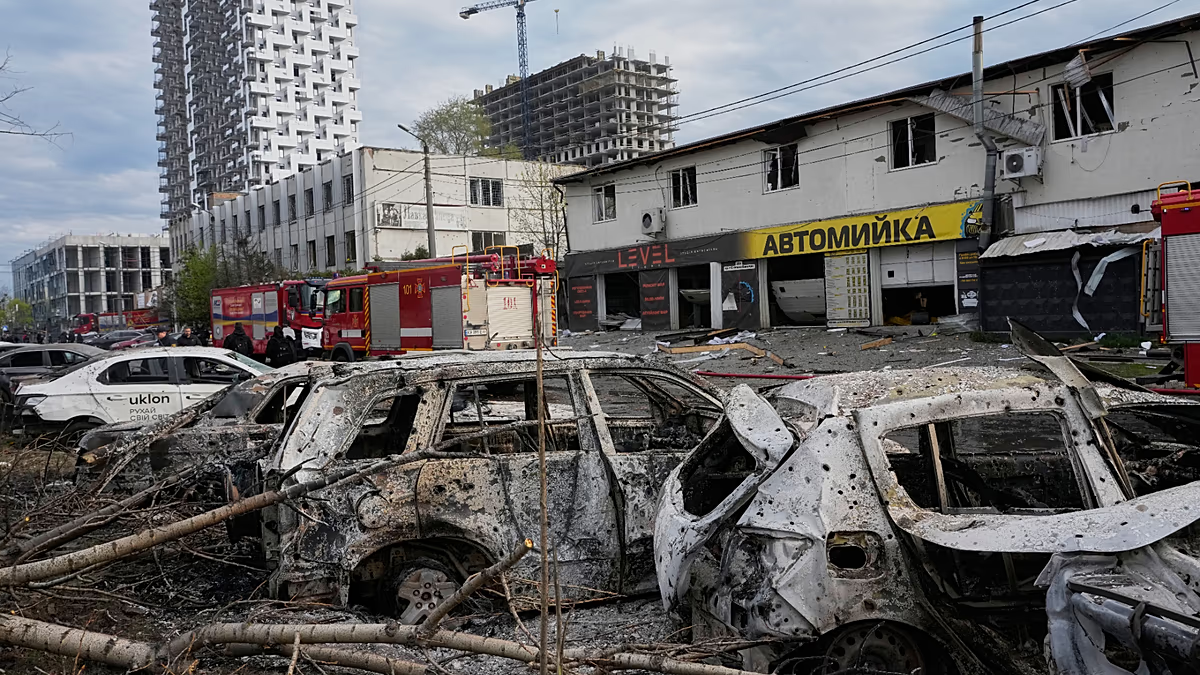
In the early hours, the historic heart of Kyiv was violently awakened. A missile strike targeted the Podilskyi district, a vibrant area nestled just southwest of the city centre on the right bank of the Dnipro River. This is not just an administrative zone; it encompasses the famed Podil neighbourhood, with its cobbled streets and cultural landmarks, interwoven with modern residential communities. The attack transformed these living spaces into a scene of immediate devastation. As the projectiles hit, rescuers rushed into action, pulling survivors from the wreckage of collapsed buildings while new fires ignited in structures nearby, lighting up the pre-dawn darkness with an ominous glow.
Paragraph 2: A Citywide Tremor of Fear
The impact was felt far beyond the immediate crater. Residents across multiple districts of the capital reported a series of terrifying blasts throughout the night. The force of the explosions shattered windows in homes miles away, a visceral reminder of the strike’s power. Many citizens were jolted from sleep by the physical shockwaves rattling their apartments, while others, seeking understanding in the chaos, captured video of thick plumes of smoke rising and staining the familiar skyline. It was a shared, traumatic experience—a night where the distant sound of air defence interceptions mixed with the closer, crushing thunder of impacts, leaving the entire city in a state of collective alarm and helplessness.
Paragraph 3: The Human Toll Emerges
As daylight filtered through the dust and smoke, the human cost began to crystallize. Kyiv’s Mayor, Vitalii Klitschko, reported that at least 45 people were injured in the capital alone. Emergency teams worked tirelessly, evacuating residents from buildings now deemed perilously unstable and providing on-site medical care to the casualties. While Ukraine’s air defenders managed to intercept some of the incoming projectiles, saving countless lives, others tragically found their mark, striking directly into homes, businesses, and critical infrastructure. This attack was not an isolated event; it was part of a broader, brutal wave of assaults across the country, with local authorities reporting at least 16 people killed and 80 wounded in combined attacks on Kyiv, Dnipro, and Odesa that same night.
Paragraph 4: The Grinding Work of Recovery
The immediate aftermath transitioned into a prolonged and grueling recovery operation. Emergency services continued their critical work into the morning of April 16th, navigating mounds of shattered concrete and twisted metal to clear debris. Their most urgent mission was the search for victims—anyone still trapped or missing beneath the rubble. Alongside this physical labour, a wave of urgent warnings flowed from authorities: the risks remained ongoing. Residents were urged to stay in shelters if possible and to strictly avoid damaged buildings, as the full extent of the destruction was not yet known. Structural engineers began the delicate, dangerous task of assessing the stability of affected homes, determining which might be repaired and which were forever lost.
Paragraph 5: The Lingering Scars Beyond the Rubble
The strike on Podil is a profound attack on more than just infrastructure; it is an assault on memory and identity. The Podil neighbourhood itself is a repository of Kyiv’s history, a place where the city’s narrative is etched into its architecture and streets. Damaging this area strikes at the cultural soul of the community. Furthermore, the surrounding residential zones represent the everyday life of Kyiv’s citizens—the apartments of families, the workplaces of professionals, the quiet spaces of ordinary life. The physical destruction of these areas creates a secondary wave of dislocation and trauma, severing people not only from their possessions but from their sense of security and normalcy.
Paragraph 6: A Testament to Resilience in the Face of Ongoing War
This event is a stark microcosm of the wider conflict endured by Ukraine. It illustrates the brutal reality of modern warfare against a civilian population: the random terror of overnight strikes, the heroic but imperfect defence by air forces, and the community’s forced mobilization into emergency response. The people of Kyiv, from the mayor coordinating the crisis to the firefighters digging through rubble and the neighbours comforting one another in shelters, demonstrate a resilient continuity of life amid chaos. Yet the repeated warnings to stay sheltered underscore that this is not a singular tragedy but part of a relentless, ongoing pattern. Each such attack writes a new chapter of loss, demanding not only recovery but an unwavering vigilance for what the next night might bring.