


The Reimagined Summer: How French Holiday Plans are Adapting to a New Era
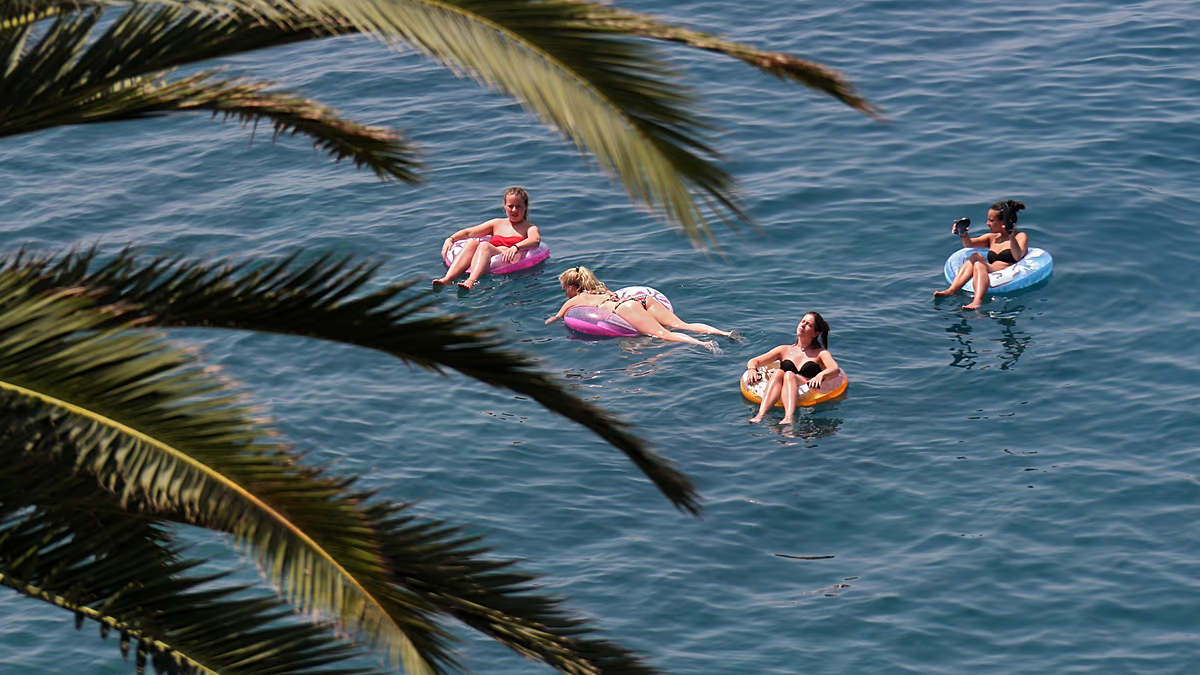
In the summer of 2026, the traditional French holiday is undergoing a profound transformation. Against a backdrop of persistent global geopolitical tensions, a lingering energy crisis, and the ongoing pressure of inflation on household budgets, the nation’s approach to its cherished vacances d’été is being quietly rewritten. The ethos is one of pragmatism over extravagance, proximity over distance, and financial caution over liberality. While the deep cultural attachment to the summer getaway remains unwavering, its manifestation is shifting significantly. Fewer citizens are committing to a trip with certainty, and those who do are systematically revising their plans to align with a new reality defined by concerns over security and economic strain. This is not a rejection of the holiday itself, but a thoughtful adaptation to a world that feels less stable and more expensive.
This cautious mood is vividly captured in data. According to a March 2026 study by Ifop for Alliance France Tourisme, while 68% of French people still aspire to take a holiday of at least one week, this represents a notable drop of nine percentage points from the previous year. More strikingly, the number of people who are certain their plans will materialise has fallen sharply from 50% to just 37%. This “rise in uncertainty,” as noted in the study, highlights a gap between desire and reality. Dominique Marcel, President of Alliance France Tourisme, summarises this nuanced sentiment: there is no collapse in the intention to travel, but the combined effects of security concerns and tighter budgets are beginning to palpably influence behaviour. The holiday remains a priority, but it is now a calculated one, weighed against other pressing demands on a household’s resources and sense of safety.
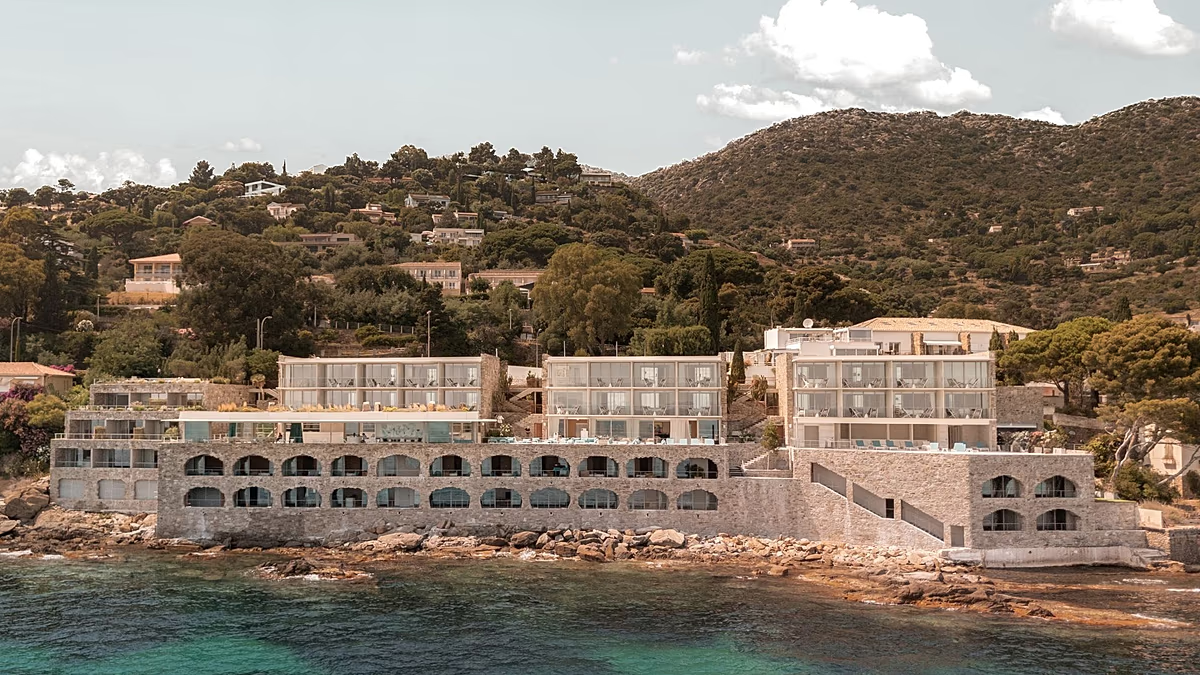
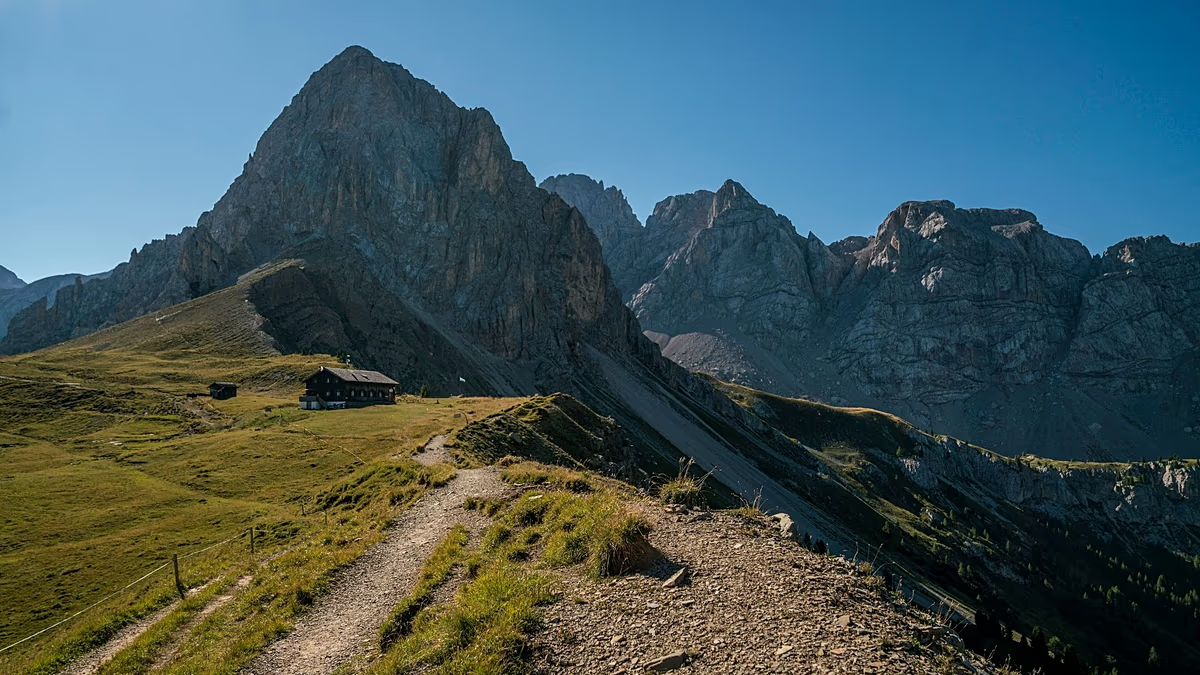
In response to this climate of uncertainty, the French landscape itself is becoming the premier destination. The international situation is directly steering travellers toward the familiar and the proximate. France is increasingly seen as a “destination of refuge”—close, easily accessible, and perceived as inherently safer. The study confirms this domestic pivot: 71% of respondents plan to travel within France, a three-point increase from 2025. Conversely, travel beyond borders is shrinking; only 23% plan to holiday within Europe, and a mere 9% will venture outside the continent. This trend signifies a retreat into the known, a preference for the comfort of home territory where language, culture, and infrastructure provide a buffer against the unpredictability associated with more distant, and often perceived as more volatile, international destinations.
The driving force behind this recalibration is, undeniably, economics. With inflation continuing to squeeze purchasing power, holiday budgets are being scrutinised and reduced. The average planned expenditure for the summer 2026 holiday has fallen to €1,530, a reduction of approximately €150 compared to 2025. To achieve this containment, households are targeting specific areas for cutbacks. More than half of French people intend to spend less on accommodation, dining, and local activities than they did the previous year. Marcel observes that this restraint is “particularly noticeable when it comes to spending on site, perhaps even more so than on accommodation,” with 60% planning to curtail these daily expenses. The holiday experience is thus becoming more austere, with a conscious trade-off between presence and indulgence.
This financial pragmatism is also reshaping accommodation choices. There is a marked resurgence in the reliance on social networks for free lodging. The study notes a significant jump in the number of people planning to stay with friends or family, from 21% in 2025 to 31% in 2026. This trend underscores a move away from commercial tourism services toward communal, cost-free solutions. However, the report also casts a stark light on the enduring social inequalities in access to leisure. The disparity is pronounced: 84% of well-off individuals plan to go on holiday, compared to only 58% of those from modest circumstances. The economic pressures, therefore, do not affect all equally; they deepen a pre-existing divide, making the summer holiday a more exclusive privilege for those with greater financial resilience.
In summary, the summer of 2026 for France is characterised by a collective embrace of moderation. The French holiday spirit is not dimming but evolving into a more resilient and introverted form. It is defined by shorter financial leashes, a preference for the domestic landscape as a sanctuary, and a heightened awareness of global uncertainties. The archetype of the long-haul, lavish summer vacation is being replaced by a more cautious, budget-conscious, and localised experience. This shift reflects a societal adaptation to ongoing crises, where the fundamental need for rest and escape is fulfilled through simpler, safer, and more economically accessible means. The holiday, in its essence, persists, but its journey is now decidedly closer to home.