



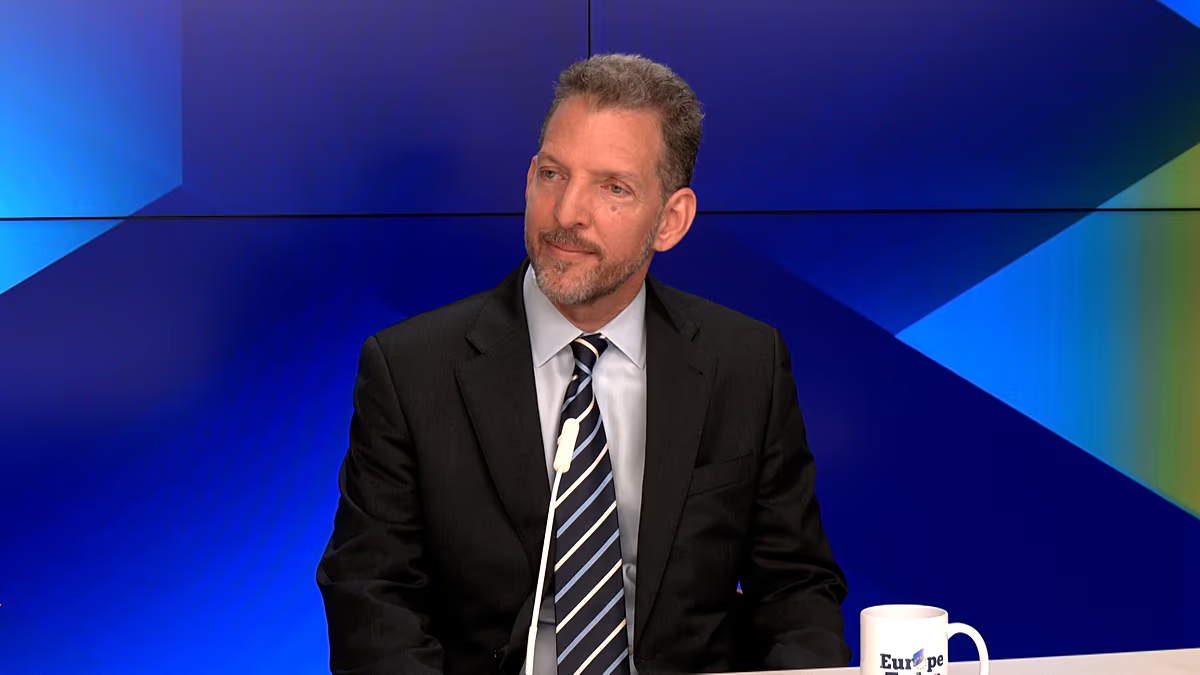
In an era marked by profound geopolitical shifts and widespread discussion on the future of global governance, Brazil’s Ambassador to the European Union, Pedro Miguel da Costa e Silva, has offered a crucial and compelling perspective. Responding to recent comments by Canada’s Prime Minister Mark Carney, who suggested that the task of rebuilding the fraying international order should be led from Europe, the Ambassador presented a fundamentally different vision. He argues that the very notion of a single, central architect for the world’s future is outdated. In a clear and diplomatic rebuttal, da Costa e Silva emphasized that the complex challenges of the 21st century cannot be solved by one region alone, no matter how historically influential. “If we’re going to rebuild something, it has to be rebuilt by everybody,” he stated, capturing the core of his argument. This position is not merely a diplomatic talking point but reflects a deeper philosophical and practical shift towards recognizing a world that is irreversibly multipolar, where authority and initiative are dispersed across continents.
Ambassador da Costa e Silva’s remarks are deeply aligned with the foreign policy trajectory of President Luiz Inácio Lula da Silva’s administration, which has consistently championed a more prominent and equitable role for the Global South in international institutions. The Ambassador’s phrasing—that the new order must be “built from all different places”—is a deliberate move to decentralize the narrative of global leadership. It underscores a growing sentiment, particularly across Latin America, Africa, and Asia, that the post-World War II framework, while built with noble intentions, often marginalizes the voices and interests of the majority of the world’s population. By stating, “Europe will have an important place at the table, but you’ll need to have all other voices speaking,” he envisions a roundtable of genuine collaboration, contrasting with a hierarchy where some regions dictate terms to others. This call for inclusive reconstruction is a direct response to a world weary of unilateralism and hungry for a system that reflects its true diversity.
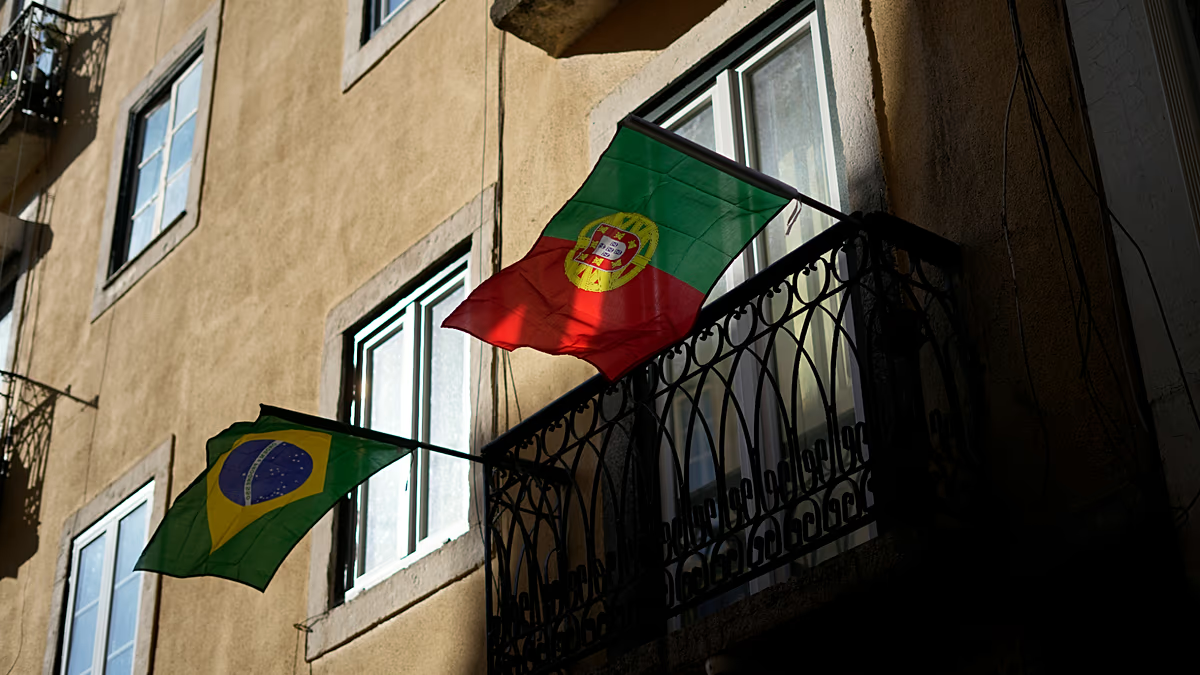
The timing of this dialogue is particularly significant, as it coincides with a landmark achievement in inter-regional cooperation: the provisional enactment of the monumental trade deal between the European Union and the Mercosur bloc. For Ambassador da Costa e Silva, this agreement stands as a tangible testament to the kind of multilateralism he advocates. He hailed it as a “victory for multilateralism in a more unstable world,” framing it not just as an economic contract but as a profound political statement. “I think that for countries like mine, rules are fundamental,” he explained, highlighting how nations like Brazil have evolved from rule-takers to co-authors of the international system. This decades-long negotiation, involving Argentina, Brazil, Paraguay, and Uruguay, symbolizes the arduous but essential work of bridging different economic models, environmental standards, and social priorities—a microcosm of rebuilding global cooperation through persistent dialogue.
However, the Ambassador’s optimism is tempered by the very real and contentious hurdles the EU-Mercosur agreement now faces. Its path to full ratification is currently stalled, referred to the European Court of Justice by the European Parliament amid significant opposition, primarily from European agricultural sectors anxious about competition. Da Costa e Silva directly addressed these concerns, warning against the spread of “disinformation” and clarifying that mechanisms like import quotas are “managed by both sides.” He expressed firm confidence that the EU’s top court will find the agreement legally sound, framing the current scrutiny as a test of Europe’s commitment to the very principles of partnership it often espouses. This ongoing controversy illuminates the central tension in rebuilding a cooperative world order: the struggle to balance domestic political pressures with broader international commitments and the challenge of turning the ideal of inclusive growth into a workable reality for all citizens.
The core of the Ambassador’s argument, therefore, presents a fundamental choice for Europe and other traditional powers. The path forward is not about nostalgically restoring a past order centered on Western leadership, which Prime Minister Carney’s comments might imply, but about courageously participating in the construction of a new, more distributed system. This new system demands a willingness to listen as much as to lead, to adapt as much as to advise. It requires moving beyond a donor-recipient mindset to embrace genuine co-creation on issues from trade and climate to security and digital governance. The EU-Mercosur pact, for all its difficulties, represents a brave step in this direction—an attempt to intertwine the economies and futures of two distinct regions on a scale of shared rules and mutual benefit.
In conclusion, Ambassador Pedro Miguel da Costa e Silva’s intervention is a powerful reminder that the future of international cooperation cannot be a solo endeavor or a project of restoration, but must be a collective and ongoing construction site. The materials for this new order are the diverse perspectives, experiences, and needs of all nations. While Europe possesses invaluable experience and a strong commitment to a rules-based system, its most critical role may now be that of a central facilitator and ardent listener in a global concert of voices. The provisional EU-Mercosur agreement embodies both the immense promise and the gritty difficulties of this collaborative path. Ultimately, a stable and just international order will not be rebuilt from any single capital or continent, but from a shared recognition that our collective security and prosperity depend on building bridges wide enough for every nation to walk across.