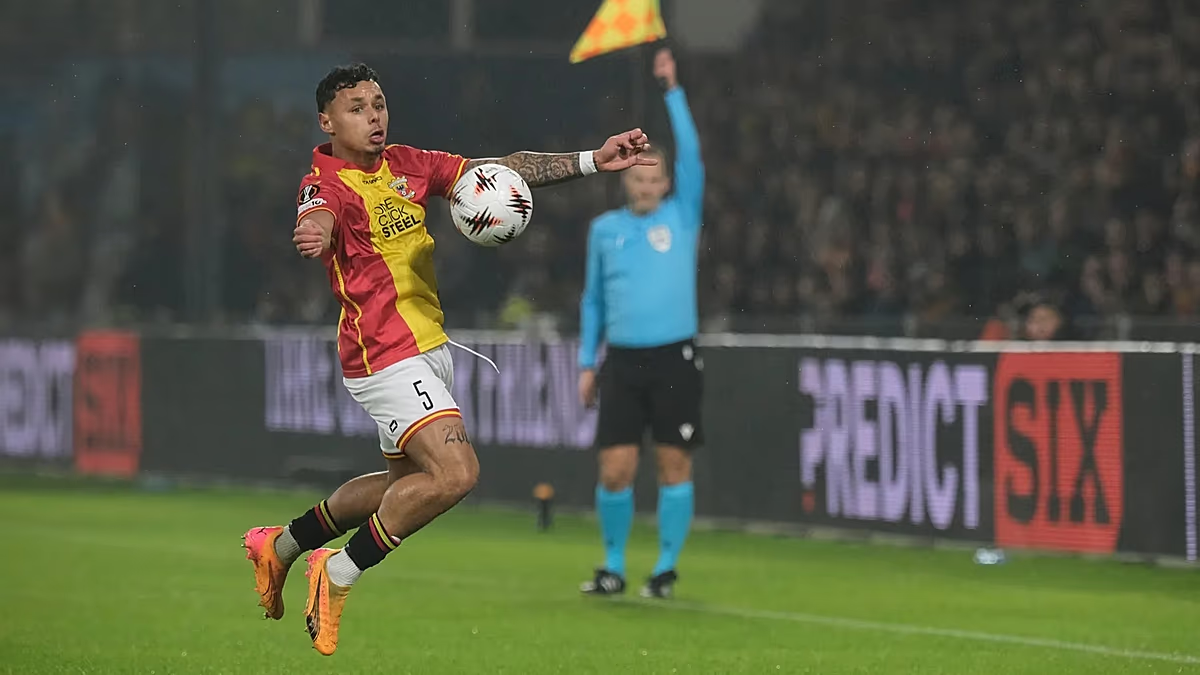



Georgia stands at a critical juncture, grappling with internal political turmoil and the looming shadow of its powerful neighbor, Russia. The upcoming presidential election, a departure from tradition, has ignited widespread protests and further exposed the deep divisions within Georgian society. For the first time, the president will be selected not by the direct vote of the people, but by an electoral college dominated by the ruling Georgian Dream party. This shift in electoral process has fueled accusations of manipulation and undemocratic practices, exacerbating existing tensions and anxieties surrounding the government’s perceived pro-Russian leanings. The sole candidate, Mikheil Kavelashvili, a former footballer and member of parliament known for his far-right views, is seen by many protesters as a puppet of the influential oligarch Bidzina Ivanishvili, the founder of Georgian Dream. Ivanishvili’s past business dealings in Russia have contributed to the widespread suspicion surrounding the party’s true allegiances.
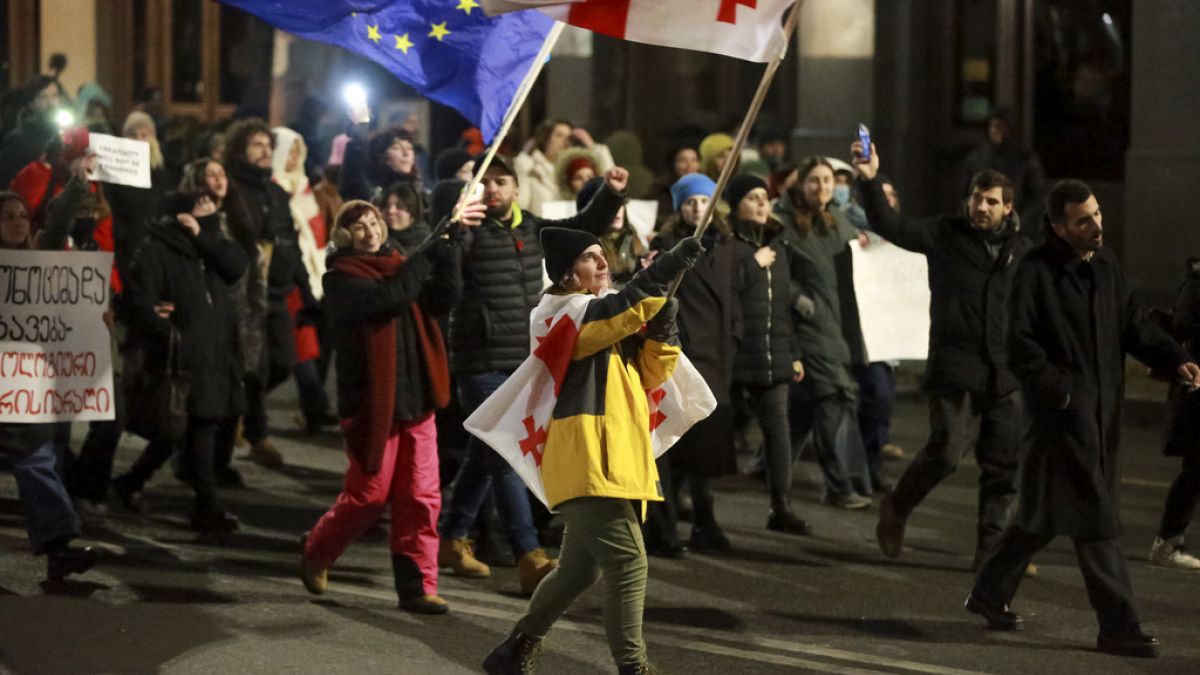
The trigger for the ongoing protests was the government’s announcement of a postponement in EU accession negotiations until 2028. This decision ignited public outrage, particularly among those who aspire to closer ties with the West and view EU membership as a crucial step towards greater security and prosperity. The delay has been interpreted by many as a sign of the government’s subservience to Moscow, further solidifying the perception that Georgian Dream is prioritizing its relationship with Russia over the aspirations of its own people. The protests, now in their third week, reflect a growing frustration with the government’s perceived lack of transparency and its reluctance to fully embrace Western integration. The protesters’ demands for a new parliamentary election and their anti-Russian slogans underscore the deep-seated mistrust towards the current political establishment and its perceived alignment with Moscow.
This internal struggle plays out against the backdrop of Georgia’s complex and often fraught relationship with Russia. The legacy of past conflicts, including the 1991-1992 war and the 2008 Russian invasion, continues to shape public opinion and influence political discourse. While many in Tbilisi and other urban centers express a strong desire for closer alignment with the West, sentiments in regions closer to the Russian-occupied territories, such as South Ossetia, are often more nuanced. Residents in these areas, bearing the scars of past conflicts and facing the constant presence of Russian troops, tend to favor a more cautious approach towards Moscow. The fear of renewed conflict and the desire for stability often outweigh the aspirations for Western integration, creating a complex and often contradictory political landscape.
The contrasting viewpoints within Georgia highlight the delicate balancing act the government must perform. On one hand, there is the pressure to appease Russia, a powerful neighbor with a history of intervention in Georgian affairs. On the other hand, there is the growing demand from a significant portion of the population for closer ties with the West, seen as a path towards greater security and democratic development. This internal struggle is further complicated by the presence of the breakaway regions of Abkhazia and South Ossetia, which are backed by Russia and serve as a constant reminder of Georgia’s vulnerability. The government’s decision to postpone EU negotiations appears to be an attempt to navigate this complex geopolitical landscape, prioritizing stability and avoiding further antagonizing Moscow.
However, this strategy has come at a cost. The protests and the growing public discontent demonstrate the limits of such a balancing act. By prioritizing its relationship with Russia, the government risks alienating a significant portion of its own population and undermining its democratic legitimacy. The electoral college system, seen as a tool to consolidate power and ensure the victory of the ruling party’s preferred candidate, has further exacerbated these tensions. The lack of genuine political competition and the perception of predetermined outcomes have eroded public trust in the electoral process and fueled the protests.
The future of Georgia remains uncertain. The upcoming presidential election, while unlikely to produce a significant change in the political landscape, will serve as a barometer of public sentiment and a test of the government’s ability to manage growing internal dissent. The protests, the demands for a new parliamentary election, and the underlying tensions surrounding Georgia’s relationship with Russia suggest that the country is at a crossroads. The government’s ability to address these complex challenges and find a path towards stability and democratic development will determine Georgia’s future trajectory and its place in the evolving geopolitical landscape of the region.