



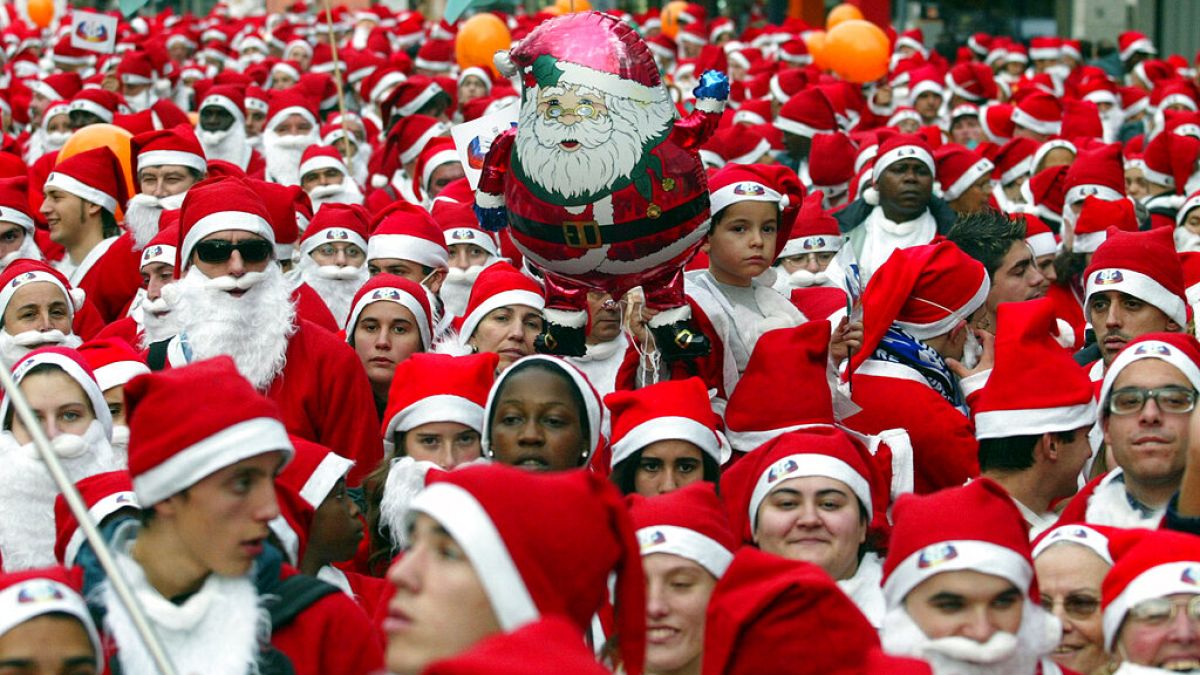
Christmas in Europe, a celebration deeply intertwined with both religious and cultural traditions, showcases a fascinating tapestry of diverse customs and historical influences. While the holiday is widely observed across the continent, its observance has not been without its challenges, facing opposition from various political and religious factions throughout history and exhibiting a remarkable divergence in traditions even within closely situated countries. This complex interplay of factors has shaped Christmas celebrations into the multifaceted spectacle witnessed today.
The religious and political landscape of Europe has significantly impacted the acceptance and practice of Christmas celebrations. In the 17th century, both Scotland and England, driven by Protestant Reformation fervor, implemented bans on Christmas festivities in their attempts to purge Catholic influences. While the English ban proved largely unpopular and short-lived, the Scottish prohibition lasted for centuries, reflecting a deeper societal resistance to Catholic traditions. Similarly, revolutionary France, in its pursuit of a secular society, banned religious holidays, including Christmas, during the late 18th century. The Soviet Union, under its atheistic communist regime, also abolished religious holidays, including Christmas, in the 20th century. These historical examples demonstrate the extent to which political and ideological forces have attempted to suppress Christmas celebrations, albeit with varying degrees of success.
The diversity of Christmas traditions across Europe is further amplified by the calendar discrepancies between the Catholic and Orthodox Churches. The adoption of the Gregorian calendar by the Catholic Church in 1582, while intended to correct inaccuracies in the Julian calendar, created a division in the observance of Christmas. While many Orthodox churches eventually adopted the Gregorian calendar, others retained the Julian calendar, resulting in a 13-day difference in their Christmas celebrations. This difference is most prominently seen in countries like Serbia, Moldova, Russia, Belarus, and Georgia, where Christmas is celebrated on January 7th, while other Orthodox countries, like Greece, Romania, and Bulgaria, celebrate on December 25th alongside Western Christian nations. Ukraine, traditionally celebrating on January 7th, recently shifted its official Christmas observance to December 25th, reflecting a complex interplay of religious and political considerations.
The relative importance of Christmas Eve and Christmas Day also varies significantly across Europe. In many northern European countries, such as Germany, Finland, Sweden, Norway, and Denmark, Christmas Eve holds greater significance, often being the day for gift-giving and the main festive gathering. In contrast, Christmas Day traditionally takes precedence in the UK, with Boxing Day, December 26th, designated for opening presents. Scotland, however, presents an exception within the UK, with New Year’s Eve, known as Hogmanay, holding a more prominent position in its festive calendar, reflecting its unique Celtic and Norse heritage. In Southern European countries like France, Portugal, Italy, and Spain, both Christmas Eve and Christmas Day share equal importance. While Christmas Eve is typically marked by intimate gatherings with close family, Christmas Day celebrations extend to a wider circle of friends and relatives, showcasing a blend of intimate and communal festivities.
These variations in the observance of Christmas underscore the rich tapestry of cultural and historical influences that have shaped European traditions. From calendar discrepancies and religious divisions to the relative importance of different days within the festive period, Christmas celebrations across Europe demonstrate a vibrant mix of shared and distinct practices. The persistence of Christmas traditions, even in the face of historical suppression, speaks to their deep-rooted cultural significance.
The diversity of Christmas celebrations in Europe provides a compelling example of the continent’s motto, “United in Diversity.” While common themes of family, togetherness, and festive cheer permeate the Christmas spirit across the continent, the specific expressions of these themes vary considerably from region to region. This intricate blend of shared and unique traditions creates a fascinating mosaic of Christmas celebrations, highlighting the rich cultural heritage of Europe while simultaneously reflecting the complex historical and religious influences that have shaped the holiday’s observance across the continent. From banned celebrations to calendar discrepancies and varying importance placed on specific days, the story of Christmas in Europe is one of both unity and diversity, a story that continues to evolve and adapt in the present day.