



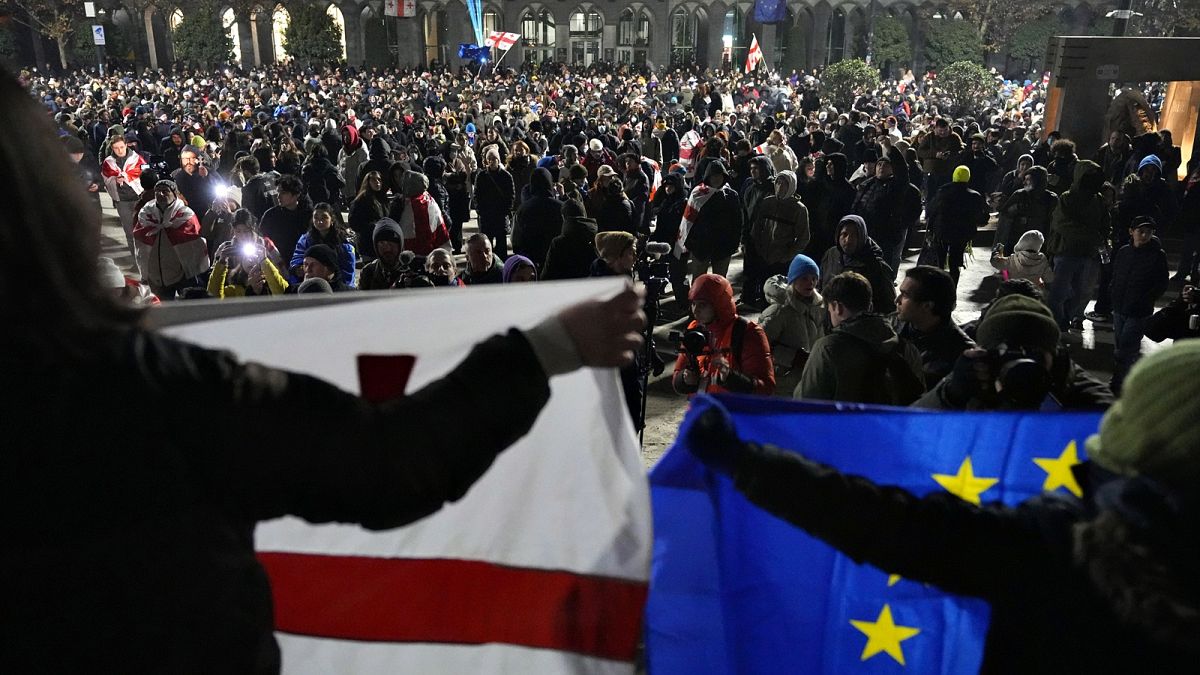
The European Union is grappling with the deteriorating political situation in Georgia, marked by the Georgian government’s suspension of EU membership talks, subsequent widespread protests, and a heavy-handed crackdown on demonstrators. This has sparked outrage within the EU, leading to renewed calls for sanctions against Georgian officials implicated in the suppression of pro-EU demonstrations. The EU’s new foreign policy chief, Kaja Kallas, is set to formally raise the issue of sanctions at an upcoming meeting of foreign ministers, seeking a mandate to initiate the technical process for implementing such measures. This move signifies a shift from previous internal discussions to a more concrete step towards potential sanctions. However, the path to imposing sanctions faces significant obstacles, chiefly Hungary’s explicit veto threat.
Kallas’s approach differs from the typical EU sanctions procedure. Instead of presenting a pre-determined list of individuals to be targeted, she intends to request authorization to begin the groundwork for identifying and sanctioning those responsible for the crackdown. This strategy allows for a more nuanced approach, potentially targeting individuals directly involved in the violence against protestors. The Baltic states have already independently imposed sanctions on several Georgian officials, including the interior minister and a prominent oligarch with close ties to Russia, demonstrating a growing impatience with Georgia’s trajectory. The European Parliament has also voiced its support for sanctions, proposing a list of high-ranking officials, including the prime minister and the speaker of parliament.
Hungary’s staunch opposition poses a major challenge to the EU’s potential sanctions regime. Hungarian Foreign Minister Péter Szijjártó has unequivocally stated his intention to veto any sanctions against Georgia, dismissing the concerns raised by the EU and other international observers. He defends the Georgian government’s actions and questions the legitimacy of the EU’s concerns about democratic backsliding. Hungary’s position is likely to be supported by Slovakia, further complicating the possibility of reaching a consensus within the EU. This division among member states underscores the difficulty of implementing cohesive foreign policy within the bloc, particularly when it comes to sensitive issues like sanctions.
Beyond sanctions against specific individuals, the EU is also exploring the possibility of restricting Georgia’s visa-free travel arrangement with the bloc. This measure is seen as a potential lever to pressure the Georgian government without directly impacting ordinary citizens. However, there are concerns about the potential unintended consequences of such a move, particularly for Georgians who support closer ties with Europe. The preferred approach seems to be targeting diplomatic and service passports, impacting government officials and representatives rather than the general population. The European Commission has already expressed its concerns about Georgia’s democratic backsliding and has hinted at the possibility of further measures.
The situation in Georgia highlights a growing tension between the EU and countries aspiring to membership. The Georgian government’s actions, coupled with its increasingly close relationship with Russia, are seen as a direct challenge to EU values and interests. The EU’s response, however, is hampered by internal divisions and the veto power wielded by individual member states. This underscores the complexities of navigating geopolitical challenges and the limitations of the EU’s foreign policy mechanisms. The debate over sanctions and visa restrictions reflects a broader struggle to balance the need for a strong response to democratic backsliding with the desire to avoid punishing ordinary citizens and further alienating the Georgian population.
The EU’s dilemma is multifaceted. It must weigh the potential impact of sanctions on Georgia’s political landscape against the risk of inaction emboldening the current government’s authoritarian tendencies. Restricting visa-free travel could send a strong message to the Georgian government, but it also carries the risk of alienating the very population the EU seeks to support. Moreover, the EU’s internal divisions, particularly Hungary’s staunch opposition to sanctions, complicate the prospect of a unified and effective response. The ongoing situation in Georgia underscores the delicate balancing act the EU faces in promoting democracy and human rights while navigating complex geopolitical realities and internal disagreements. The coming weeks will be crucial in determining the EU’s next steps and their potential impact on Georgia’s future.