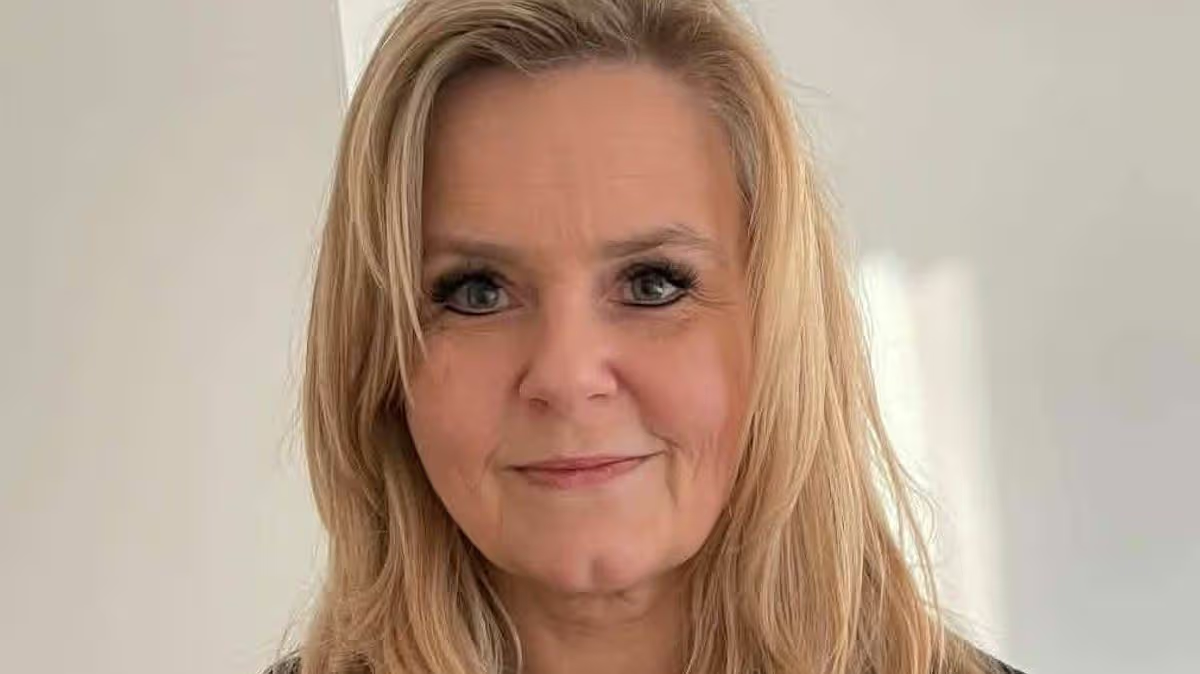




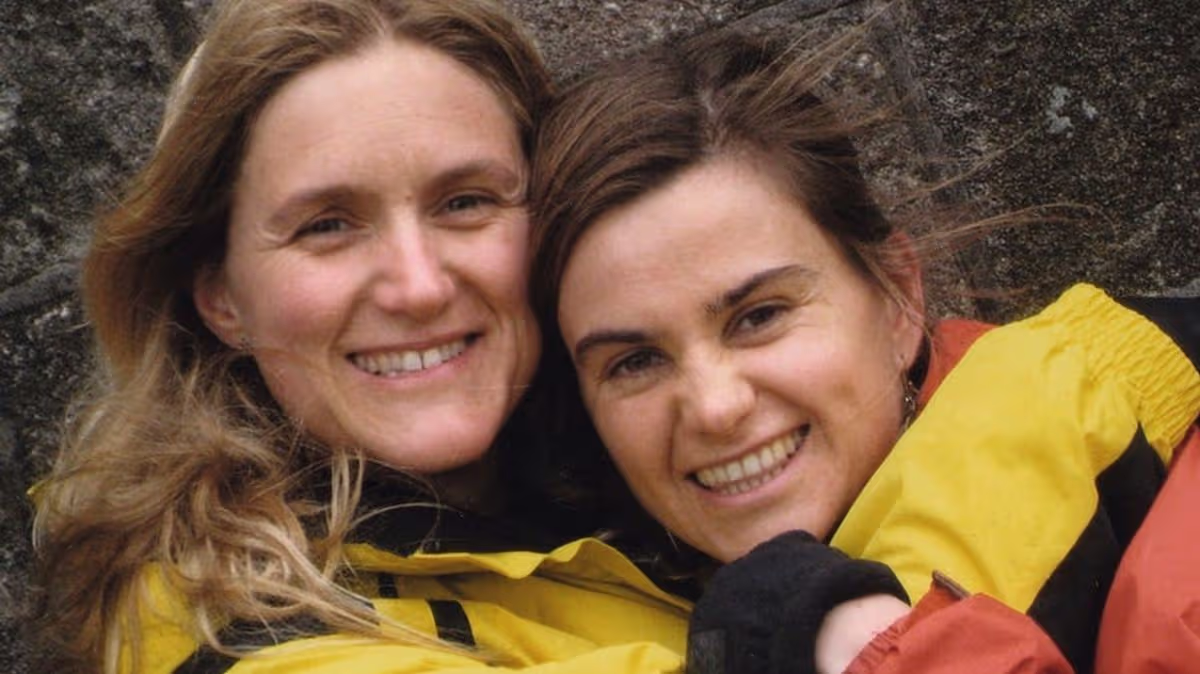
Ten years on, the sight of gently deflating helium balloons in Kim Leadbeater’s parliamentary office carries a profound weight. They are remnants of a recent birthday celebration, but they also tug at a far more poignant memory. It was at her 40th birthday party in 2016 that her sister, Jo Cox, arrived last-minute from Parliament, shed her MP’s suit, and embraced the fun in a neon tutu. They sang karaoke together, a moment of pure, unadulterated joy. Just six weeks later, that same sister, arriving for a constituency surgery in the community they both grew up in, was murdered by a Far Right extremist. The family’s world shattered, pivoting from watching a football match to being plunged into a perpetual nightmare. Kim reflects that a decade later, she still hasn’t been able to properly grieve. “We just had to keep going forward,” she says, fearing that if she stops, she might fall apart.
A decade after Jo’s murder, Kim confronts a painful and glaring truth: the watershed moment the nation hoped for has not materialized. Recent events have seen Far Right agitators ruthlessly exploit acts of violence, leading to racial attacks and orchestrated intimidation in communities across the UK. “When Jo was killed, it should have been the end – and the start of something different,” Kim states. “But at this moment things are worse than ever.” She speaks from a place of deep understanding about anger, but emphasizes the critical choice in how to channel it. She consciously chooses not to hate, framing her sister’s killing as the act of one individual, not a whole group. Yet, the escalating climate of division marks this tenth anniversary as different; it demands a sharper focus on the toxic context that enabled the tragedy.
For years, Kim and her remarkable family have championed Jo’s legacy of ‘More In Common,’ fostering connection through initiatives like The Great Get Together. But now, Kim feels a need to shift the conversation. “We’ve done such a powerful job… to remember the good things,” she explains, “but what we haven’t done is talked about the fact she was killed by a right-wing fascist neo-Nazi.” This anniversary, she wants to address that context directly—not by naming the perpetrator, but by examining the ideologies that fuel such hatred. Alongside this, Kim has carved her own distinct path in Parliament, most notably as a leading advocate for the Assisted Dying Bill. This role forces her to live the values she and Jo cherished, constantly seeking common ground and learning to disagree well on the most human of issues.
Her work on assisted dying is deeply personal, though not simplistically so. While Jo’s death was one of violent indignity, Kim frames the bill as fundamentally about choice—something Jo was denied. “All the bill is asking is for a choice. Jo didn’t have a choice,” she says. This mission, along with the approach of summer and major football tournaments, brings echoes of that devastating June in 2016, a period she recalls only as a blur of autopilot. In response, the family channeled their energy into “the worst of humanity followed by the best of humanity,” establishing foundations, campaigns, and community events in Jo’s name.
People often remark on the sisters’ similarities—their shared values, warmth, and love for their community. Kim acknowledges this but is quick to highlight Jo’s less-seen shyness and her hard-won skill as a public speaker, in contrast to her own childhood confidence. The conversation lightens as Kim gestures to a copy of Vogue featuring her interview, erupting in laughter at the sheer improbability of it. “Jo would have found it absolutely hilarious!” she exclaims, noting her own charity-shop attire. For a moment, the memory of Jo feels vibrantly present, as if she might still be cycling through Parliament corridors.
In quiet moments, Kim allows herself to imagine a different world, one where Jo lived. She pictures them both as neighbouring MPs, representing their beloved home area side-by-side. “It makes me happy to think about that,” she says, gazing out at the Thames. While that parallel life is a source of wistful happiness, it is not one of regret. Kim Leadbeater has been compelled on a journey she never wanted, navigating unimaginable loss to forge a purpose of her own. She carries forward Jo’s spirit not through imitation, but through her own resilient and compassionate voice, determined to confront the hard truths of the present while steadfastly championing a more connected, kinder future.