




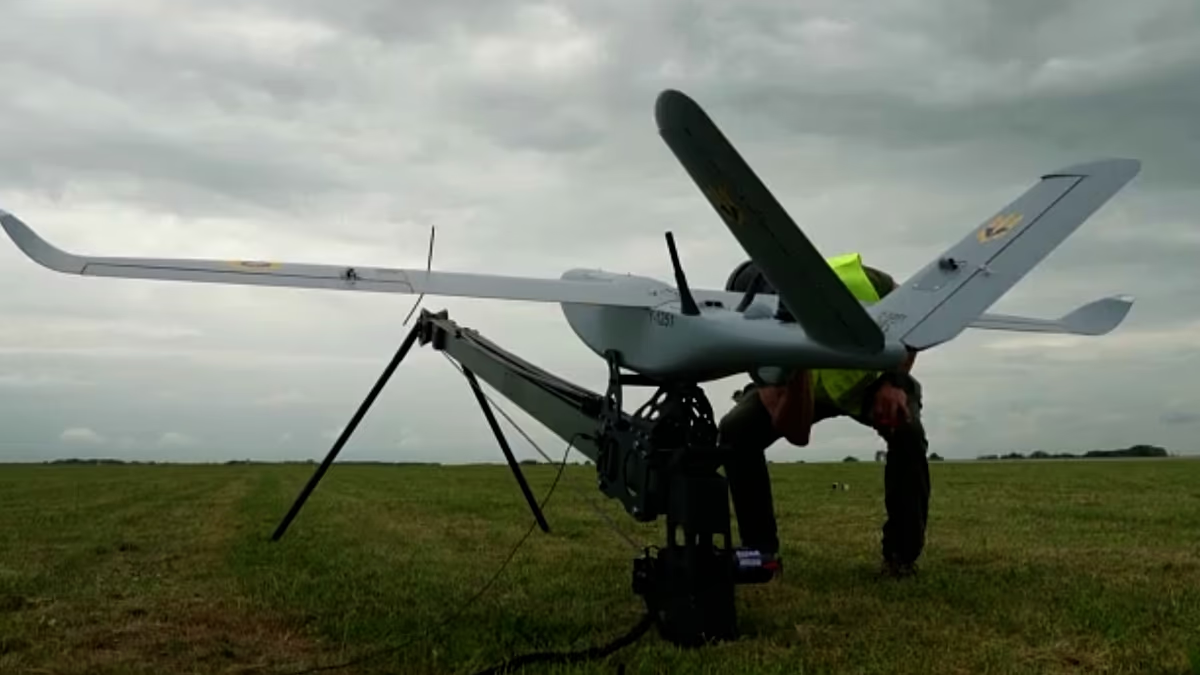
The shifting dynamics of modern conflict and security were on full display at a recent major industry event in Denmark, where leading drone manufacturers and defence contractors gathered. Their primary focus was not solely on the drones themselves, but increasingly on the sophisticated systems designed to find and defeat them. This exhibition underscored a pivotal moment for European nations, who are actively stepping up their efforts to counter a growing array of security concerns. These range from nuisance incursions by hobbyist drones near critical infrastructure to the devastating, battlefield-proven effectiveness of unmanned aerial vehicles (UAVs) in contemporary warfare. The event served as a clear indicator that the drone, once a symbol of remote warfare, has now become a ubiquitous threat—and the race to develop countermeasures has become a central priority for national defence.
The urgency driving this technological push is palpable and rooted in recent history. The battlefield in Ukraine has acted as a stark, real-world laboratory, demonstrating how relatively inexpensive commercial and tactical drones can cripple multi-million dollar tanks, artillery pieces, and warships. This has democratized air power in an unprecedented way, levelling the playing field in a manner that keeps military strategists awake at night. Beyond the conventional battlefield, the threat spectrum has widened. Incidents of drones disrupting airports, snooping on industrial facilities, or posing risks to public events are becoming commonplace. For European security agencies, the challenge is twofold: defending against orchestrated military assaults while also protecting the civilian sphere from a new domain of asymmetric threats that are cheap, readily available, and hard to track.
In response, the technologies showcased in Denmark represent a multi-layered shield, a blend of detection and hard-kill systems. The first and most critical line of defence is simply knowing a drone is there. Exhibitors presented advanced radar systems specifically tuned to pick up the small, low-flying, and slow-moving signatures of consumer drones, which traditional air defence radars often miss. Radio frequency (RF) scanners that can identify the unique communication link between a drone and its operator were also prominent, alongside sophisticated acoustic and electro-optical sensors. This sensor fusion—combining multiple data sources—is key to cutting through false alarms and providing security forces with a reliable, comprehensive picture of the airspace, a concept often termed “situational awareness.”
Once a rogue drone is detected, the next step is neutralization. The showcase featured a diverse arsenal of countermeasures, moving far beyond simple signal jammers. Directed energy weapons, including high-powered lasers and microwave systems, were highlighted for their ability to silently burn through a drone’s hull or fry its electronics with a speed-of-light pulse. Kinetic solutions, such as specialised anti-drone cannons that fire nets or interceptor drones designed to physically collide with a target, offer a more physical approach. Perhaps most strategically, many systems now focus on “soft-kill” methods, like taking over the drone’s control signal to safely land and capture it, allowing for forensic analysis of the device and its operator. This layered approach ensures that a security team can choose the appropriate response, whether in a crowded city square or on a remote military base.
For European nations, adopting and integrating these technologies is not just a procurement exercise; it is a complex strategic imperative. It involves weaving these new systems into existing national air defence networks and coordinating with civilian aviation authorities to avoid catastrophic accidents. Legislation is also racing to catch up, defining no-fly zones and establishing clear rules of engagement for security personnel. The industry event in Denmark thus functioned as more than a trade show; it was a nexus for dialogue between defence ministries, law enforcement, airport authorities, and private corporations, all seeking to build a cohesive, continent-wide resilience against the drone threat.
Ultimately, the gathering in Denmark illuminated a fundamental shift in our security landscape. We are witnessing the emergence of a continuous, silent duel of innovation—a cycle where each advancement in drone capability prompts a new countermeasure, which in turn inspires the next evolution in drone technology. This cycle is now permanent. For governments and citizens alike, the message is clear: the skies are no longer empty or benign. They are a new frontier for conflict, crime, and espionage. The work displayed in Denmark represents our collective effort to reclaim that frontier, not through mere destruction, but through smarter, more adaptable, and more vigilant guardianship of the air above us.