


Of course. Here is a humanized and expanded summary, structured into six paragraphs.
The Met Gala is more than a party; it is a cultural phenomenon. Each year, the grand staircase of the Metropolitan Museum of Art in New York transforms into a stage for the most audacious, beautiful, and sometimes baffling expressions of fashion. It is a night where haute couture collides with pop culture, where historical reverence meets avant-garde fantasy, all under the glare of a global media spotlight. For attendees, it is a coveted invitation, a chance to be part of a living, breathing art exhibit. For the world watching, it is a spectacle—a parade of the “good, bad, and ugly” that sparks endless conversation, critique, and admiration. The event’s core purpose is noble: it is the primary fundraiser for the Museum’s Costume Institute, ensuring the preservation and study of fashion history. Yet, the public spectacle of the red carpet, with its viral moments and instant judgments, often becomes the defining memory.
This year’s Gala, however, arrived with a palpable tension simmering beneath its glittering surface. The chosen theme, “Costume Art,” promised a celebration of fashion’s most theatrical and artistic dimensions, a canvas for interpretative and breathtaking looks. Yet, a significant shadow was cast by the event’s sponsorship. The involvement of Amazon founder Jeff Bezos and his wife, Laura Sánchez-Bezos, proved controversial. In a notable departure from usual Gala fervor, a constellation of high-profile stars chose to boycott the event entirely, their absence a quiet but powerful protest against the affiliation. This ethical stance highlighted an evolving dialogue within the industry, where alignment with certain corporate and personal values is increasingly scrutinized. The empty seats and missing names whispered a narrative of principle, reminding observers that even in this world of glamour, political and social consciousness plays a role.
Despite this principled absence, the Gala’s magnetic pull remained undeniable. Hundreds of other luminaries—A-list actors, chart-topping musicians, elite athletes, and fashion icons—ascended the famous steps. For them, the platform’s power outweighed the controversy. The Met Gala offers an unparalleled global stage; a single look can define a career, inspire trends, and cement a place in fashion history. The red carpet is not just photographed—it is dissected, memeified, and debated across continents in real-time. To participate is to engage directly with this powerful engine of cultural influence. Furthermore, the underlying mission of supporting the Costume Institute provided a compelling justification for many attendees, framing their participation as support for art and scholarship, not merely a sponsor.
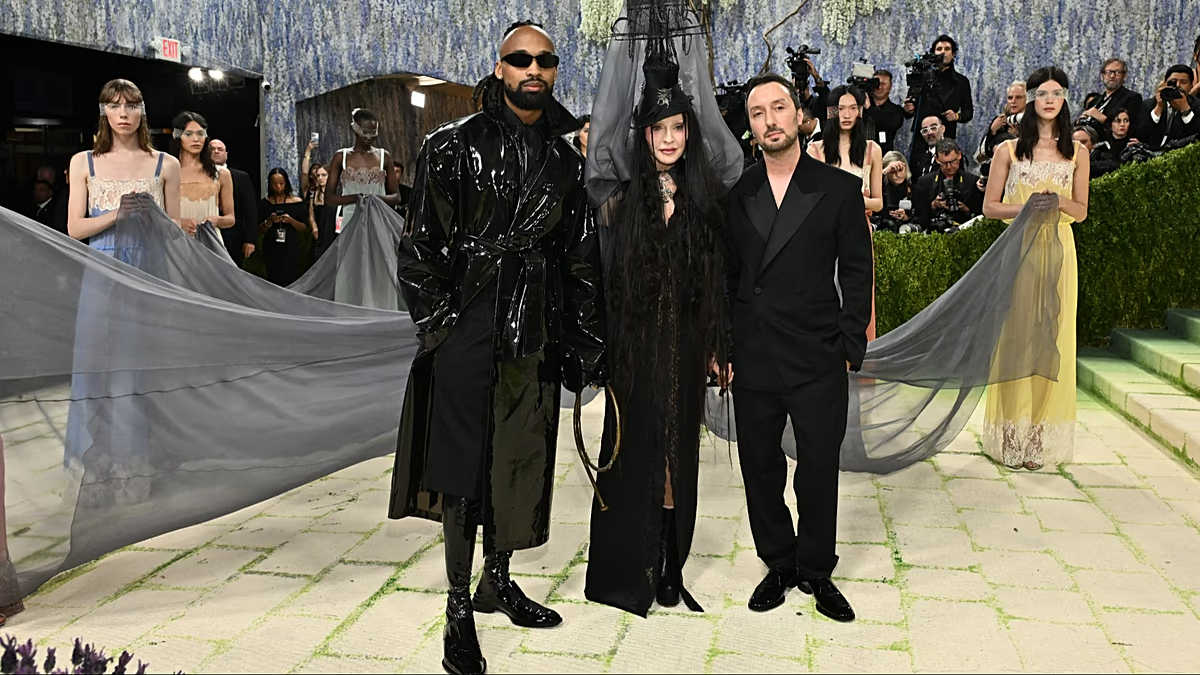
Thus, the night unfolded as a complex tapestry of artistic expression and silent protest. For those who attended, the “Costume Art” theme served as a thrilling directive. We witnessed garments that blurred the lines between clothing and sculpture, between wearable item and gallery installation. Fabrics were manipulated into impossible forms, colors clashed and harmonized with deliberate drama, and historical references were reimagined with contemporary audacity. Each outfit was a statement, a answer to the theme’s challenge. The red carpet became a walking exhibition, a competition of imagination and craftsmanship where the only rule was to embody art itself.
For the vast audience watching from home, the experience was one of curated discovery. As looks debuted in real time, journalists and commentators worked tirelessly to provide context, critique, and updates. The directive to “refresh the page” was not just technical advice; it captured the live, evolving nature of the event. Each refresh could reveal a new masterpiece or a puzzling oddity, a respectful homage or a rebellious deconstruction. Behind the scenes, teams like that of video editor Yolaine De Kerchove Dexaerde worked to compile these moments into coherent narratives, translating the chaotic glamour into digestible stories and highlights for the world. This real-time documentation is essential, turning a single evening into a week-long cultural conversation.
In conclusion, the 2026 Met Gala was a event of dualities. It was a celebration of unbridled artistic fashion under the “Costume Art” theme, yet it was also a stage for a quieter protest through absent stars. It showcased the enduring power of the event as a global platform for those who walked the carpet, while also reflecting a growing industry awareness of ethical alignment. Ultimately, the night served its core purpose: it raised crucial funds for fashion preservation and provided a breathtaking, conversation-driving spectacle. The looks that debuted will be studied, the absences noted, and the debates about sponsorship will linger. But as the last guest departed, the Met Gala reaffirmed its role as the most captivating intersection of art, fashion, celebrity, and culture in the modern world.