



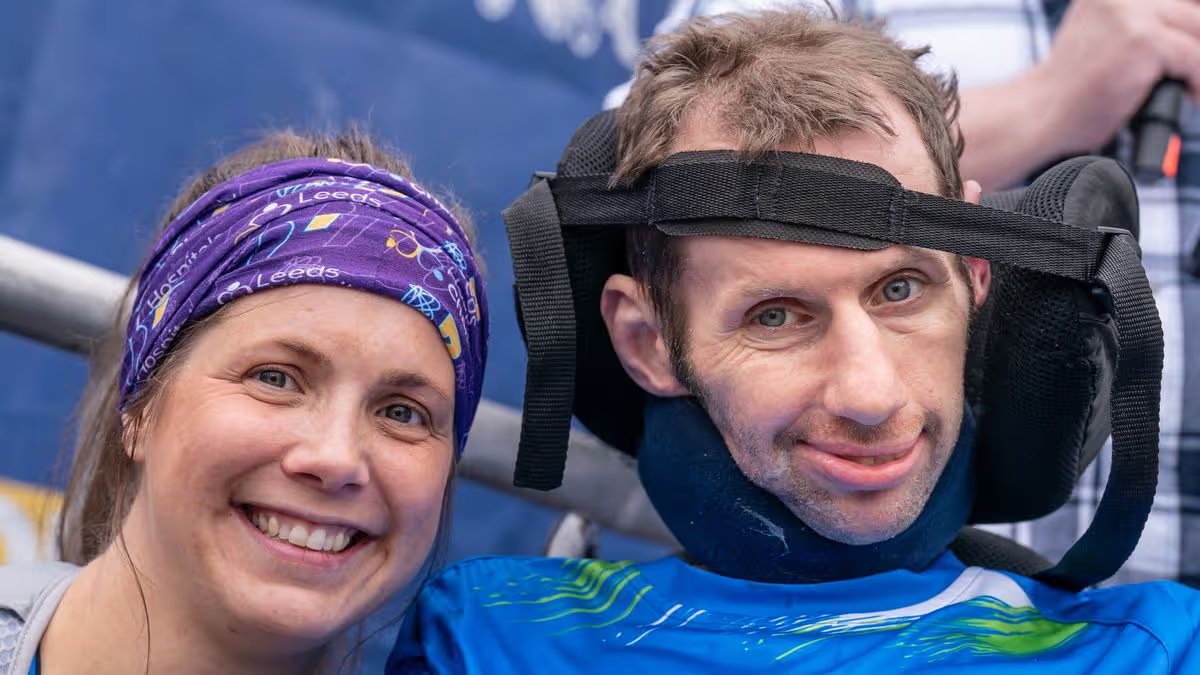
In a world that often shrinks from the uncomfortable, Lindsey Burrow is issuing a gentle but urgent plea: we must learn to talk about death, especially with our children. The widow of rugby league legend Rob Burrow, who passed away from motor neurone disease (MND) in June 2024, Lindsey speaks from the heart of a devastating loss. She reveals that, like more than half of parents according to new research, she initially dreaded having these conversations with their three young children, Macy, Maya, and Jackson. As a parent, her instinct was to shield them, to be a bastion of positivity amidst her own torrent of grief. Yet, she has come to understand that silence is not protection. “Grief is invisible,” she emphasises, “so it is important that we do talk about grief and bereavement.” Her journey from fear to openness underscores a vital truth: acknowledging sadness and loss is not a sign of weakness, but a crucial step in healing.
Lindsey’s mission is now intertwined with her family’s daily life and her advocacy for Rob’s legacy. Since his diagnosis in 2019, the Burrow family became synonymous with courage, raising millions for MND research and awareness. Now navigating life as a single mother, Lindsey ensures that Rob’s presence remains tangible. “We try and talk about Rob every day,” she shares, transforming their home into a space where memories are cherished and his name is spoken without hesitation. This practice is her answer to the silent struggle many face, a way to make the invisible weight of grief something shared and supported. Her advocacy extends to supporting ‘Celebration Day,’ a charity initiative encouraging people to pause and remember loved ones, and she welcomes new guidelines bringing grief education into the national curriculum, hoping to equip future generations with the vocabulary for loss.
The raw difficulty of those early conversations remains fresh for Lindsey. She admits it was “incredibly hard,” tasked with managing her own sorrow while guiding three heartbroken children. The statistics that once placed her among the majority of avoiding parents are now a catalyst for her message. She has learned that in creating permission to grieve—to show children it is “okay to be sad”—we build resilience. Her experience challenges the archetype of the stoic parent, proposing instead a model of compassionate honesty. This philosophy was shaped in part by her own preparation; she researched how to discuss death before Rob passed, yet found that reality delivered a unique and profound challenge. “I never thought it was a situation I would find myself in, at 41-years-old losing my husband,” she reflects, her words echoing the unpredictable nature of life.
Amid the pain, Lindsey finds her strength and purpose in her children, who she says embody their father’s bravery and love for life. They are her reason to wake up with a smile, her anchor in the fluctuating tides of grief that bring both good days and bad. Rob’s own profound lessons in living fuel her perspective. He left behind not only a legacy of fundraising but a powerful directive to “not waste a moment” and to “dare to dream.” He even pre-recorded heartfelt messages for his children to hear at future milestones, a testament to his foresight and enduring love. Lindsey honours this by focusing on the beautiful memories they crafted as a family, even in his final days—moments of painting nails and sharing smiles—which she hopes will teach their children not to fear death, but to see it as a peaceful conclusion to a life richly lived.
Lindsey has chronicled this intense journey of love, care, and loss in her memoir, Take Care, offering an intimate look at her role as Rob’s carer and the family’s final moments together. She recalls his peaceful passing, surrounded by love, as the greatest comfort. “When you love somebody you don’t want to see them suffering… It was time,” she says, her words carrying the heavy relief that comes with the end of a long battle. This narrative is not one of unrelenting tragedy, but of profound love and dignified closure. It provides a blueprint for others: that facing death with openness can, in time, soften its sharpest edges and allow families to move forward without the burden of unspoken fear.
Ultimately, Lindsey Burrow’s story transcends her personal tragedy, becoming a universal call to action. She urges us to break the taboo, to find the words for loss, and to integrate the memory of those we love into the fabric of our daily lives. Her advocacy, born from the most profound personal loss, seeks to spare others the isolation of invisible grief. By sharing her family’s path—from Rob’s public battle with MND to the private, ongoing process of mourning—she lights a way for others to follow. In a society that often races past discomfort, Lindsey asks us to pause, to remember, and to speak openly about life’s inevitable end, thereby truly honouring the legacy of those, like Rob, who taught us to live bravely and love deeply.