



The Dueling Heartbeat of a World Cup Host: Joy Amidst Unthinkable Loss
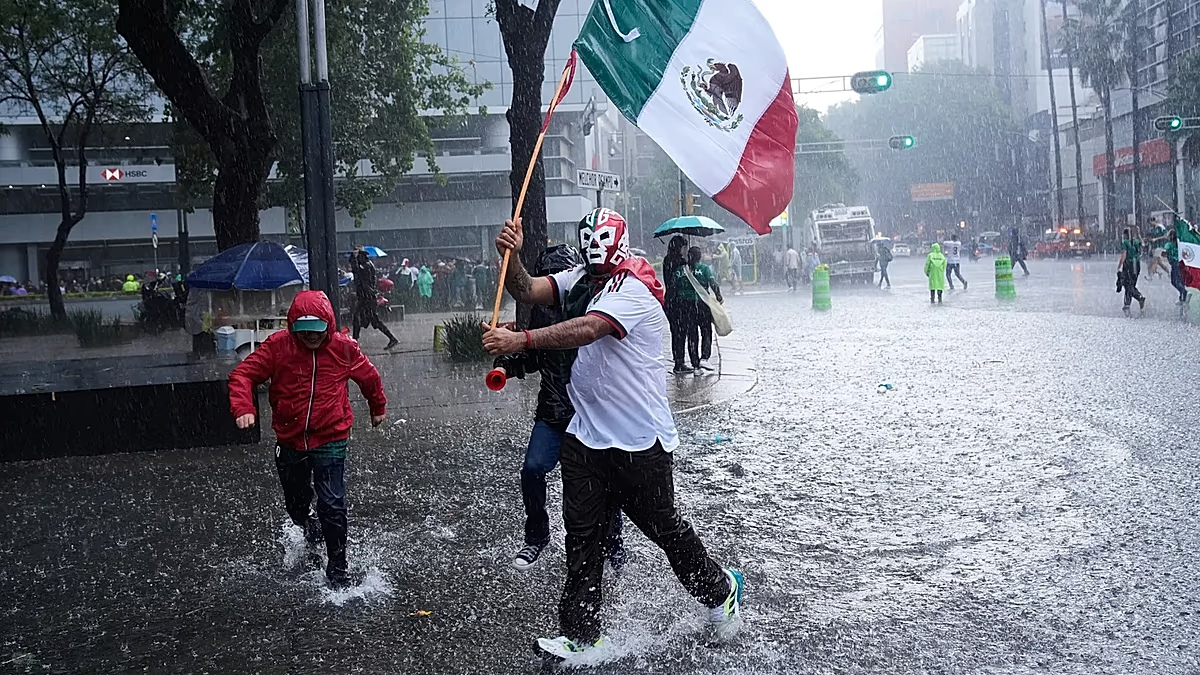
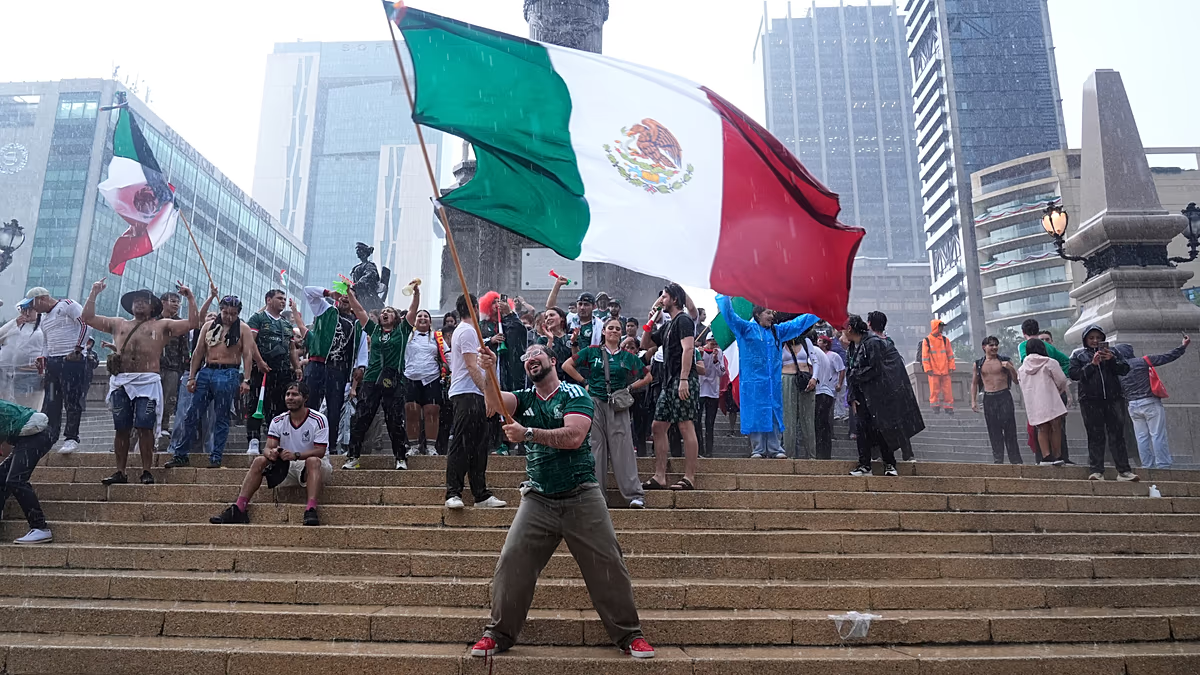
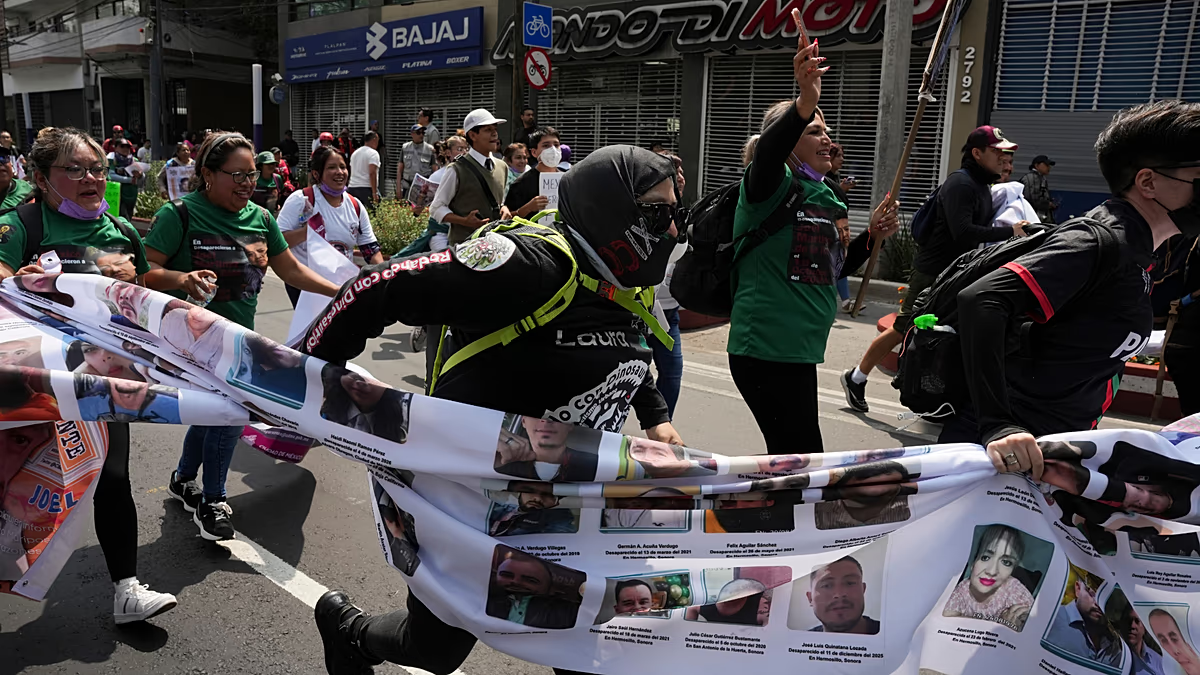
On the dazzling opening day of the 2026 FIFA World Cup, Mexico City vibrated with a profound and painful duality. Inside the historic Estadio Azteca, a global audience was captivated by a spectacle of music and sport, as the joint host nation celebrated the tournament’s commencement with performances by international icons like Shakira, Andrea Bocelli, and Burna Boy. The air inside thrummed with anticipation and festivity, a moment of pure, unifying joy. Yet, just beyond the stadium walls, a different, more somber rhythm echoed through the streets. Here, the beat was not one of celebration, but of relentless protest—a powerful, aching counterpoint to the festivities. Over a thousand relatives of Mexico’s disappeared marched toward the arena, their candles flickering like silent stars against the night, their hands clutching framed photographs of loved ones swallowed by an abyss of uncertainty. In that moment, the city was not just a host; it was a living portrait of a nation wrestling with its soul, torn between a present of global celebration and a past and present marred by an unending crisis.
These protestors carried a message they desperately needed the world to hear, especially as the globe’s gaze fixed upon their country. They had bestowed upon Mexico a grim, unofficial title: “Mexico campeon en desaparicion“—Mexico, the champion of disappearance. Their plea was simple yet profound: do not let the beautiful game blind the world to our beautiful, broken people. As 48 nations begin their quest for a trophy, these families seek a far more basic prize: truth, closure, and justice. The sheer scale of the tragedy they represent is staggering. Official figures state that more than 130,000 individuals are registered as missing in Mexico, a number that has climbed relentlessly over the last two decades. This escalation runs parallel to the expansion of powerful organized crime syndicates and the brutal intensification of the nation’s drug war, painting a clear picture of a violence so pervasive it has made disappearance a horrifyingly common phenomenon.
The mechanisms of this crisis are as cruel as they are complex. Countless disappearances are linked to criminal empires built on drug trafficking, extortion, and human trafficking. Victims—often young men, but also women, students, and activists—are abducted for forced recruitment, killed over territorial disputes, or vanish as silent casualties of broader criminal enterprises. Many are buried in clandestine graves, their identities stripped from them. The tragedy is compounded by widespread allegations from families and human rights groups that authorities have too often failed to properly investigate these cases or hold perpetrators accountable, fostering a culture of impunity that deepens the wound. The issue was violently thrust back into the national consciousness just a year before the World Cup, in 2025, with the discovery of a site linked to cartels in Jalisco. There, civilian search groups uncovered human remains and personal effects, suggesting a location used for detention and murder. This discovery reignited public outrage and fueled the protests we see today, a stark reminder that the crisis is not historical but ongoing.
In the vacuum left by often-ineffective official channels, a formidable force of love and desperation has arisen: the madres buscadoras, the “searching mothers.” These volunteer collectives, primarily composed of mothers, sisters, and wives of the disappeared, have become the moral compass and the relentless investigators of this crisis. Armed with little more than shovels, hope, and an unbreakable bond to their missing family members, they organize searches in treacherous terrain—scrublands, abandoned lots, and suspected burial sites. Their work is physically grueling and psychologically torturous, yet they have succeeded in locating evidence and remains that official investigations have missed. However, their bravery comes at an immense personal cost. These activists routinely face intimidation and threats from the very criminal groups they seek to expose, all while battling what they describe as a lack of meaningful government support and protection. Theirs is a pilgrimage of anguish, a testament to a love that refuses to be silenced by fear or forgotten by bureaucracy.
Recognizing the depth of public despair and the powerful moral authority of these families, President Claudia Sheinbaum has proposed a series of reforms aimed at confronting the crisis. The measures seek to streamline the agonizing process for families: making it easier to identify missing persons, improving how case information is organized and shared between agencies, increasing transparency around official statistics, and ensuring investigations begin immediately, without a torturous waiting period. The proposals also aim to create a clearer legal distinction between kidnapping and disappearance cases, which could alter how resources are allocated. Announcing these plans, President Sheinbaum emphasized collaboration and the fight against impunity, stating the government’s obligation to support families. While these reforms represent a significant political acknowledgment of the problem, for the families marching outside the Azteca, promises are measured solely by results—by the long-awaited phone call, the identified bone fragment, the answered question.
As the World Cup unfolds, with its narratives of triumph and heartbreak on the pitch, a more profound human drama continues in its shadow. The protests are a cry of frustration from families who have spent years, sometimes decades, orbiting a black hole of unanswered questions. For them, this is not merely about crime statistics; it is about the basic human need for truth and the dignity of recognition for the tens of thousands who have vanished. They march so that their loved ones are not erased twice—first from society, and then from memory. Their presence is a powerful insistence that even a festival as global as the World Cup cannot whitewash their reality. As the tournament captivates millions, these campaigners work to ensure that international attention remains fixed, however briefly, on a humanitarian crisis that has scarred communities across Mexico for a generation. They remind us that while a nation can host the world’s most celebrated sporting event, its true strength—and its path toward healing—lies in how it confronts its deepest wounds.