

Europe’s Economic Outlook Dims Amid Energy and Geopolitical Crises
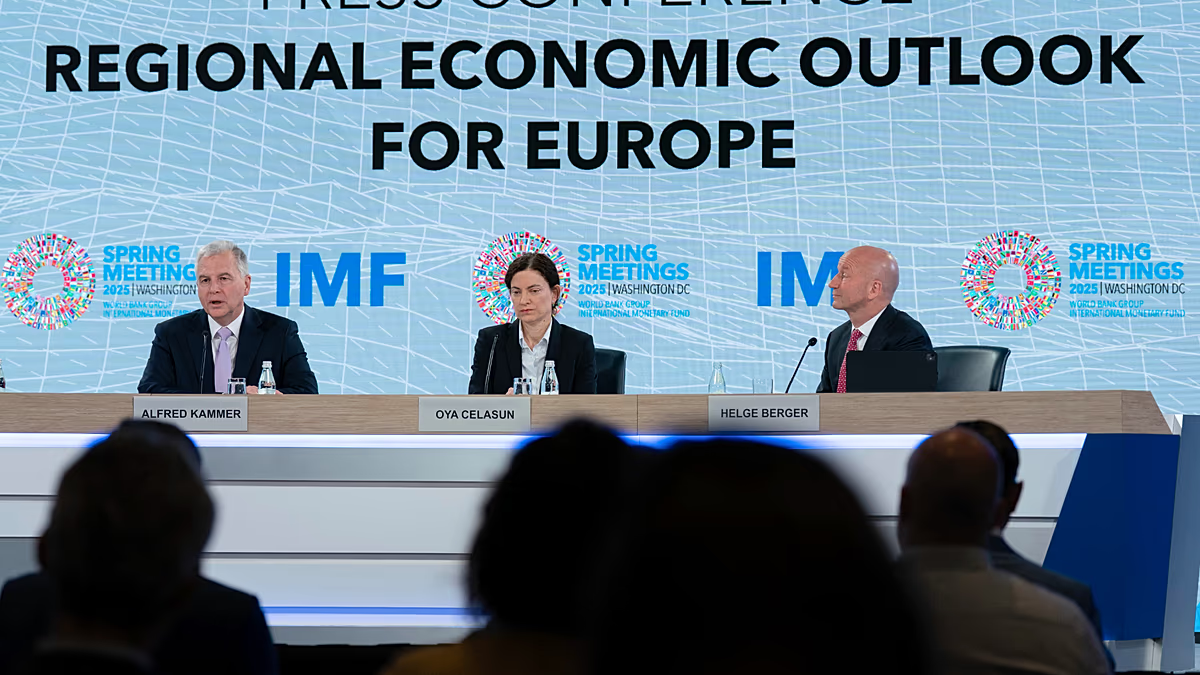
Europe’s economic resilience is being severely tested by the aftershocks of war, according to a sobering new assessment from the International Monetary Fund (IMF). The conflict originating in the Middle East has triggered major disruptions to global energy supplies, sending shockwaves through the European economy. While the continent’s underlying fundamentals remain strong, the IMF warns that these external shocks are forcing a period of tighter financial conditions and casting a long shadow over future growth. The core of the challenge is an acute energy crisis, directly linked to the war in Iran and the closure of the critical Strait of Hormuz, which has exposed Europe’s continued vulnerability to global market instability.
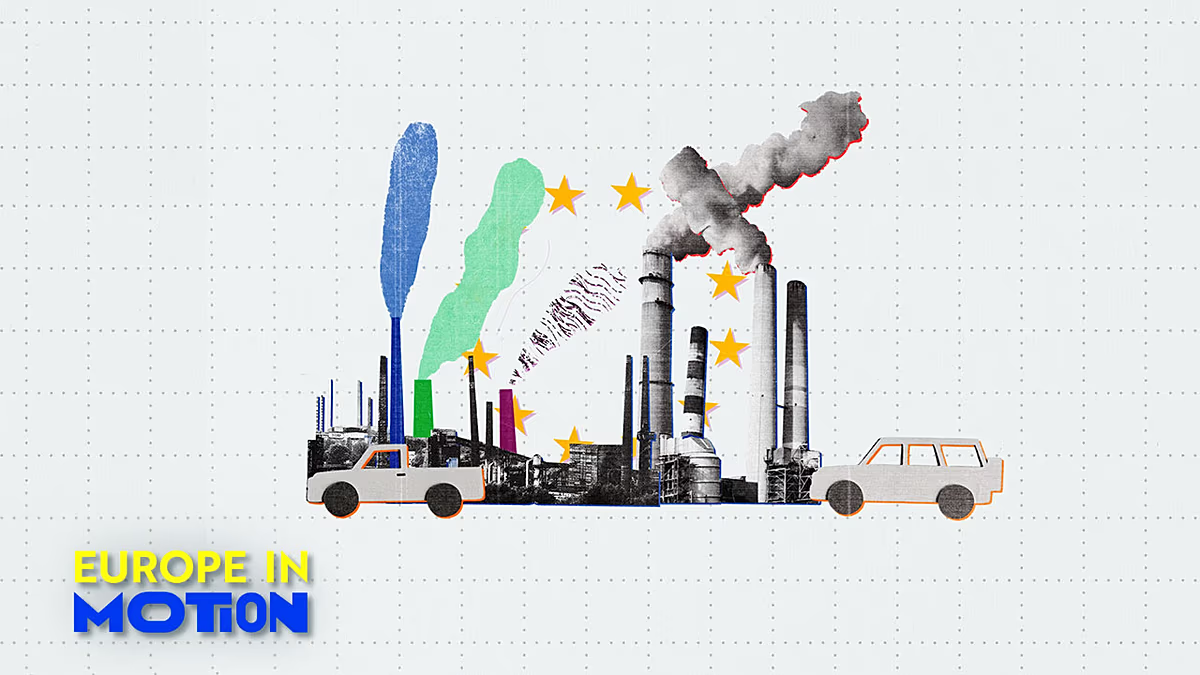
The immediate impact is being felt in soaring energy costs, a painful echo of the 2022 crisis. Oil prices have jumped approximately 70%, and European natural gas prices remain stubbornly high, sitting about 45% above pre-war levels. Although the current price spike is less extreme than the previous one, the IMF cautions that it will still weigh heavily on economic growth. This comes atop a pre-existing problem: even before this latest conflict, European industries were paying two to three times more for energy than their competitors in the United States and China. The IMF stresses that this is not a temporary gap but a deep-seated structural vulnerability that now threatens to erode the region’s industrial competitiveness and economic momentum.
In response to these pressures, the IMF has downgraded its growth forecasts, illustrating the tangible cost of the crisis. The euro area is now projected to expand by just over 1% in 2026, a significant reduction from the approximately 1.4% growth anticipated before the war began. Meanwhile, inflation remains persistently high, driven by ongoing cost pressures from energy and supply chain disruptions. The future fiscal health of European nations is now directly tied to the duration of the conflict. As EU Economy Commissioner Valdis Dombrovskis noted, the overall economic damage hinges entirely on how the situation evolves, particularly regarding energy infrastructure and supplies. A short conflict may limit the fallout, but a prolonged crisis could potentially tip the fragile European economy into a full-blown recession.
Facing this turmoil, the IMF urges European leaders to pursue swift and smart reforms rather than reactionary policies. A critical priority is to stay the course on the clean energy transition, which has already provided a partial buffer against the shock; renewables now generate over half of the EU’s electricity. The report strongly advocates for preserving the EU’s Emissions Trading System (ETS), viewing it as essential for maintaining momentum on decarbonization and supporting wind and solar adoption. Equally important is completing the internal energy market by modernizing the continent’s electricity grid and boosting storage capacity—a complex task that will dominate EU policymaking and political debates in the coming months.
However, the IMF sounds a clear warning against inward-looking policies that could backfire. It references the EU’s proposed Industrial Accelerator Act, acknowledging its useful measures for diversifying supply chains but criticizing elements like strict “Made in Europe” procurement rules. Such conditions, the IMF argues, could distort markets, weaken Europe’s comparative advantage, and ultimately prove counterproductive. While protecting strategic industries is a legitimate goal, the fund insists it must be guided by rigorous cost-benefit analysis and limited to situations where the market cannot adjust on its own. The report cautions that common pitfalls like loosening competition rules or scaling back climate commitments would ultimately weaken, not strengthen, Europe’s global position.
The path forward requires a careful balancing act. European policymakers must provide targeted, temporary support to cushion the immediate blow of the energy crisis without fueling inflation, as Commissioner Dombrovskis emphasized. Simultaneously, they must resist the allure of protectionism and instead double down on long-term resilience through deeper financial integration, a completed single market, and productivity-boosting reforms. The coming years will be defined by this dual challenge: navigating the immediate storm of geopolitical conflict and high energy prices while steadfastly building a more integrated, efficient, and sustainable European economy for the future. The continent’s economic stability depends on its ability to address both the urgent crisis and the underlying vulnerabilities it has exposed.