



Paragraph 1: A Sudden Lockdown
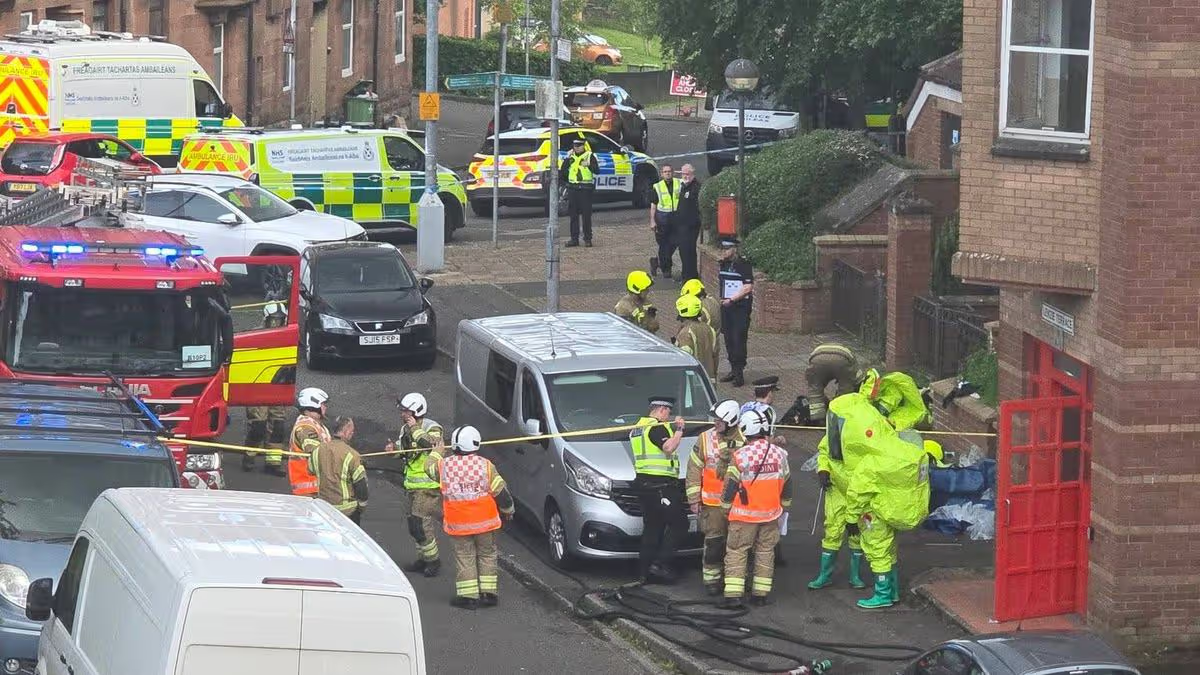
On a quiet Sunday afternoon in the Springburn area of Glasgow, the ordinary rhythm of life on Lenzie Terrace was abruptly shattered. At approximately 3:30 PM on May 31st, a chemical incident at a local property triggered a massive and immediate emergency response. What began as a routine weekend quickly escalated into a scene of intense activity, with police, fire, and ambulance services descending upon the street. The urgency of the situation was underscored by the swift arrival of specialist Hazardous Materials (hazmat) crews, a sight that instantly communicated the serious and potentially dangerous nature of the event. The familiar surroundings of the residential terrace were transformed as authorities moved decisively to secure the area, setting the stage for a prolonged and unsettling lockdown for those who call it home.
Paragraph 2: The Visible Scale of the Response
The scale of the operation was both impressive and alarming to behold. A significant stretch of Lenzie Terrace was swiftly cordoned off, its usual access points blocked by emergency vehicles and official tape. The most striking image from the scene was that of responders clad in bright yellow, full-body hazmat suits—a stark visual departure from everyday life that highlighted the perceived risk. These specialists were seen entering a block of flats, their protective gear a clear signal that the incident involved substances requiring extreme caution. Photographs from the scene captured not just the emergency personnel, but the eerie quiet of a normally active street now under strict control, emphasizing the disruption and the serious measures being taken to ensure public safety.
Paragraph 3: The Human Impact of the Lockdown
For the residents of Lenzie Terrace, the incident was not just a news story but a deeply personal and disorienting experience. Many found themselves effectively trapped, with police instructing some occupants that they were not permitted to leave their own homes—a containment measure that, while precautionary, is profoundly unsettling. One resident’s simple, stark statement, “The street is completely blocked off and some of us aren’t even allowed to leave the house,” encapsulates the confusion and loss of autonomy felt in such moments. The incident peeled back the curtain on how quickly a sense of security can vanish, replaced by a tense wait for information and resolution, all from behind closed windows.
Paragraph 4: Official Actions and Public Guidance
In response to the developing situation, Police Scotland provided clear official guidance to manage the risks. As a precautionary measure, nearby properties were evacuated to remove individuals from potential harm’s way. Authorities also issued a firm request to the wider public to avoid the Lenzie Terrace area entirely, a directive aimed at preventing further complications and keeping both the curious and the unaware safe from any unseen hazards. For those directly affected by the lockdown or in need of immediate help, police assured the community that assistance was available either by approaching officers stationed at the perimeter of the scene or by calling a dedicated phone line, quoting the specific incident reference number.
Paragraph 5: Coordination and Ongoing Investigation
The response highlighted the complex, coordinated dance of modern emergency services. Police maintained the secure perimeter and managed public communication, while fire crews, especially the hazmat specialists, took the lead in assessing and mitigating the chemical threat inside the property. Ambulance services stood ready to provide medical support if needed. This multi-agency effort, operating under a unified command structure, was essential to address both the immediate danger and the broader community impact. The focus remained on stabilizing the situation, ensuring no further spread of contamination, and safeguarding the wellbeing of residents and responders alike, all while the investigation into the incident’s cause quietly began.
Paragraph 6: Reflections on Community and Resilience
As the evening progressed on Lenzie Terrace, the incident served as a stark reminder of the vulnerabilities woven into the fabric of everyday life. A single report of a chemical incident was enough to mobilize a major civil response, displace families, and isolate residents. Yet, within that disruption, the protocols of public safety—from evacuation to specialist decontamination procedures—demonstrated a society’s capacity to respond to unforeseen threats. For the community of Springburn, the hope was for a swift and safe resolution, a return to normalcy, and answers to the questions hanging in the air. The ultimate resolution would hinge on the skill of the responders and the patience of a neighborhood suddenly placed at the centre of an alarming, yet controlled, emergency.