



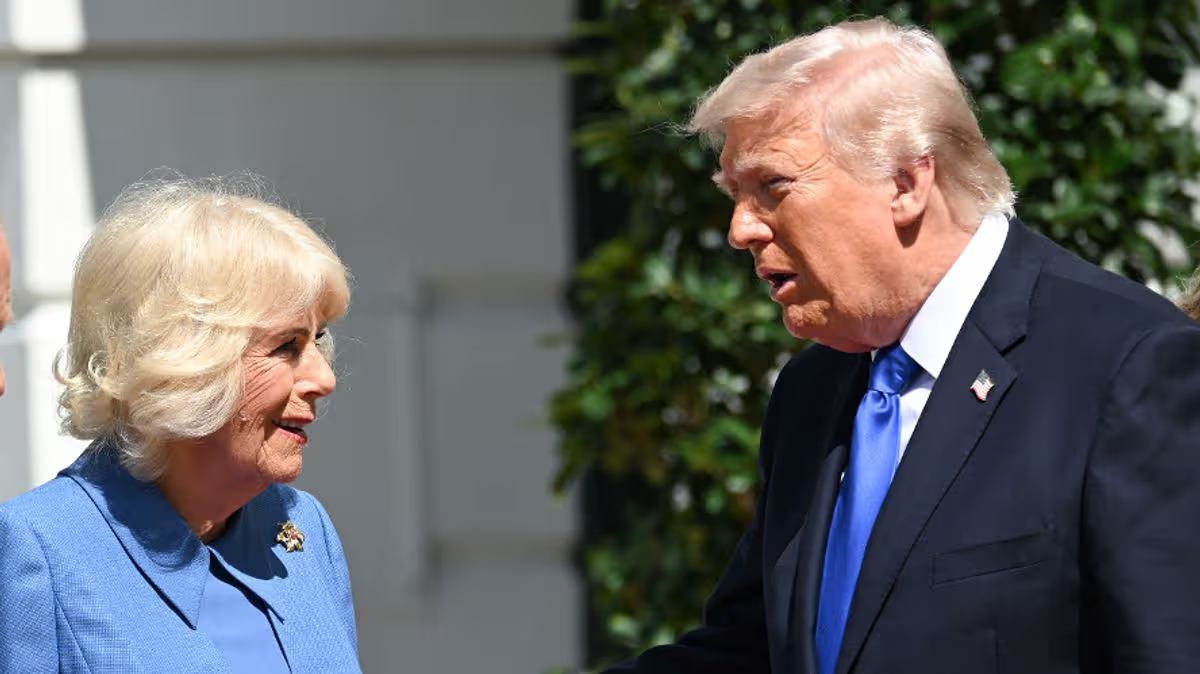
The whirlwind state visit of King Charles III and Queen Camilla to the United States concluded on a note of warm, personal diplomacy, as the royal couple bid a formal farewell to President Donald Trump and First Lady Melania Trump on the South Portico of the White House. The day prior had been spent in New York, a bustling contrast to the political heart of Washington, D.C., but the final act of their American tour returned them to the presidential residence to express gratitude for the hospitality extended over their several-day stay. As the two couples met on the driveway, the familiar rituals of state—the handshakes, the posed photographs for the assembled press—were infused with a notably genial and informal tone, suggesting a visit that had transcended mere protocol to forge a genuine, if unlikely, rapport between the British monarchs and the American first family.
This atmosphere of mutual appreciation was vividly captured in the exchanges between the leaders, as observed by lip readers. As the four stood together, President Trump was effusive in his praise, particularly for Queen Camilla. Turning to King Charles, he gestured toward the bustling scene and the Queen, remarking, “I don’t know how she does it, she’s amazing.” His compliments continued directly to Camilla herself, thanking her for making the visit a success and even sending “love to the grandchildren”—a touchingly personal note that broke through the usual formal veneer of such occasions. First Lady Melania, too, expressed her delight, assuring the Queen, “I’m glad you had a great time,” and thanking the King for their presence with a heartfelt, “We loved having you here.” A particularly meaningful moment occurred when Melania noticed Camilla was wearing the elegant Tiffany brooch gifted to her during the Trumps’ visit to the UK the previous autumn, a subtle but powerful symbol of an ongoing personal connection.
The convivial spirit persisted as the media called out questions, with one reporter inquiring about the “Trump renaissance” and improvements in the capital. King Charles, never one for expansive political commentary, offered a characteristically diplomatic and positive, “I like it, very interesting.” Following the royal departure, President Trump, never shy with the press, continued his commendations unabated, hailing Charles as “the greatest king in my book” and describing both royals as “really great people,” adding the wistful comment, “We need more people like that in our country.” This very public and warm endorsement from the President, following a visit that had been watched with keen interest on both sides of the Atlantic, served as a striking finale to the political segment of their journey, highlighting a successful bridge built between two distinctly different institutions and personalities.
With the official send-off complete, King Charles and Queen Camilla transitioned from the realm of high politics to one of profound national reverence and local community spirit. Their motorcade carried them across the Potomac River to Arlington, Virginia, and the hallowed grounds of Arlington National Cemetery. There, amidst the serene and solemn rows of white headstones, they participated in a act of shared remembrance, placing a wreath at the Tomb of the Unknown Soldier. The ceremony, marked by a traditional 21-gun salute, was a poignant reminder of the deep and enduring military alliance between the United Kingdom and the United States, a bond forged in shared sacrifice across generations of conflict. This stop provided a moment of quiet reflection, honoring the past before immersing once more in the celebratory present.
The final engagement of the visit offered a complete change of pace, exchanging the silence of the cemetery for the vibrant sounds of a small-town American celebration. Traveling to the picturesque town of Front Royal, Virginia, the King and Queen immersed themselves in a joyous ‘block party’ held in honour of America’s upcoming 250th anniversary. Accompanied by Virginia’s governor and the town’s mayor, they became spectators and participants in a classic Main Street parade. Marching bands filled the air with music, cheerleaders brought energy, and a procession of classic British and American cars rolled by, symbolizing the transatlantic theme of the day. Mingling with residents, the royals experienced firsthand the warmth and patriotic pride of a community celebration, an authentic slice of American life far from the corridors of power in Washington.
Thus, the state visit concluded on a perfectly balanced note, having seamlessly woven together the threads of high-stakes diplomacy, solemn historical tribute, and unfiltered public joy. From the personalized compliments on the White House portico to the shared silence at a soldier’s tomb and the cheerful noise of a small-town parade, Charles and Camilla’s journey underscored the multifaceted nature of the modern monarchy’s role. They served as diplomats, dignitaries, and relatable figures, strengthening the crucial “special relationship” at its highest levels while also connecting meaningfully with the American people and their traditions. The resonant image of the visit may well be the contrast between the President’s very public praise and the Queen’s simple, smiling wave from a small-town street—a testament to a tour that successfully navigated the vast spectrum of American experience.