


A Moment of Lost Focus, A Lifetime of Loss
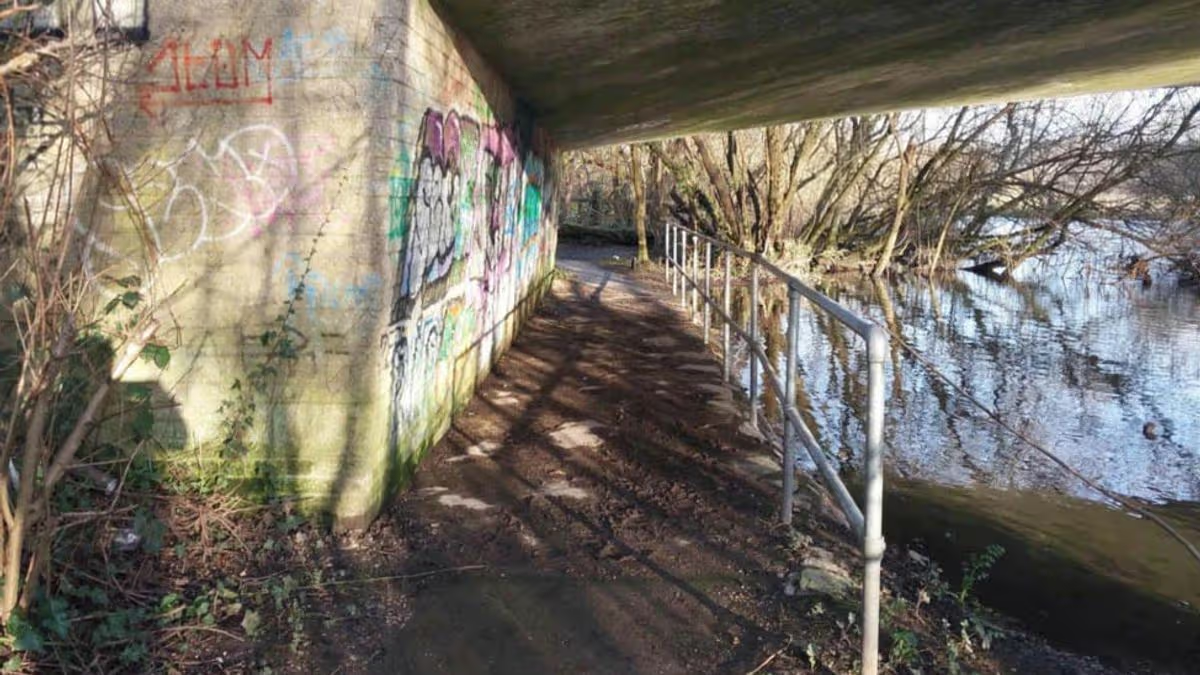
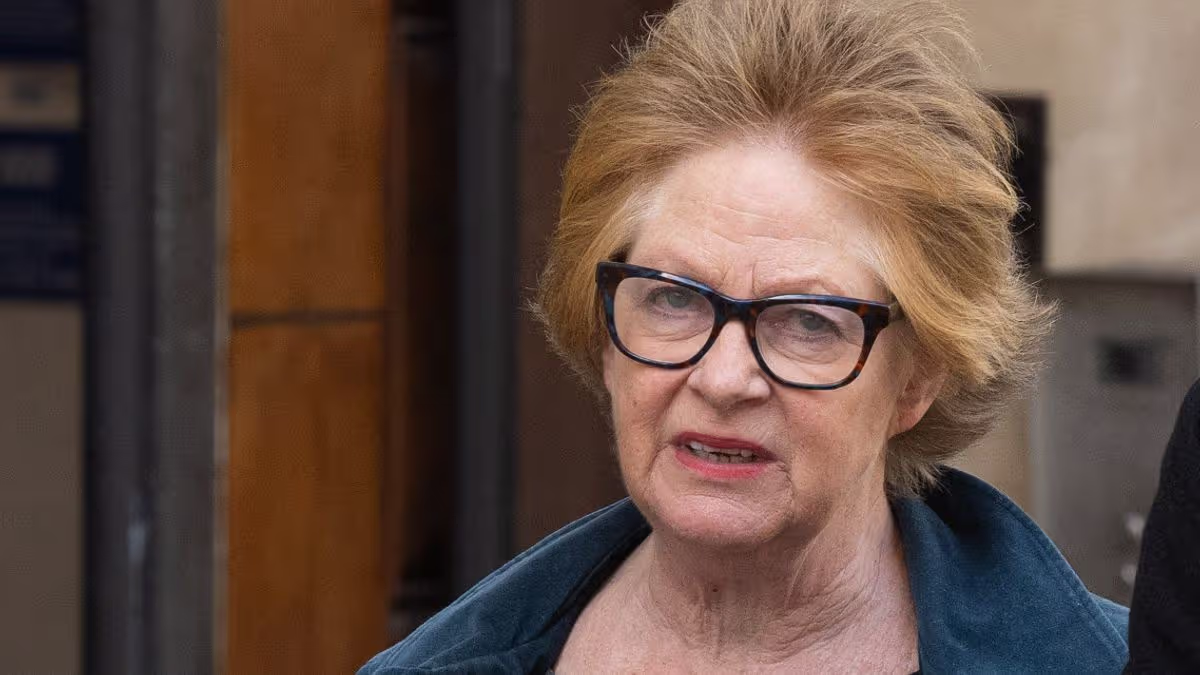
The footage released by Avon and Somerset Police presents a scene of profound and unsettling contrast. It captures Fiona Hodge’s first, shell-shocked account of the events that led to a catastrophic collision, an account given just hours before Donna Crossman, the woman she struck, succumbed to her injuries. This immediate recording is not of a callous individual, but of a 69-year-old woman seemingly bewildered by her own actions. She describes “a very nasty accident,” telling officers the road was not busy, that she was within the speed limit, and that she was simply chatting with friends. The critical, devastating admission follows: she “lost her concentration.” In that singular, fleeting moment of inattention, her red Citroen mounted the pavement on the A370 Brunel Way bridge in Bristol. The mundane act of a conversation between friends became the prelude to an irreversible tragedy.
On the other side of this equation was Donna Crossman, a 53-year-old from Bridgend, South Wales, full of anticipation for an evening of joy. She was walking with her friends towards Ashton Gate stadium, tickets in hand for a Take That concert. Described as a dedicated and talented netball coach, she was a cherished daughter, wife, and friend, embodying the vibrancy of a life lived actively and in connection with others. Her journey that evening was one of lighthearted fun and shared experience, a simple pleasure tragically intercepted. The collision, occurring around 5:30 pm on June 9, 2024, was terrifyingly swift. Hodge’s own words paint a horrifyingly vague picture: “It was very quick. I didn’t really see the person. She seemed to have gone over the side of the bridge.” Donna Crossman’s promising evening was erased in an instant, her life ending in a hospital the following day.
The subsequent trial at Bristol Crown Court delved into the painful details of that day. Witnesses, including friends traveling with Hodge and independent motorists, provided testimony. Notably, drivers in another car reported seeing a red vehicle swerving between lanes ahead of them prior to the incident. The defense presented a medical explanation, arguing that Hodge had suffered an epileptic seizure at the wheel, a claim that, if accepted, would have fundamentally altered the legal and moral landscape of the case. However, after considering the evidence, the jury rejected this explanation. Their unanimous guilty verdict for causing death by careless driving indicated a clear conclusion: this was not an unavoidable medical event, but a fatal failure in the fundamental duty every driver accepts—to maintain proper attention and control.
The impact of this verdict extends far beyond the courtroom. For Donna Crossman’s family and friends, the past eighteen months have been a torturous journey of grief, punctuated by the protracted processes of investigation and trial. Designated Investigating Officer Noelie Poupard acknowledged their “great strength and dignity” throughout the ordeal, expressing a hope that the verdict might offer a measure of closure. Yet, such closure is always relative; it does not fill the void left by a vibrant life cut short. Their loss is permanent, a haunting reminder of how fragile our collective safety is on roads shared with others.
The case stands as a stark and somber lesson in responsibility. Fiona Hodge was not speeding, not drunk, not engaged in overtly reckless behavior. She was, by her own description, distracted by conversation. This elevates the tragedy from the realm of the sensational to the terrifyingly ordinary. It underscores that “careless driving” is not a minor infraction but a potentially lethal act. The penalty for a momentary lapse in focus, for a glance away from the road, can be astronomically disproportionate and irrevocable. It shatters the lives of victims and their families, while also forever altering the life of the driver, who must live with the consequences of that single error.
As Fiona Hodge awaits her sentencing, the community is left to reflect on this profound loss. Two lives, previously unknown to each other, converged on a bridge with devastating results. One life was ended, and another is forever scarred by a burden of guilt and remorse. The memory of Donna Crossman—the netball coach, the concert-goer, the loved one—is what remains most vital. This tragedy serves as an urgent plea to every person who gets behind the wheel: the task of driving demands our full and unwavering presence. For on the other side of a split-second distraction could be another person’s entire world.