
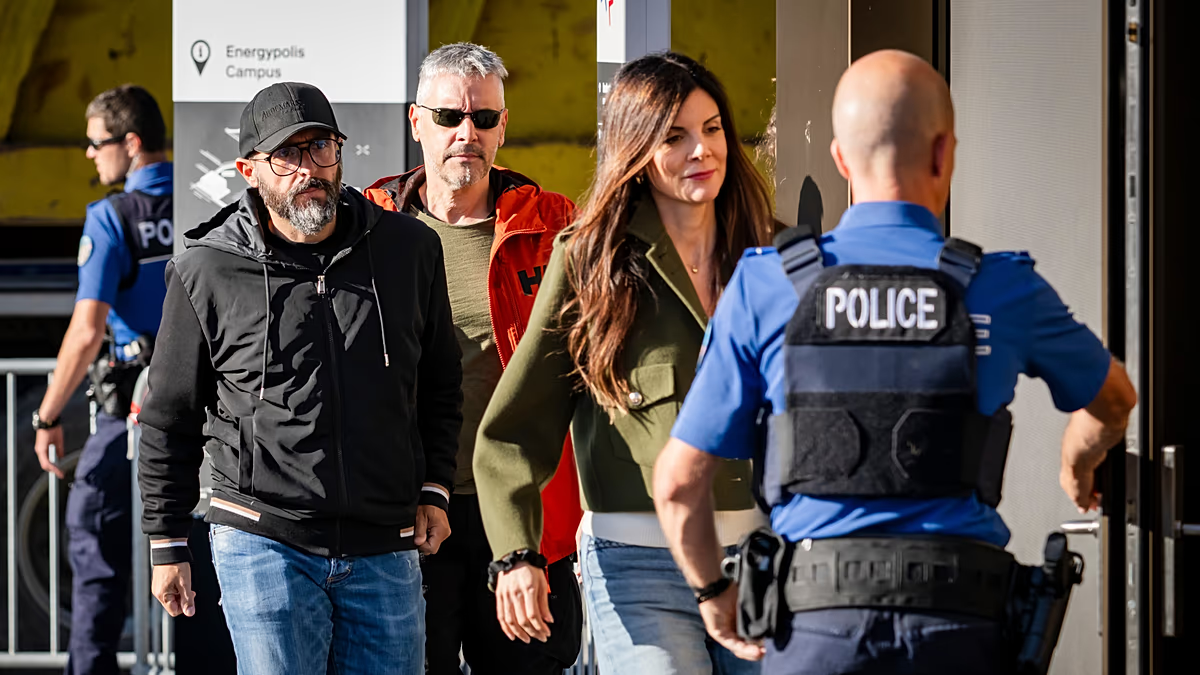
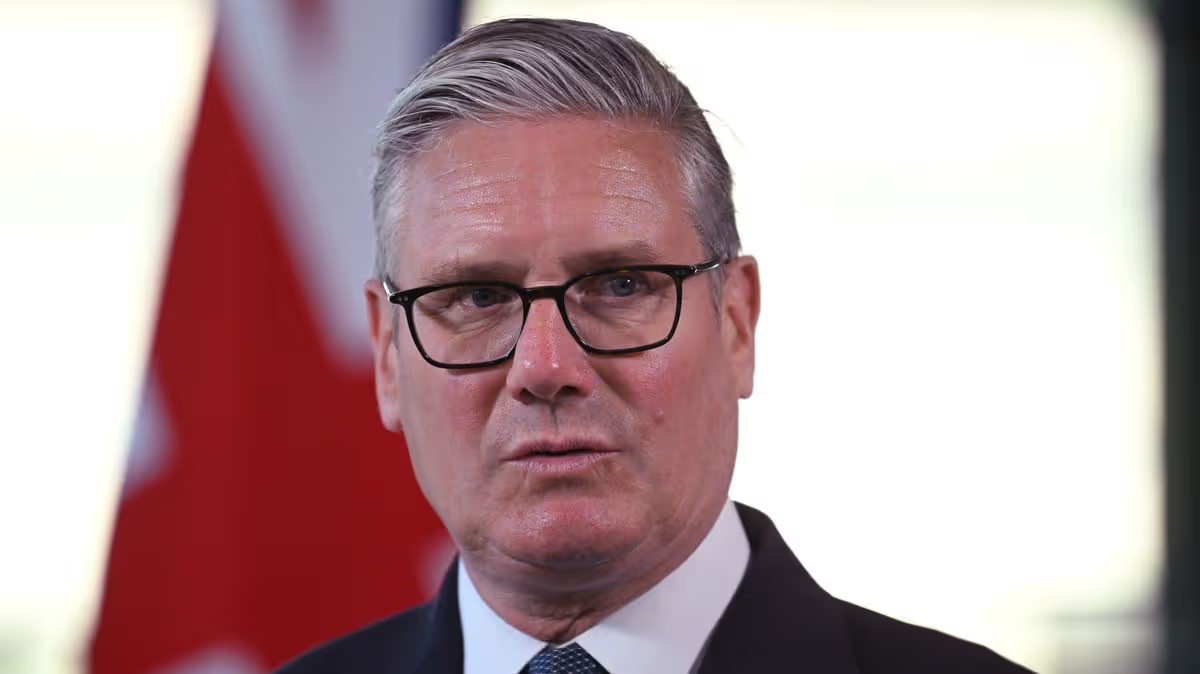



As Prime Minister Keir Starmer prepares to face the House of Commons, the political spotlight burns intensely not on a new policy, but on a familiar and controversial figure: Peter Mandelson. Dubbed the ‘Prince of Darkness’ for his masterful and often ruthless command of media and political strategy, Mandelson has been a defining, if polarizing, force in British politics for over three decades. His latest appointment as Ambassador to the United States, however, has erupted into a full-blown scandal, ensnaring the Prime Minister and raising severe questions about governmental judgment and process. The core allegation is grave: how was a man with known, friendly ties to the convicted sex offender Jeffrey Epstein appointed to such a sensitive diplomatic post? The crisis deepened when it was revealed that Mandelson began his ambassadorial role in February 2025 before completing in-depth security vetting, only to be dismissed in September when further details of his Epstein association emerged. A furious Prime Minister Starmer has labeled the situation “outrageous,” asserting that the Foreign Office overruled a security recommendation against the appointment without his knowledge, leaving him to inadvertently mislead Parliament.
Mandelson’s journey to this precarious moment is steeped in political dynasty and personal resilience. The grandson of Labour giant Herbert Morrison, he was elected MP for Hartlepool in 1992 and swiftly became one of Tony Blair’s most indispensable lieutenants, a chief architect of New Labour’s formidable public image. His career, featuring roles as Business Secretary and Northern Ireland Secretary, was nonetheless marked by volatility, suffering two high-profile resignations only to repeatedly stage comebacks, including a stint as European Trade Commissioner. This very resilience now faces its sternest test. Beyond the Epstein links, he was arrested in February on suspicion of misconduct in public office—though released without charge and maintains his innocence—over allegations he shared market-sensitive information with Epstein while in government. These swirling controversies stand in stark contrast to the polished narrative of New Labour’s rise, revealing the enduring complexities and potential vulnerabilities of a man who helped shape modern political communications.
Away from the glare of headlines and political machinations, Mandelson’s personal life has been a quiet, decades-long testament to a different kind of fortitude. For 27 years, his life has been shared with Brazilian translator Reinaldo Avila da Silva, whom he met on a Caribbean holiday in the mid-1990s. In a less tolerant era for LGBTQ+ individuals in public life, Mandelson navigated the difficult reality of having his sexuality exposed without his consent and used as a political weapon by rivals. The couple’s decision to marry in October 2023 was, as Mandelson wrote, a deliberate move from privacy to a public declaration of love, granting him a newfound “emotional comfort and strength.” Yet, even this private sanctuary has been touched by the Epstein shadow, with files indicating the financier transferred money to da Silva in 2009 for an osteopathy course—a transaction that, while not implying wrongdoing, further wove Mandelson’s personal world into the scandal’s web.
The heart of the current firestorm lies in the detailed correspondence from the released Epstein files, which paint a picture of a friendly, ongoing relationship that extended well beyond casual acquaintance. The emails suggest a disconcerting familiarity, with Mandelson arranging to stay at Epstein’s properties, discussing sensitive political gossip like Gordon Brown’s “bigotgate” incident almost in real time, and Epstein’s associates facilitating introductions to women for him. While Mandelson strenuously denies any knowledge of or involvement in Epstein’s crimes, and maintains he cannot recall specific events or individuals mentioned in the logs, the cumulative effect of these exchanges is deeply damaging. They depict a prominent politician willingly engaging with a man already convicted of sex offences, a fact Mandelson now admits was a profound error in judgment for which he has apologised to Epstein’s victims.
Confronting this crisis, Prime Minister Starmer’s primary challenge is one of accountability and transparency. His anger is directed not just at the historic association, but at the systemic failure within his own government that allowed Mandelson’s appointment to proceed against security advice. By declaring his intent to “set out the facts” to Parliament, Starmer seeks to draw a line under the episode by exposing the procedural breakdown, thereby separating his leadership from the flawed decisions of his administration. However, the political danger is palpable. The scandal fuels opposition claims of poor judgment and sleaze, threatening to undermine Starmer’s promise of a renewed, ethical government. It also forces Labour to confront the lingering legacy of its past, as a figure synonymous with the Blair-Brown era once again casts a long and troublesome shadow.
Ultimately, the Mandelson saga is a multifaceted drama about legacy, judgment, and the indelible intertwining of the personal and political. It traces the arc of a man who helped redefine British politics, who built a private life against the odds, yet whose associations have triggered a severe governmental and personal reckoning. For Keir Starmer, Monday’s statement is a critical test of damage control and authority. For Peter Mandelson, it represents perhaps the final, and most severe, chapter in a career of spectacular highs and precipitous falls. The answers demanded by Parliament will not only determine the immediate political fallout but will also scrutinize how a nation vets and trusts those who represent it on the world’s most powerful stages.