



Navigating Flight Disruptions: Your Rights and Critical Choices During Summer Travel
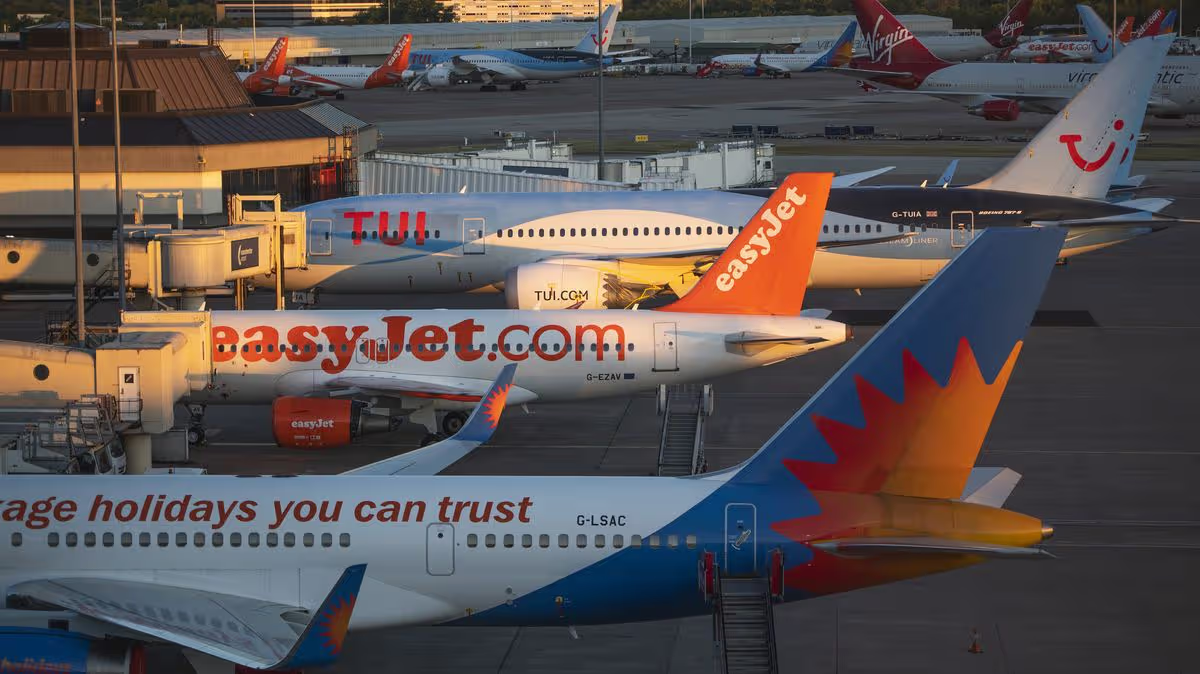
As the summer travel season reaches its peak, a shadow of uncertainty lingers for many holidaymakers due to the ongoing conflict in the Middle East. Thousands of travellers have already experienced the frustration and anxiety of cancelled or severely disrupted flights, throwing meticulously planned getaways into disarray. The immediate aftermath often involves a stressful scramble to rearrange itineraries or, in some cases, the heartbreaking decision to abandon long-awaited vacations entirely. This widespread disruption underscores the vulnerability of modern air travel to geopolitical events far beyond the control of the average passenger. However, amidst this turbulence, regulatory bodies are stepping forward to provide clarity and assert passenger protections, aiming to transform confusion into actionable guidance for those caught in the crosshairs of these operational delays.
In response to the growing concern, the UK’s Civil Aviation Authority (CAA) has issued explicit summer guidance, seeking to reassure the public. The authority emphasizes that while some disruption is an unfortunate reality, travellers departing from or returning to the UK are safeguarded by some of the most robust passenger rights in the world. These regulations are designed to offer a safety net, ensuring individuals are not left financially stranded or without recourse when airlines cancel services. The CAA’s statement is a crucial reminder that knowledge of these rights is the traveller’s first and best line of defence. It encourages passengers to move from a position of helplessness to one of informed engagement with airlines, equipped with a clear understanding of the legal obligations carriers must fulfil.
Central to the CAA’s advice is a critical warning about a common financial pitfall: the choice of a refund. The authority strongly cautions passengers that if their ultimate goal is still to reach their planned destination, accepting a refund is often the worst possible option. This is because, under UK law, once a refund is selected and processed, the airline’s other legal duties—namely, to provide an alternative flight and to offer care (meals, accommodation, etc.) during extended waits—are nullified. The refund might seem like a quick financial reprieve, but it effectively severs the contractual relationship, leaving the traveller to rebook on their own in what is likely a chaotic and expensive market. Therefore, unless one has decided unequivocally not to travel, opting for re-routing is almost always the more advantageous path.
So, what are the concrete options when a flight is cancelled? For journeys departing from the UK, or for return flights to the UK operated by UK or EU carriers, the law mandates airlines to present three choices. First, a full refund of the unused ticket. Second, re-routing on an alternative flight at the earliest possible opportunity. Third, re-routing at a later date that suits the passenger’s convenience, subject to seat availability. It is imperative to deliberate carefully, as the CAA notes that once a selection is communicated to the airline, changing one’s mind is typically not permitted. Choosing the earliest alternative flight obligates the airline to provide reasonable care—including meals, refreshments, and hotel accommodation if an overnight stay is necessary—while you wait. They must also facilitate communication, such as allowing for phone calls or emails.
The situation and your rights can vary slightly depending on how you booked your travel. For those who purchased a flight directly from an airline or through a third-party agent, the above rules apply directly. However, if your cancelled flight was part of a package holiday booked under the Package Travel Regulations, your position is even stronger. In addition to the airline’s obligations, your tour operator has a duty to either provide a suitable alternative holiday or offer a full refund for the entire package. This layered protection means package holiday travellers should always contact their tour operator first, as the operator will typically manage the rebooking and logistics on your behalf, potentially saving significant time and stress.
In conclusion, while the spectre of disruption can cast a pall over the excitement of summer travel, being forewarned is to be forearmed. The CAA’s guidance serves as a vital roadmap through the complexities of airline cancellations. The paramount rule to remember is to resist the instinctive lure of an immediate refund unless you are certain you wish to cancel your trip altogether. By understanding your right to alternative transportation and necessary care, you can navigate these challenges with greater confidence and security. As the industry works to manage these disruptions, an informed passenger, aware of their strong legal protections, is best positioned to ensure their journey, though perhaps delayed, can still reach a satisfactory conclusion.