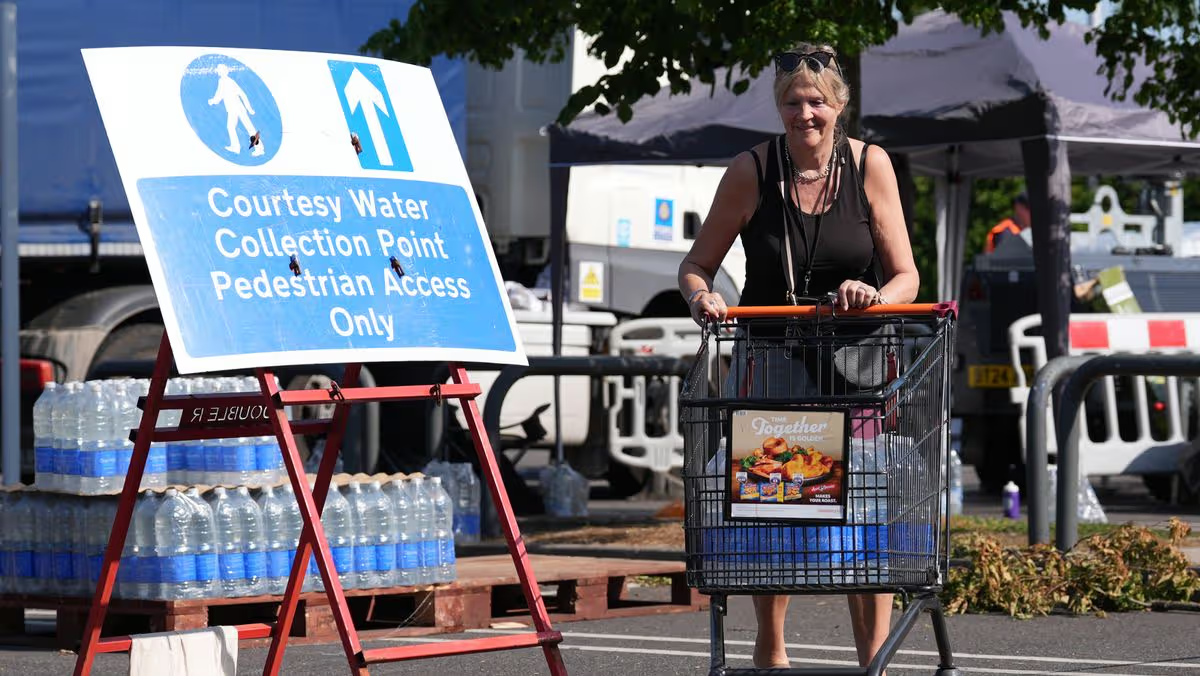




The residents of Kent are enduring a crisis that feels both physically grueling and emotionally galling. During a record-breaking heatwave this week, tens of thousands of customers served by South East Water found themselves without a reliable water supply, a fundamental necessity made even more critical by soaring temperatures. The disruption began on Wednesday, leaving approximately 8,000 people in Whitstable with no water at all, while another 14,000 in Tankerton, Ashford, and surrounding areas suffered from intermittent flow or low pressure. By Thursday, the number of affected households had risen to 22,000. This failure of basic infrastructure forced some local businesses to close and compelled residents, including the elderly and vulnerable, to queue at distribution points for bottled water—a stark and exhausting contrast to simply turning on a tap.
Among those struggling is Pat Prestage, a 67-year-old Whitstable resident living with a disability that makes such outages particularly dangerous. Her household supply failed completely on Wednesday evening. Her husband, Martin, attempted to call for an emergency delivery but found the company’s emergency line inaccessible. The following morning, he spent an hour in a queue to secure bottled water. Pat describes herself as “spitting, fuming, angry, and powerless.” Both she and her husband expressed deep frustration at South East Water’s communications, which encouraged a “Blitz spirit” and asked customers with water to reduce usage to help others. Pat sharply countered this sentiment, noting, “They’re a private company, run for profit. Some of the money we’re paying, they’re pocketing, and it’s not going into the reservoir we’ve needed for 40 years.”
Martin Prestage echoed this sense of injustice, feeling the company’s explanation implicitly blamed consumers. “They say the extreme hot weather means the system can’t cope, but what sort of system is it that goes offline like it has for us for 20 hours? Surely you build things into the system so you don’t get that happening,” he said. This frustration is widespread. A 90-year-old woman collecting water between Herne Bay and Whitstable called the situation “absolutely disgusting,” adding, “I live alone, I’m 90 years old, and I’m cut off again. It is absolutely ridiculous.” These personal stories highlight the human toll of the outage, where the burden of resilience falls disproportionately on those least able to bear it.
In response to the crisis, South East Water stated it is doing everything possible to restore services. Incident Response Manager Matthew Dean reported that by Thursday, some customers had begun to see their water return, but warned that supplies could remain intermittent into the weekend. Specifically, he noted that 3,500 people in Whitstable should see a return of supply “later today,” while 165 customers in Cranbrook remained without water due to storage tanks reaching a “critical level.” A further 10,500 customers in Coxheath, Loose, Headcorn, Herne Bay, and Benenden were still experiencing low pressure or intermittent flow.
Dean attributed the failures to “incredibly high demand during this heatwave,” explaining that for most affected customers, water would be intermittent, frequently failing during peak usage times in the morning and evening. The company has advised people in affected areas to limit their water use strictly to drinking, cooking, and cleaning until the issues are fully resolved. This guidance, however, offers little solace to those who have already endured days without reliable access, and it underscores the fragility of the system under stress.
The ongoing situation in Kent transcends a simple utility outage; it has become a profound breach of trust and a test of community endurance. Residents are grappling not only with the physical inconvenience and health risks posed by a water shortage during extreme heat, but also with a growing anger towards a private company perceived as prioritizing profit over robust infrastructure investment. The images of elderly residents hauling bottled water and businesses forced to shutter speak to a failure of basic service provision. As the heatwave persists and the repairs continue, the community’s patience is wearing thin, replaced by a demand for accountability and a system built not just for average days, but for the challenging ones as well.