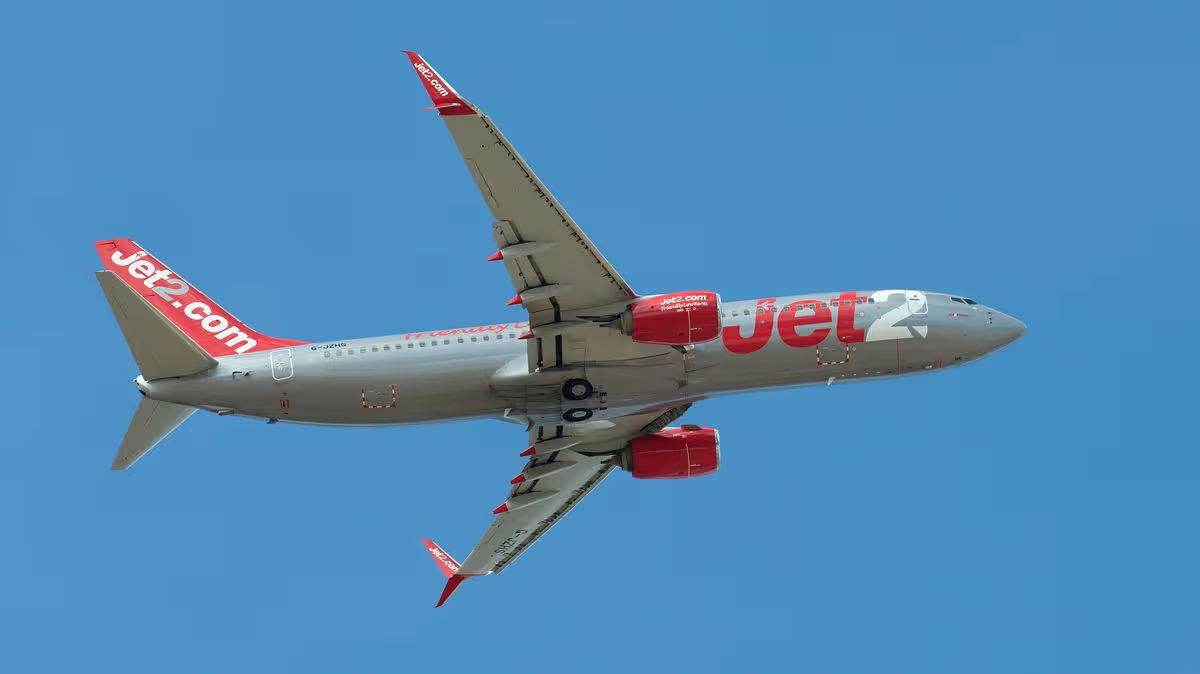




The sudden and frightening disruption of a routine journey from holiday to home became a stark reality for the 220 passengers aboard Jet2 Flight LS1266. Travelling from Tenerife to Birmingham, the night flight was transformed from a peaceful, darkened cabin into a scene of palpable anxiety when one of the pilots became seriously unwell, suspected to be suffering a heart attack. The initial signs were subtle yet alarming: passengers awoke to flashing lights and the sight of visibly distressed, tearful stewardesses urgently running through the aisle. Their emotional state underscored the gravity of the situation as they pleaded for any medically trained passengers to assist. This raw human concern, breaking through the usual composed facade of cabin crew, immediately communicated to everyone onboard that this was no minor incident, sending a ripple of fear through the aircraft, particularly among families with young children.
The procedural response to the emergency was swift and demonstrated the rigorous training underpinning aviation safety. With the captain incapacitated, the First Officer assumed full control, executing a rapid descent and navigating the aircraft to an unscheduled emergency landing at Porto Airport in Portugal. The abrupt drop in altitude, a necessary manoeuvre for the situation, further heightened the distress within the cabin, with one passenger noting their two-year-old child crying alongside many others due to the sudden and forceful descent. The landing itself at 2:11am was successfully managed, a testament to the crew’s skill under extreme pressure. Upon touchdown, the plane was immediately met by a fleet of emergency vehicles on the tarmac, their flashing lights piercing the darkness as medical teams rushed to attend to the unwell pilot, whose condition was the paramount concern.
Following the safe landing, however, the experience for passengers transitioned from an acute emergency into a prolonged and frustrating logistical ordeal. They were confined on the aircraft for over an hour after landing, a period of uncertainty and exhaustion. Once disembarked, they found themselves stranded at Porto Airport for more than thirteen hours without provisions for proper accommodation. A passenger recounted being left to wander the terminal, told by the airline that arranging hotels was “too expensive.” This lack of post-emergency care contrasted sharply with the evident professionalism displayed during the actual crisis, leaving many tired, inconvenienced, and feeling neglected despite expressing their “full sympathy” for the afflicted pilot. The human element of the drama was thus twofold: profound empathy for the crew member’s health crisis, and mounting frustration at the subsequent ground handling.
Jet2’s operational recovery plan involved flying a replacement pilot from Manchester to Porto to take command of the original aircraft. To address the disruption for passengers, the airline offered a free rebooking onto any Jet2 flight to 14 UK destinations over the following week, providing some flexibility for those impacted. In their statement regarding the incident, Jet2 confirmed the diversion was due to a pilot feeling unwell and firmly stated that “at no point was safety compromised,” with customers eventually continuing their journey. They also extended an apology for the unforeseen delay. This official response highlighted the airline’s commitment to safety protocols during the flight itself but did not directly address the grievances regarding the lengthy ground delay and lack of immediate accommodation.
The incident on LS1266 encapsulates the unpredictable nature of air travel, where routine can be shattered by sudden human vulnerability. It showcased the effective, safety-first protocols of the aviation industry in managing a critical in-flight emergency, from the co-pilot’s capable handling of the aircraft to the swift emergency response on the ground. Yet, it also revealed a potential gap in the holistic care of passengers after such an event, where the trauma of the emergency is compounded by logistical failures and poor communication. The tearful stewardesses and the crying children in the descending plane painted a picture of human fear and resilience, while the long wait in a deserted terminal spoke to a more mundane, yet deeply felt, human need for comfort and clear support after a shocking experience.
Ultimately, this event serves as a reminder of the complex chain of responsibility in commercial aviation. The primary duty—the preservation of life and safety during a crisis—was unquestionably met. The secondary duty—the welfare and dignity of passengers after the immediate threat has passed—appeared, in this instance, to have fallen short. The journey for those 220 Brits became a story not just of a medical emergency adeptly handled in the sky, but also of an extended ground ordeal that tested patience and highlighted the importance of comprehensive customer care. Their safe arrival home was achieved, but the path there was marked by both alarm and inconvenience, a narrative of two very different kinds of distress.